






The world, once again on edge: the two-week ceasefire agreed by Iran and the United States concludes on Wednesday, and for now the possibility of extending the truce seems remote.
Read more Air transport faces its most uncertain summer due to fuel scarcity
The two countries were supposed to start a new round of negotiations in Islamabad tomorrow after the fiasco of the meeting held on April 11, but the ayatollahs’ regime is reluctant to resume dialogue. An abyss of distrust has opened between Tehran and Washington.
The spokesman for the Iranian Foreign Ministry, Ismail Baghaei, said this Monday that his government does not plan to attend the meeting in the Pakistani capital, as the United States is not demonstrating “a serious commitment to the diplomatic process.” The proof of this, according to Baghaei, are actions such as the recent seizure of an Iranian freighter, the naval blockade on the ports of the Persian country, and delays in the implementation of the truce in Lebanon, which constitute “clear violations” of the ceasefire terms.
With these words, Baghaei throws the ball back into the court of a White House that, with its carrot and stick strategy, continues to send contradictory signals: on Sunday, US President Donald Trump confirmed that he would send a delegation to Islamabad led by his vice president, J.D. Vance, but at the same time threatened to “blow Iran to smithereens” if it did not sit down to negotiate. And, to give weight to his words, the Republican announced the capture of the Iranian vessel Touska, which was trying to circumvent the maritime blockade applied by Washington in the waters of the Gulf of Oman, near the Strait of Hormuz. As Trump detailed, the US Navy warned the ship to stop, but it refused, and was therefore attacked. The aggression was immediately condemned by the Revolutionary Guard, which announced “retaliation.”
Read also
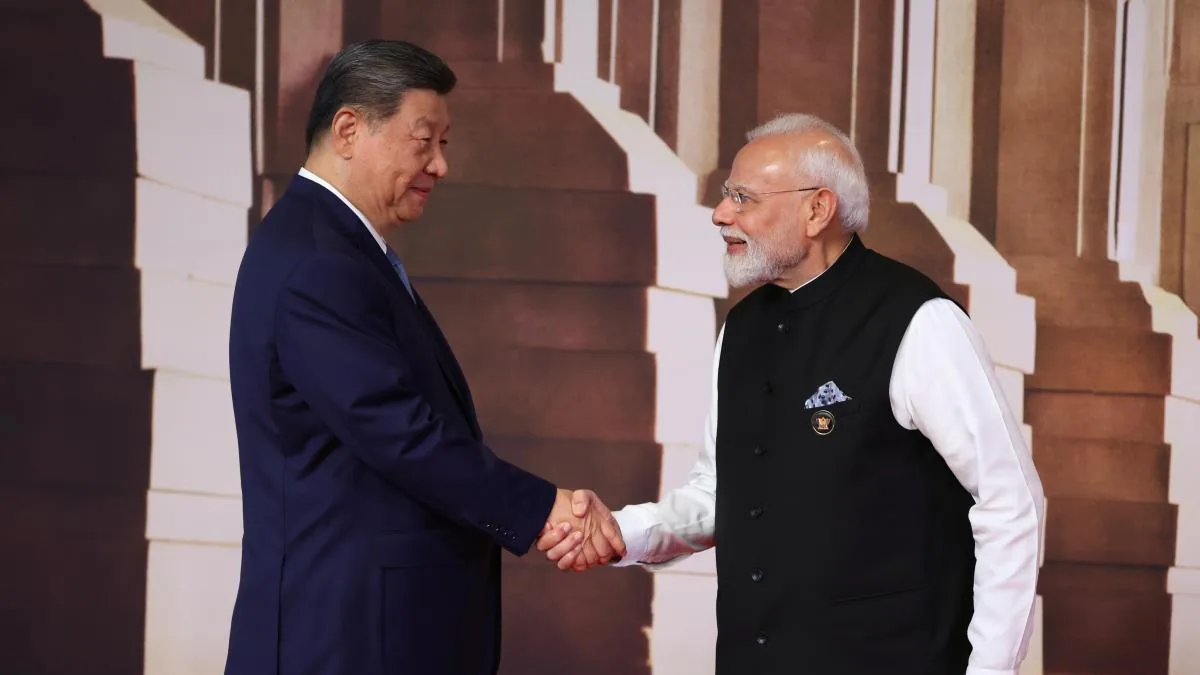
In this context, it is difficult to visualize a possible agreement that would allow extending the ceasefire sealed by Iran and the United States on April 8. Neither country seems willing to make concessions. Tehran has maintained the selective closure of Hormuz throughout the truce, despite the fact that the pact with Washington was supposed to imply the total opening of the strait – an opening that Chinese President Xi Jinping called for this Monday in the interest of “the common interest of the countries of the region and the international community.” For his part, Trump has raised the stakes with his naval blockade on Iranian ports, which he has said he intends to maintain until Iran capitulates. Likewise, the nuclear issue continues to be a source of friction: Trump wants Iran to hand over its enriched uranium, but Tehran does not contemplate this option, as spokesman Baghai stressed this Monday.
Read more The transfer of Venice
Thus, faced with a diplomatic path fraught with obstacles, the possibility of a military escalation is gaining strength. In fact, the White House is already preparing for this scenario: during these truce days, the Pentagon has continued to accumulate troops in the Middle East, with the mobilization of 10,000 soldiers who must join the 50,000 already present in the region. According to the US press, Trump is considering several high-risk plans that include the deployment of ground troops: from the seizure of Iranian nuclear material to the occupation of Kharg Island, including the taking of enclaves that allow control of Hormuz.
Despite all this, the possibility of an unexpected last-minute move that could save the truce should not be ruled out. The current ceasefire agreement itself came as a complete surprise: Washington and Tehran announced it shortly after Trump threatened to eliminate an “entire civilization,” and when Israel was in the midst of an offensive on Lebanon.
Now, Trump continues to launch threats against Iran – on Sunday he spoke of destroying its power plants and bridges – but he has forced Benjamin Netanyahu to halt his military campaign, a gesture intended to bring Tehran to the negotiating table. The problem is that the Iranian regime has ample reasons to distrust Washington’s siren calls: one only needs to remember how this war began, in the midst of talks about its nuclear program.
Read more United States attacks an Iranian ship and Tehran suspends peace negotiations