
Futurist Manifesto, 1909
1. We want to sing the love of danger, strength, and recklessness.
2. The key elements of our poetry will be courage, audacity, and rebellion.
Read more Two dead and machete fights rekindle the debate on insecurity
3. Contrasting with the literature that has glorified until today the immobility of thought, ecstasy, and dreams, we will glorify aggressive movement, feverish insomnia, gymnastic steps, risky leaps, slaps, and punches.
4. We declare that the splendor of the world has been enriched with a new beauty: the beauty of speed. A racing car with its belly adorned with thick pipes, like snakes with explosive breath…, a roaring car that seems to run over shrapnel, is more beautiful than the Winged Victory of Samothrace.
5. We want to sing the man who owns the steering wheel, whose ideal axis crosses the Earth, itself launched by the circuit of its orbit.
6. The poet must lavish himself with ardor and splendid grandeur to increase the enthusiastic fervor of the primordial elements.
7. There is no beauty except in struggle. No work of art without an aggressive character can be considered a masterpiece. Painting must be conceived as a violent assault against unknown forces, to make them bow before man.
8. We are on the highest promontory of the centuries! Why should we protect ourselves if we intend to break down the mysterious gates of the Impossible? Time and Space will die tomorrow. We already live in the absolute because we have already created eternal omnipresent speed.
9. We want to glorify war — the only hygiene of the world — militarism, patriotism, the destructive gesture of anarchists, the ideas for which one dies, and contempt for women.
10. We want to destroy museums, libraries, all academies, and fight moralism, feminism, and all other opportunistic and utilitarian cowardices.
11. We will sing to the great crowds exhausted by work, pleasure, or rebellion; to the multicolored and polyphonic hangovers of revolutions in modern capitals; to the nocturnal vibration of arsenals and mines under their violent electric moons; to the gluttonous stations that swallow smoking snakes; to factories hanging from the clouds by the ropes of their smoke; to bridges like gymnasts’ leaps stretched over the devilish flickering of rivers bathed by the sun; to adventurous liners sniffing the horizon; to broad-chested locomotives pawing the rails like huge steel horses bridled by long tubes, and to the slippery flight of airplanes, whose propeller has the screeches of a flag and the applause of an enthusiastic crowd.
Palantir Manifesto, 2026
1. Silicon Valley has a moral debt to the country that made its rise possible. The elite of Silicon Valley engineering has the positive obligation to participate in the defense of the nation.
2. We must rebel against the tyranny of applications. Is the iPhone really our greatest creative achievement, if not our greatest achievement as a civilization? The object has changed our lives, but it could also, from now on, limit and restrict our sense of the possible.
3. Free email is not enough. The decline of a culture or civilization, and indeed of its ruling class, will only be forgiven if that culture is capable of generating economic growth and security for its citizens.
4. The limits of soft power, of brilliant rhetoric alone, are evident today. The ability of free and democratic societies to impose themselves requires more than a moral appeal. It requires hard power, and the hard power of this century will be based on software.
5. The question is not whether AI-based weapons will be made, but who will make them and for what purpose. Our adversaries will not stop to engage in theatrical debates about the advantages of developing technologies with critical applications for national and military security. They will move forward.
6. Military service should be a universal duty. As a society, we should seriously consider moving away from an all-volunteer force and only wage the next war if we all share the risk and cost.
7. If a U.S. Marine asks for a better rifle, we should make it; the same goes for software. We should be able, as a country, to continue debating the appropriateness of military action abroad without ceasing to be unwavering in our commitment to those we have asked to put themselves in danger.
8. Public servants do not have to be our priests. Any company that paid its employees as the federal government pays public servants would have difficulty surviving.
9. We should show much more grace toward those who have submitted to public life. The eradication of all space for forgiveness — the rejection of all tolerance toward the complexities and contradictions of the human psyche — could leave us with a gallery of characters in charge whom we will regret.
Read more Desperate plea from the hantavirus cruise: “We want to go home”
10. The psychologization of modern politics misleads us. Those who turn to the political arena to feed their soul and sense of self, who rely too much on their inner life, finding their expression in people they may never meet, will be disappointed.
11. Our society is increasingly in a hurry, and often joyful, for the disappearance of its enemies. Defeating an adversary is a moment to pause, not to rejoice.
12. The atomic era is coming to an end. An era of deterrence, the atomic era, is ending, and a new era of deterrence, based on AI, is about to begin.
13. No other country in world history has promoted progressive values more than this one. The United States is far from perfect. But it is easy to forget how many more opportunities exist in this country, for those not belonging to hereditary elites, than in any other nation on the planet.
14. American power has made an extraordinarily prolonged peace possible. Too many have forgotten, or perhaps take for granted, that nearly a century of peace has prevailed in the world, without military conflicts between great powers. At least three generations — billions of people, their children, and now their grandchildren — have never known a world war.
15. The neutralization of Germany and Japan after the war must be reversed. The disarmament of Germany was an excessive correction, for which Europe pays a high price today. A similar and highly theatrical commitment to Japanese pacifism, if maintained, will also threaten to alter the balance of power in Asia.
16. We should applaud those who try to build where the market has failed to act. Culture almost mocks Elon Musk’s interest in grand narratives, as if billionaires should limit themselves to staying in their realm, which consists of getting rich… Any genuine curiosity or interest in the value of what he has created is essentially dismissed, or perhaps hidden under barely veiled contempt.
17. Silicon Valley must play a role in the fight against violent crime. Many politicians in the United States have basically shrugged at violent crime, abandoning any serious effort to address the problem, or risking their voters or donors in the search for solutions and experiences in what should be a desperate attempt to save lives.
18. The ruthless exposure of the private lives of public figures drives too many talents away from government service. The public arena — and the superficial and petty attacks against those who dare to do anything other than get rich — has become so relentless that the republic faces a significant number of empty and ineffective helmets, whose ambition would be forgiven if there were the slightest true conviction hidden inside.
19. The caution we inadvertently foster in public life is corrosive. Those who say nothing wrong often say very little at all.
20. Intolerance toward religious beliefs, omnipresent in certain circles, must be fought. The intolerance of elites toward religious beliefs is perhaps one of the most revealing signs that their political project constitutes a less open intellectual movement than many within it claim.
21. Some cultures have produced vital advances; others remain dysfunctional and regressive. All cultures would now be equal. Criticism and value judgments would be prohibited. However, this new dogma overlooks the fact that certain cultures, and indeed certain subcultures […] have produced wonders. Others have been mediocre and, worse, regressive and harmful.
22. We must resist the superficial temptation of empty and meaningless pluralism. We, in the United States, and more broadly in the West, have resisted for the last half-century the definition of national cultures in the name of inclusion. But, inclusion in what?
The publication on April 18 of a political manifesto by the tech company Palantir, a contractor for the United States Administration, specialized in the application of Artificial Intelligence in the military and domestic surveillance fields, has made an impression. Palantir helps ICE locate undocumented immigrants and accelerates the combat capability of the armed forces. The Iran war bears its signature. The company is present in other areas of the U.S. Administration while expanding into various European countries. “Palantir has become the de facto operating system of the U.S. government. Its trail appears behind battlefield management, logistics, personnel systems, and intelligence analysis,” wrote last November in La Vanguardia, Francesca Bria, an international AI specialist.
The company founded by Peter Thiel has just taken a step further, a step no other tech company has taken so far. It has just published a manifesto with 22 theses on the doctrinal orientation that U.S. policy should have in the coming years. These 22 theses largely derive from a book published by the company’s director, Alex Karp, titled The Technological Republic (2025). Thiel and Karp have studied philosophy and love to appear as thinkers of the present and soothsayers of the future.
The publication of this manifesto has caused a stir due to its authoritarian background. Hundreds of articles about this document have been published in just over two weeks. At Penínsulas, we propose an exercise to our readers today. Read the full Palantir Manifesto after reviewing the Futurist Manifesto published in 1909 by the Italian poet Filippo Tomasso Marinetti, considered one of the cultural precursors of fascism.
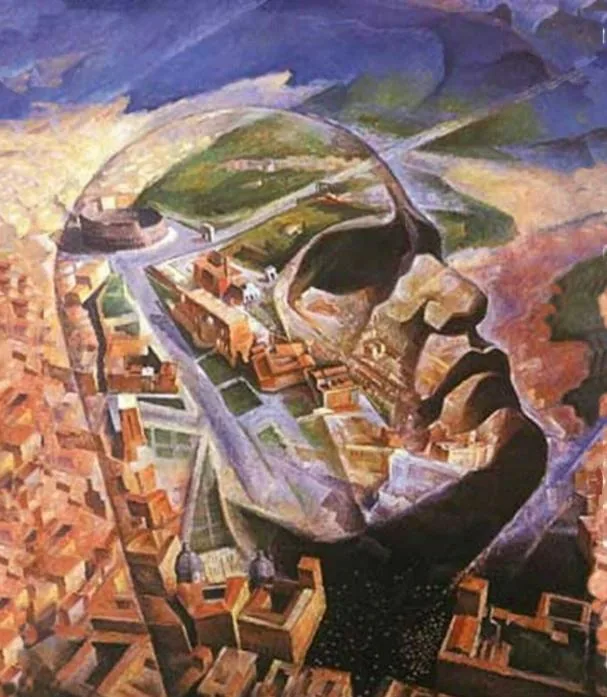
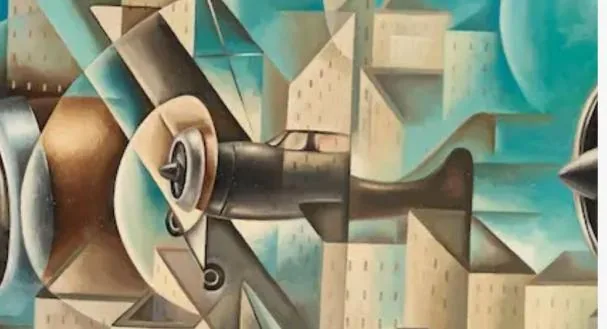
Emerging ten years later, in 1919, the fascist movement was a coalition of landowners frightened by socialism, resentful World War I veterans due to lack of social recognition, nationalists exalted by the poet Gabriele d’Annunzio and Marinetti’s futurists, hallucinated by the acceleration of the world, the roar of combustion engines, and the bold flight of airplanes. All under the baton of Benito Mussolini, a socialist-turned-master, a journalist with keen instinct, a tribune with great instinct, a limitless adventurer, a shrewd politician, a voracious male, who saw in the resentment of veterans a valuable lever of power. They were promoted by the Italian monarchy as a safety valve. Marinetti’s poetic breath ended in disaster, Mussolini was executed by partisans, and the crown fell.
The first futurists dreamed of war. Palantir’s executives believe it inevitable and want to take command. Read and judge.
Read more 15-day quarantine on board if the cruise affected by hantavirus arrives in the Canary Islands