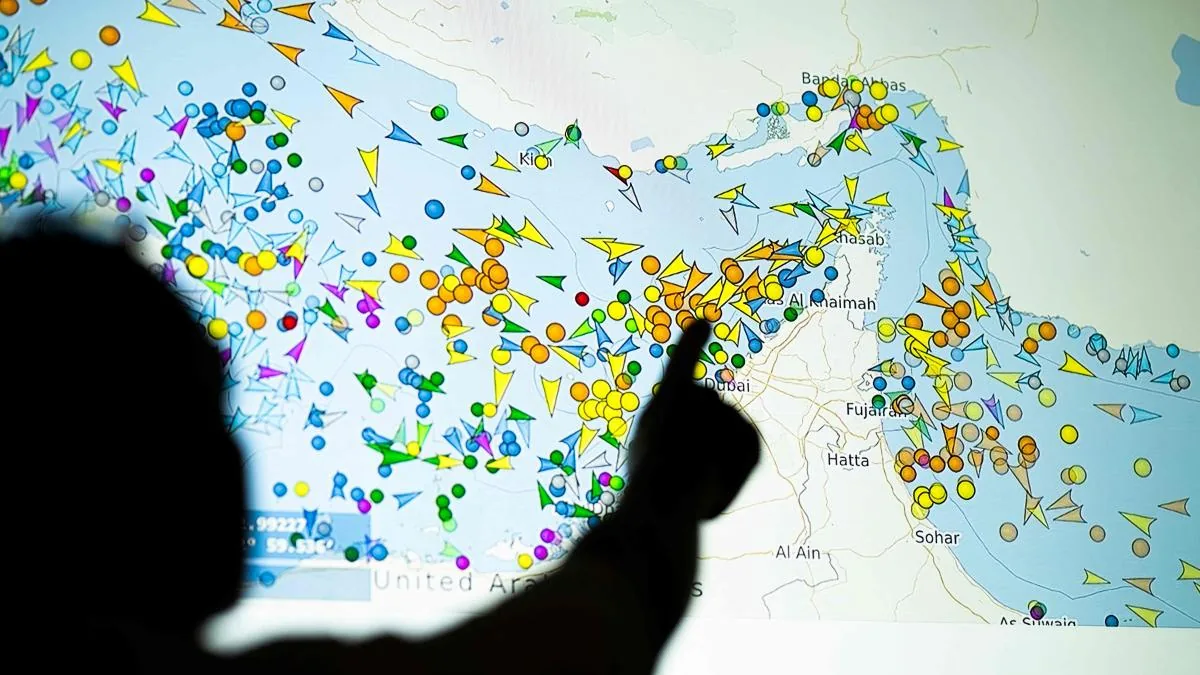
Uncertainty has settled in the Strait of Hormuz after a series of bombings by Iran against ships flying the flags of the United States, the UAE, and South Korea, as well as against an oil complex in the United Arab Emirates throughout Monday, casting doubt on Donald Trump’s initiative to “guide” the ships trapped in the maritime route. The ceasefire between Washington and Tehran is faltering as peace negotiations, mediated by Pakistan, continue to yield no results two months after the war began.
Read more Carlos Garaikoetxea, first lehendakari after Francoism, dies at 87 years old
In an interview with Fox News, Trump threatened to “wipe Iran off the face of the earth” if it attacks the U.S. Navy ships participating in his operation in Hormuz to help the ships exit the strategic strait, blocked by Tehran since the conflict began. “We have bases all over the world and all of them are supplied. We can use all that material and we will if necessary,” the president added, returning to his most bellicose tone, which he has frequently used in this war.
The Iranian attacks occurred on the same day the U.S. announced that its risky naval intervention is already underway. Although shipping companies remain reluctant to cross Hormuz without Tehran’s authorization, Central Command assured that this morning two U.S.-flagged merchant ships have successfully transited the maritime route.
Also read
In a post on its social media, U.S. Central Command confirmed that “U.S. forces are actively assisting efforts to restore commercial maritime transit.” The Iranian Revolutionary Guard, however, denied this: it stated that no tanker or commercial ship crossed the strait on Monday, adding that the U.S. announcement is “unfounded” and full of “blatant lies.”
The U.S. operation is part of the so-called Freedom Project, announced Sunday by President Trump. The Republican described the initiative as a “humanitarian gesture” requested by “neutral” countries worldwide, not involved in the war, and the Pentagon later confirmed that it was not about “escorting” the trapped ships, but guiding them along the safest route.
Admiral Brad Cooper, head of U.S. Central Command, provided more details of the plan on Monday. He stated that all mines have been cleared in a corridor of the strait, through which he encourages commercial ships to transit. He also reported that, in parallel, Washington has established a “defensive umbrella” with helicopters and combat aircraft, which have already sunk six small Iranian boats that threatened civilian vessels and U.S. Navy ships.
The United States claims two merchant ships have successfully transited the Strait of Hormuz, but Iran denies it
In announcing the plan, Trump insisted the goal is “humanitarian,” that is, to unblock the passage of stranded ships that, he said, “are running out of food and everything needed to remain on board healthily.” He added that if Iran tried to interfere with his initiative, as it has, he would respond “firmly.” Tehran, for its part, warned that all commercial and oil ships “must refrain from any attempt to transit without coordination with the armed forces.”
Read more Iran attacks United Arab Emirates with drones and sets fire to an oil complex
This morning, the Iranian state news agency Fars announced that the Navy Force of the Army fired two missiles at a U.S.-flagged frigate preparing to enter Hormuz. According to their version, they issued a “firm and quick warning,” which was “ignored” by the destroyer. However, U.S. Central Command denied this: “No U.S. Navy ship has been hit.”
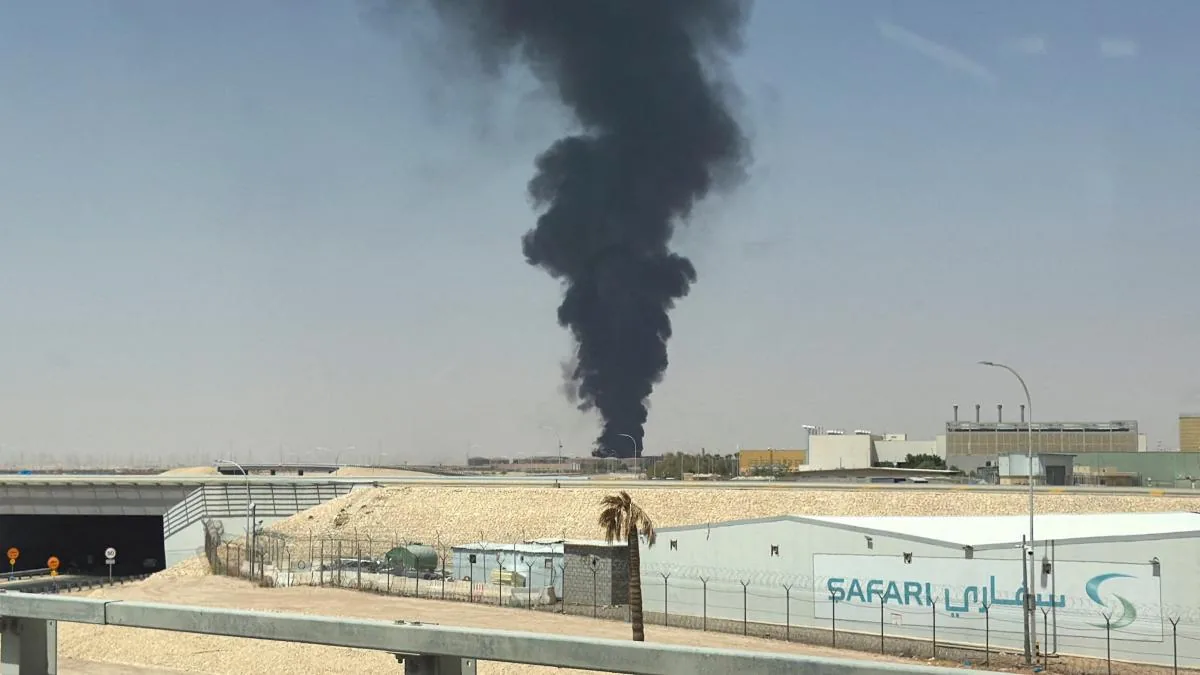
Additionally, the United Arab Emirates accused Iran of launching a drone attack against a tanker owned by ADNOC, its state oil company, marking the first recorded aggression of this type since the fragile ceasefire between the U.S. and Iran began. Hours later, a fire was reported at an oil facility in Fujairah, an important Emirati city in the Gulf of Oman, near the strait.
According to Emirati authorities, the facility was attacked by Iranian drones, which could effectively mark the end of the truce, or at least a violation of it. Shortly before, the Ministry of Defense had reported the launch of four other missiles from the Persian country, three of which were intercepted and one fell into the sea.
Also read
Meanwhile, the South Korean government said it was verifying a possible attack against a South Korean-flagged ship in the strait, after which no casualties have been reported. According to the Ministry of Foreign Affairs announcement, there was an “explosion” followed by a fire on the ship, which had 24 crew members on board.
The U.S. plan to “guide” ships through the strait has not yet convinced the maritime transport sector, which remains reluctant to transit Hormuz if the operation is not also agreed upon with Iran. “There is a risk that hostilities will break out again,” Jakob Larsen, head of security at the International and Baltic Maritime Council, representing maritime sector companies, told The New York Times. “It is unclear whether the Freedom Project is sustainable in the long term or if it will be a limited operation to get some of the trapped ships out.”
Monday’s bombings along the strait demonstrate, once again, the fragility of the indefinite truce between Iran and the U.S., announced on April 21 by Trump after Pakistan’s mediation, just as the initial two-week ceasefire was about to expire. Since then, the two parties have been unable to sit at the negotiating table, despite two announcements by Trump that he would send his envoys, given Tehran’s no-show while the U.S. naval blockade of its ports continues.
Read more A 26-year-old man arrested for fatally stabbing another in a hair salon in Valencia