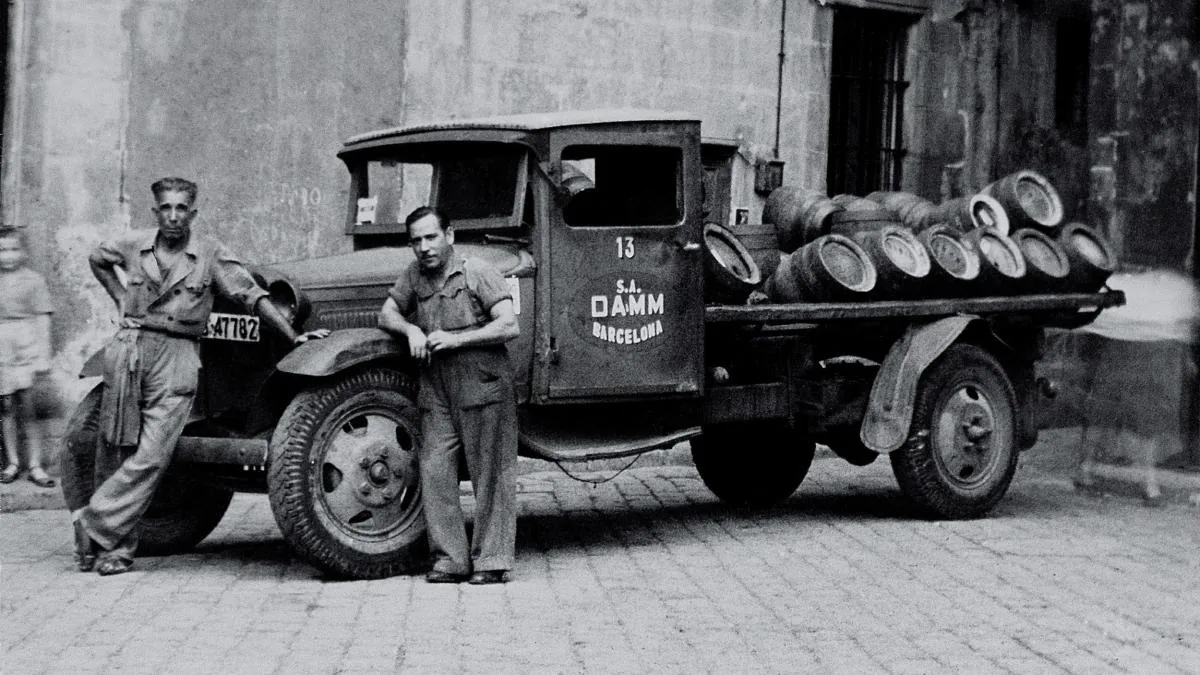
Few Catalan industrial companies can boast of having been born in the Eixample of Barcelona. And even fewer of having gone through three different centuries. Damm is one of them. Like most family businesses, it keeps the name of its founder. In 1876, the Alsatian master brewer August Kuentzmann and Joseph Damm, who had emigrated to Barcelona fleeing the Franco-Prussian war, rented a building on Viladomat street. It was a brewery that would end up becoming the seed of a food and hospitality company that today invoices 2.025 billion euros, earns 175 million, and has 16 factories of beers, waters, soft drinks, and other beverages. Present in 130 countries, it is one of the best-known Catalan multinationals. Today, as the company celebrates its 150 years of life, the Carceller family is its main shareholder.
Read more The crazy race of the magic sneakers: this is how the two-hour marathon was broken

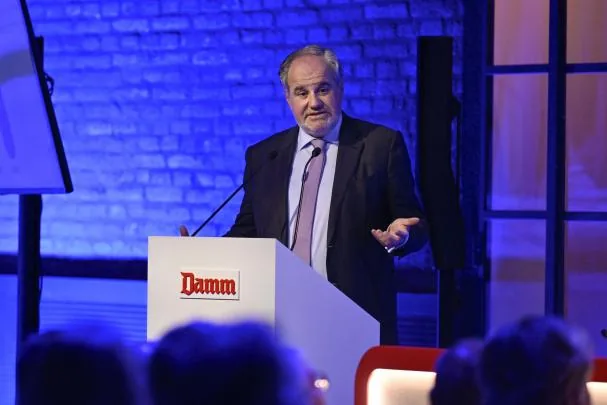
“In the last three decades, we have undergone a profound transformation. We have gone from being a brewery with a deep-rooted local tradition to establishing ourselves as a global food and beverage group with presence in markets around the world,” explains Demetrio Carceller, CEO of Damm. The company bottles 21 million hectoliters annually, far from the first beer they brewed in Barcelona in the 19th century, adapted to the warm climate and local tastes, with barley malt, rice, and hops. It is the same recipe that contains a fifth like those that can be found today in any bar on Viladomat street.
The turnover of the Catalan group was 2.025 billion euros with data from 2024, the latest available year
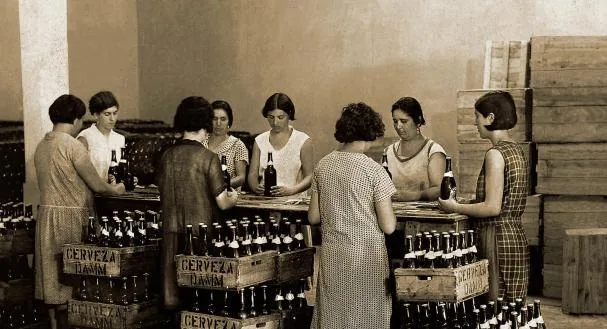
The well-known Estrella Dorada brand appeared in 1916. It gained great popularity and became Damm’s flagship. Like many other companies, it was collectivized during the Spanish Civil War, although it never stopped producing. The post-war period was tougher, as the shortage of raw materials led it to close for a few months. In the 1950s, Damm launched the Voll-Damm brand and a decade later made the leap outside Catalonia with the Estrella de Levante factory in Espinardo, Murcia.
At the end of the last millennium, the company started diversification with Aguas de San Martin de Veri and, years later, with distribution activities. In 2011, it entered the restaurant business with the incorporation of Grupo Rodilla. Additionally, Damm has acquired 50% of two other historic companies in decline, Cacaolat and Letona, in a tough bidding war. Internationally, Damm began producing abroad for the first time in 2008 with the purchase of the Santarém factory in Portugal.
Today Damm is much more than a brewery. “We have just completed an internal reorganization, structured into three business units: hospitality, food, and international,” Carceller details. Looking ahead, “our primary goal is to expand our position both in the national and international markets.” To do this, Carceller wants to “drive the growth of our beer and soft drink brands, but also explore and develop new categories that respond to changes in consumption habits.”
Read more “Catalunya has a very solid biopharmaceutical ecosystem”
The company’s net profit – controlled by the Carceller family – is 170 million euros
Perhaps one of the biggest challenges the company faces is the decline in alcoholic beverage consumption. “The trend towards more moderate alcohol consumption is a reality, especially among young people. We are a beverage company, not just a brewery, and that gives us a strategic flexibility that not all players in the sector have,” reflects Damm’s CEO.
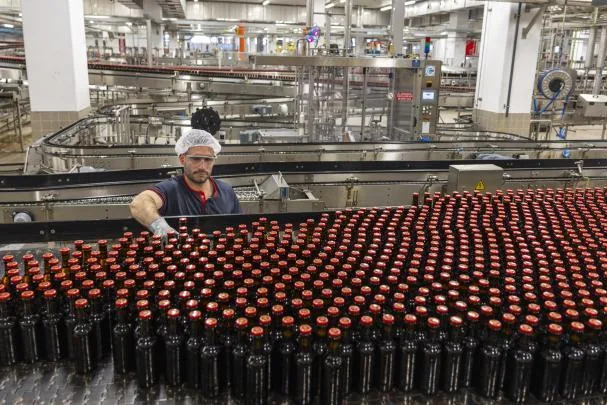
One such example is the recent alliance with Nestlé to produce the popular Nestea drink. “It has allowed us to expand our beverage portfolio with a leading brand, access new consumer segments, and gain presence in categories where we previously had no relevant position. Regarding non-carbonated drinks, we are exploring this and many other growth avenues.”
Damm has gone through so many stages that it even reached the stock market. Something that seems unlikely to happen again: “At this moment we are not considering it,” Carceller notes.