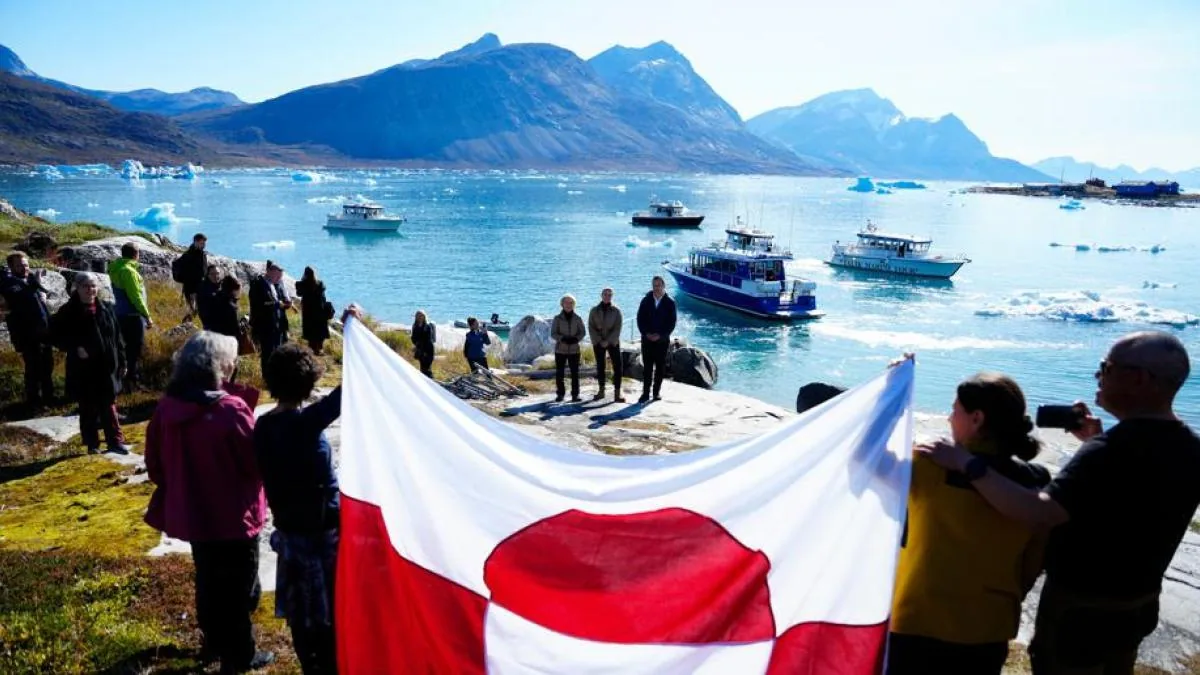
NATO welcomed on Saturday the agreement reached between the United States, Denmark, and Greenland to strengthen the U.S. presence and security on the Arctic island, a pact announced by Donald Trump after months of tensions between Washington and Copenhagen over the U.S. president’s claims on the territory.
Read more Barça is looking for an investor to build the new Palau Blaugrana
“The Arctic and the North Atlantic are fundamental to our collective security,” the Alliance stated, considering that the agreement will advance security, stability, and cooperation in the region and assures it will continue to strengthen its own presence in the Arctic.
The pact foresees a significant U.S. military presence in Greenland and mechanisms to prevent U.S. adversaries from establishing bases or deploying forces on the island. However, the main details have not yet been made public, including the scale of that military presence or the decision-making scope Washington will have. Its signing is scheduled for next week, coinciding with the United Nations General Assembly.
Trump announced on Friday that the agreement will grant the United States “permanent control” over Greenland’s security and assured that no adversary will be able to establish a military presence there or make certain investments without Washington’s approval.
Denmark and Greenland qualified this interpretation on Saturday. Both governments maintain that the pact does not imply a transfer of sovereignty and recognizes both the territorial integrity of the Kingdom of Denmark and the right of Greenlanders to self-determination.
The agreement aims to close a crisis opened for months by Trump’s repeated statements about the need for the United States to control Greenland for national security reasons. The threats strained relations between two NATO members and pushed Washington, Copenhagen, and Nuuk to negotiate a solution that would strengthen the island’s defense without formally changing its sovereignty.
The U.S. presence in Greenland, in any case, is not new. The United States maintains the Pituffik space base there, key for early warning systems and Arctic surveillance, under the defense agreement signed with Denmark in 1951.
The strategic relevance of the region has also increased for NATO due to the growing activity of Russia and China. The Alliance launched this year the Arctic Sentry initiative to strengthen surveillance and defense of the northern flank, a strategy in which allies with territory or direct interests in the Arctic especially participate.
Read more Shakira ignites Madrid