Donald Trump has a yardstick, euphemistically speaking, to measure immigrants. During his first term, the U.S. president contrasted those coming from countries that were “shitholes” (Haiti and African territories, according to him) with his favorites from Norway.
Read more Robles awards CNI agents amid controversy over Ceuta warnings
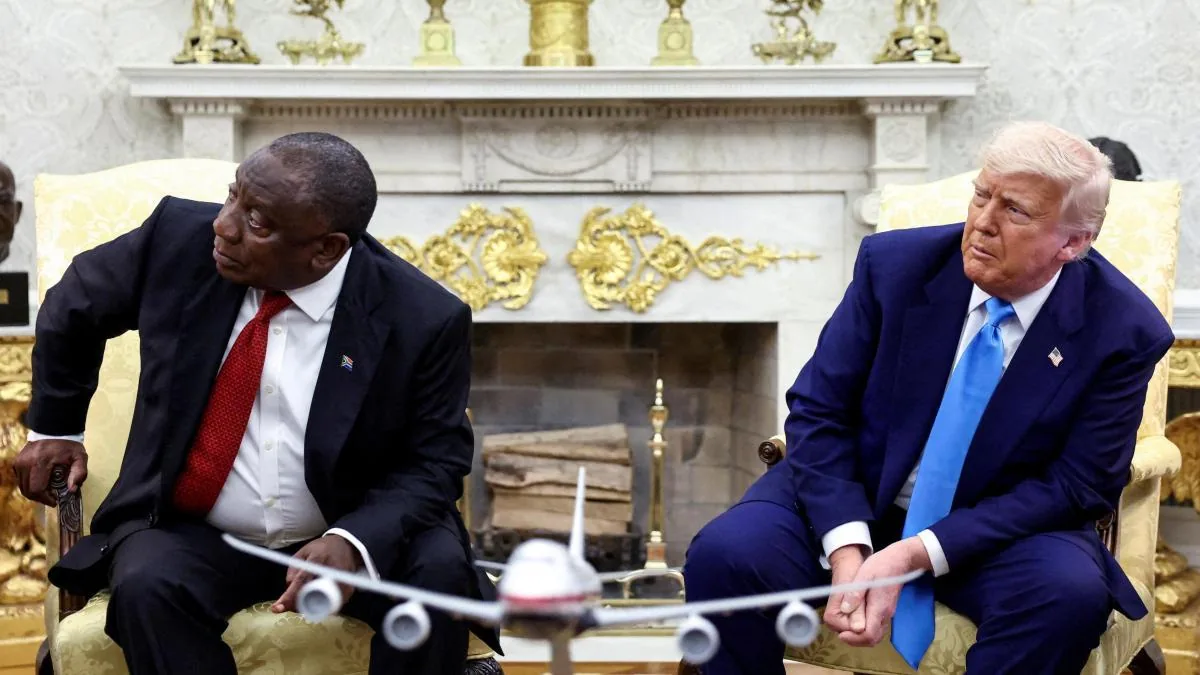
Back at the White House, the Republican refined that yardstick by establishing differences within the same country: South Africa. The U.S. government announced visa restrictions this week for some citizens of that territory, while the Trump Administration continues to claim that the Pretoria government discriminates against white citizens on racial grounds, who constitute a minority in the country and whom the White House accepts as refugees, despite setbacks that have arisen.
The visa restriction is aimed at people accused of discriminating against the white minority in South Africa, in the latest escalation of tensions between the two countries. Trump has spent much of his new term baselessly claiming that there is a white genocide in South Africa and attacking affirmative action policies to combat racial inequality, as he has done domestically.
According to Trump, these policies are intended to discriminate against Afrikaners, mainly descendants of Dutch and French settlers, who ruled the country with an iron fist during apartheid. That regime repressed the black majority and kept the white population safe and in a situation of economic prosperity. Since then, and despite the emergence of a black elite, 38% of black citizens are unemployed, compared to only 8% of whites.
“The U.S. remains deeply concerned about government-sponsored racial crimes and discrimination against Afrikaners and other minority populations in South Africa, including race-based discriminatory legislation, threats of land expropriation without compensation, and incitement to racial violence through chants and dehumanizing slogans,” emphasized U.S. Secretary of State Marco Rubio this week.
According to Rubio, “the South African people are being abandoned by a government that is destroying their economy due to its obsessive pursuit of racial grievances against the Afrikaner minority,” and Pretoria “has not adequately addressed rural crime, violent and dehumanizing rhetoric, and race-based discriminatory policies.”
In contrast, Trump assured in February last year that the U.S. would accept Afrikaners as refugees who are victims of racism in their country. Many of those white citizens then thought someone was listening to them.
Read more Meta censors an ad about a Virginia Woolf play that contains the word ‘feminism’
But in recent months, dozens of applicants to the refugee program have been rejected, causing dismay and confusion over being forced to face in their country what Trump has falsely described as a genocide.
After the executive order a year and a half ago on the so-called resettlement program, which was expanded to include members of a racial minority, the first group of 68 white South Africans arrived in the U.S. that May, while, in parallel, Washington closed the refugee program to anyone else fleeing war and persecution.
Since then, more than 13,000 Afrikaners have moved to U.S. territory, according to State Department data. Arrivals accelerated in August with more than 2,600 people admitted.
However, since last June, Facebook and WhatsApp groups of white South African applicants, both potential and already accepted, began filling with messages about people who had started receiving rejection letters for their refugee applications.
“We are writing to inform you that, after reviewing your application, USCIS [U.S. Citizenship and Immigration Services] has determined that your application does not meet the requirements to continue being processed for resettlement in the United States at this time. This decision is not appealable,” The Guardian reported after reviewing several of those notifications. It is unclear how many people have been deemed ineligible.
Read more A huge Georgian restaurant sets up in the former Bulevard Rosa