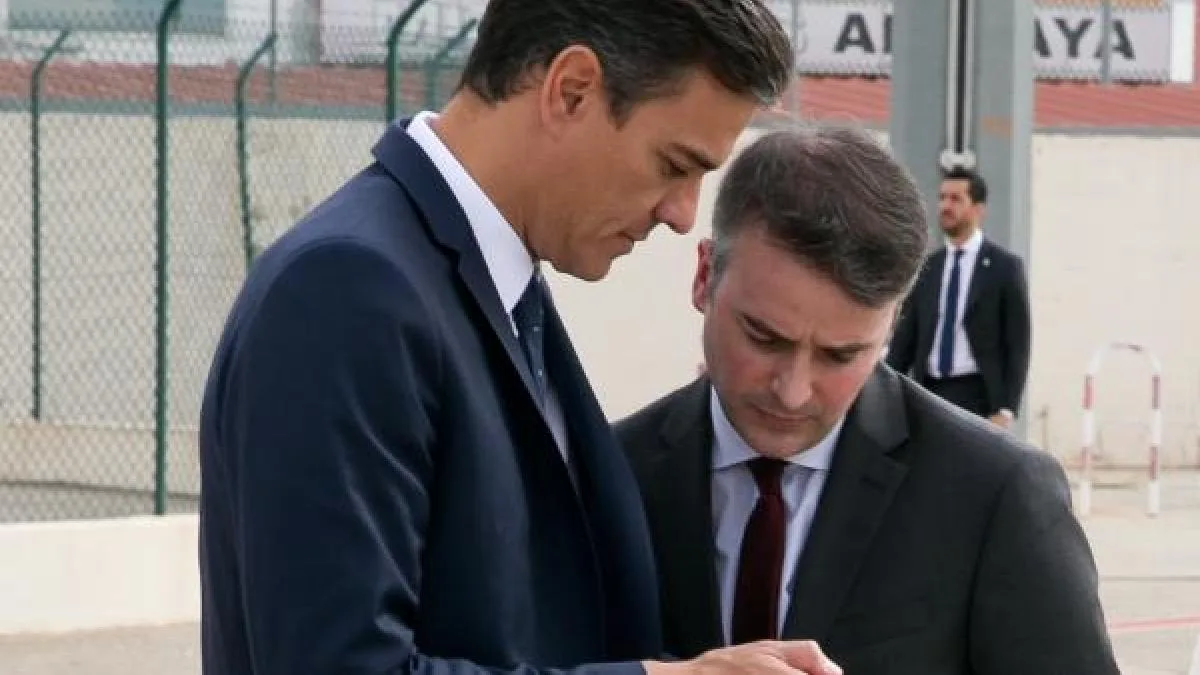
The Bunker
The chief of staff must be the president’s pillow, his squire, and the most trusted person. It is a relationship based on professionalism, honesty, and hierarchy, never on cronyism, partisanship, or sycophancy.
Read more The rift between Florenci and Jordi Pujol comes to light
And there they see the Director on his way to the operating room. He is going down from the floor to the basement in a large elevator and carries an IV line prepared for anesthesia on his arm. He is escorted to the operating room by Moncloa staff, and when he enters the operating room, the chief inspector of his security team will remain restless in an adjacent room watching through the door everything the surgeons do during the duration of the procedure.
But where is he? And how did he get there?
Let’s go back in time again.
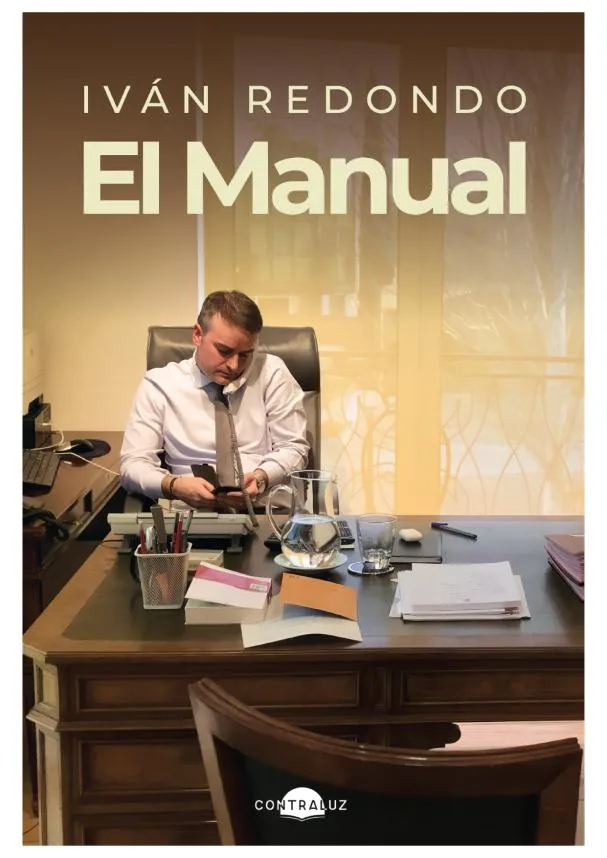
The Manual
Iván Redondo
Backlight
432 pages
On May 7, The Manual arrives in bookstores, the first book by political advisor and strategist Iván Redondo, in which he shares the intricacies of power in Spain during a period he experienced firsthand alongside President Pedro Sánchez. He served as Secretary of State, Secretary of the National Security Council, and Director of the Cabinet of the Presidency of the Government (2018-2021). The book presentation will take place tomorrow, Monday, at the Bellas Artes Theater in Madrid at 7 p.m., and another presentation will soon be held in Barcelona. In this editorial preview, Redondo (the Director) reveals the heart surgery he underwent in December 2020.
Do you remember him? In Moncloa, the building called the Bunker is the headquarters of the National Security Department (DSN). It has three floors and includes a hospital and cabins with a maximum capacity of one hundred people. It also has two special bedrooms with offices arranged for the king and the prime minister in the event of a national security threat. The name is not figurative; it is a real bunker. It was built as a refuge against possible states of exception or alarm and, therefore, is also equipped with a food storage to survive in case confinement is necessary for a long period of time.
(…)
Didn’t I tell you? The Bunker also has a discreet gym that officially belongs to the National Security Department and, like everything in Moncloa, there is a prior protocol for its use. Since the Bunker has healthcare professionals, it is mandatory to undergo medical tests before using its facilities. Not much, it was a small cardiological check-up that includes a cardiopulmonary auscultation, a blood pressure measurement, and an electrocardiogram. It is done with everyone, without exception, regardless of their rank.
When they measured the Director’s blood pressure, the medical staff were struck by his pulse. His blood pressure was too high. It was at the limit and, for his age, even despite the stress he might have been enduring, a bit elevated. So, since it was Friday, they decided to put him on a Holter over the weekend, a diagnostic test in which a device records the heart’s activity for several hours through electrodes placed on the torso. The goal was to observe whether that high blood pressure was occasional and due to stress or if it remained at all times, for example, while sleeping, which would rule out the stress component and require considering other problems. They advised him that during those days it would be optimal to follow a low-salt diet and avoid pre-cooked foods to draw an accurate conclusion about his condition.
(…)
From there, many tests were done in the following weeks until they found what they were looking for. He had an ASD, or atrial septal defect, a congenital heart disease commonly known as “a hole in the heart,” which yes, sounds very poetic, but is, in a much more prosaic—and serious—way, a defect in the wall (the atrial septum) between the two upper chambers of the heart, the right and left atria, causing oxygenated blood received by the left side of the heart to pass from the left atrium (high pressure) through the hole in the septum to the right atrium (low pressure), the side of the heart that carries deoxygenated blood to the lungs, which caused the blood to mix. This leads to increased blood flow on the right side of the heart and lungs. Over time, this additional blood volume stresses the heart and causes the right atrium, ventricle, and pulmonary arteries to dilate, becoming wider, which can eventually lead to heart failure, pulmonary hypertension, or arrhythmias in the future due to the size of the heart.
(…)
At thirty-nine years old, he had to undergo heart surgery; it was essential
When something like this happens, the first thing one asks is “why me”; then one thinks about the possibility of dying and, finally, although it is usually advised not to, one ends up consulting the internet for the latest scientific publications to soak up all kinds of concepts and grammars that make up a completely unknown new language that one never wanted to learn. But, since he listens to absolutely no one, the Director keeps asking for more and more information, even begging his doctor to send him the latest articles published at Harvard on the subject.
(…)
That’s how it was, the world suddenly witnessed a chain of unprecedented images and events while the doctors explained to the Director very clearly that, at thirty-nine years old, he had to undergo heart surgery. It was absolutely essential to place a device to fix his hole.
The situation was clear and somewhat unusual. The doctors had to ensure all his vital signs were optimal and kept repeating that his emotional and physical state had to be optimal, something really difficult to achieve, especially emotionally. But the surgery was not only inevitable but imminent; it would take place on December 17, 2020, a carefully considered day, a Thursday that could easily be combined with Friday and was also very discreet at the doorstep of Christmas.
(…)
There was the Director. Already in the operating room, about to be operated on. The anesthetist began asking him questions about his past. It was simply to pass the time so that the general anesthesia would take effect. He answered with increasing difficulty.
Scientific advances have determined that during general anesthesia, and with adequate depth, the unconscious state resembles non-REM sleep, which is why, a priori, we would think it is not so common to dream during surgery. The reality is that dreaming during anesthesia is possible, but it is a dream conditioned by characteristics related to the anesthetic technique used, certain patient-specific characteristics, and their emotional state. It is common in the operating room for the doctor, before starting anesthesia, to ask the patient to think of something pleasant, a hobby or a vacation. And that is what they were doing with the Director by reminding him of some of his electoral battles. He felt his eyes closing, they put on the respirator, and he began to remember in flashes.
His wife came to mind, snapshots from when she was not yet his wife
His wife came to mind, snapshots from when she was not yet his wife, there she was with those Bonaventure jeans that suited her so well. He remembered her at eighteen waiting for him by the Urumea river to go up with other friends to the Deusto University campus in Donosti. That love story of two people who met by chance and, although it took them a while to realize it, were waiting for each other for life.
Between flashes, he saw glimpses of the first victory in Extremadura, the greatest comeback in the history of an autonomous election in Spain; and the day of his wedding in the church atop Hondarribia with family and friends, and that phrase he said to his wife after putting the ring on her finger that made the Italian monk with a ponytail, so picturesque, who married them smile: “It’s about time we meet our children.”
(…)
His sleep was already deep. And whether it was a dream or not, like a time travel, he was sixteen again, at the Young Play nightclub, Pont Aeri was playing, and he was dancing to Flying Free, flying free accepting his dream without knowing when he would wake up. Or not.
Read more Fans, cynics, or crazy?