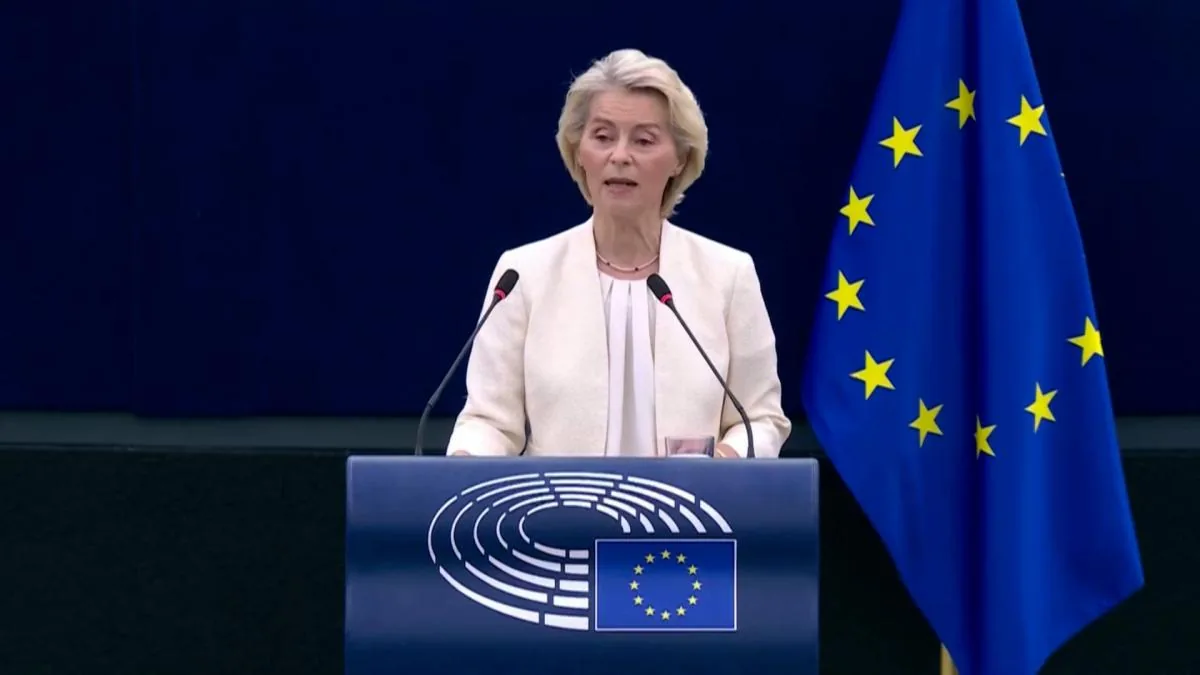






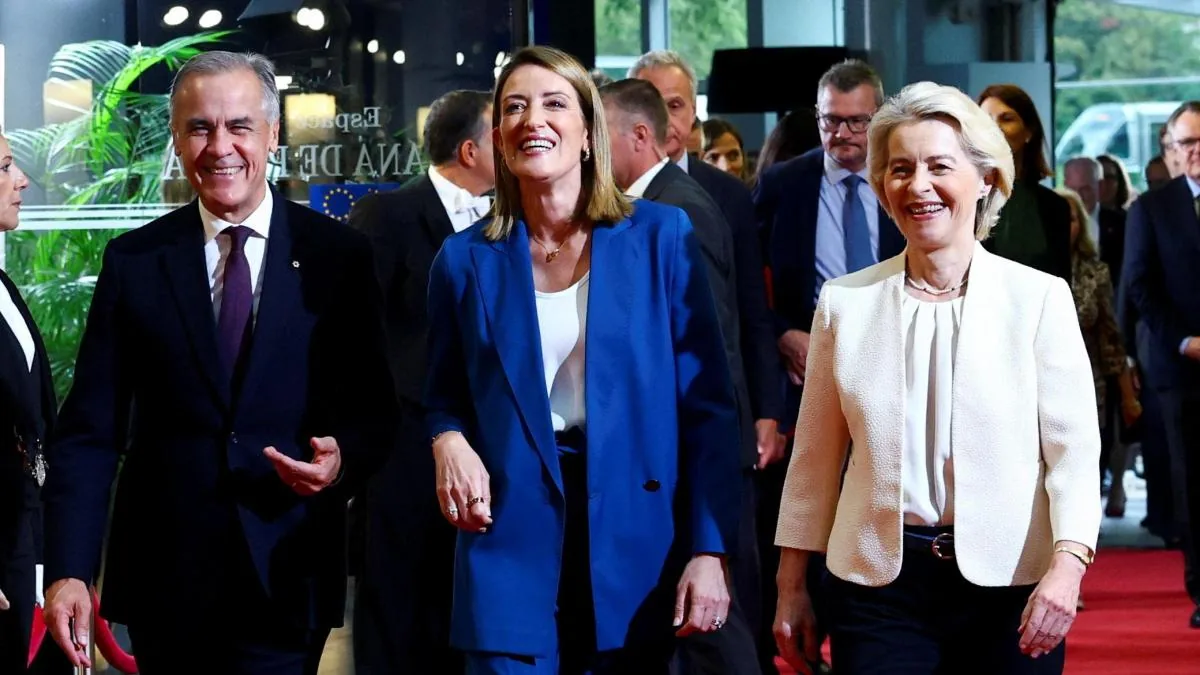
Ursula von der Leyen, President of the Commission, began her speech this Wednesday in the European Parliament on the state of the Union by noting a contradiction: Europe is stronger than ever but, nevertheless, the feeling is quite the opposite. Pessimism seems to have taken hold of Europeans, although the idea of Europe, the building of a community of values, peace, and prosperity, attracts many nations, some as distant as Canada.
The world, as Von der Leyen acknowledged, is “openly hostile” to a project like the European one. It is full of dangers, of chain crises that affect quality of life and favor extremism.
The threats are well known. They come mainly from Russia, China, and the United States. Many materialize in hybrid attacks, some worsened by the lack of adequate responses from the EU itself, unable to adapt to the speed of changes, to “the exceptionality of these times,” as Von der Leyen admitted.
Europe protects itself, invests more in defense and technology, tries to shield children from the toxicity of social networks, prepares for artificial intelligence that scares more than it excites, diversifies its energy sources, and seeks new trading partners to avoid depending so much on China.
It knows what it has to do. It is aware of the strength of its internal market. It knows that when it removes barriers to capital flow and banking concentration, its extraordinary saving capacity will serve to create wealth in Europe. But it is difficult for each of the 27 states to benefit from greater integration. And this is another contradiction: the common benefit of greater integration is undeniable, but at the same time, it is not clear what the particular benefit of each state will be. There seems to be no answer to a very simple question: What do I gain if we all win?
Read more A study in Barcelona will determine if Ozempic promotes female fertility
Von der Leyen insists that Europeans will not move forward if we do not strengthen the union. The rise of the far right, however, indicates that millions of Europeans are asking for more borders and more security even at the cost of fewer freedoms. They do not trust that the EU is capable of protecting their identity. They do not want more immigrants. They reject tolerance and inclusion, fundamental values of the European project.
Ultranationalism seems to excite more than Europeanism. Radical leaders are more popular than Europeanists. Von der Leyen admits that “we must win back the hearts of Europeans, make the feeling of belonging to something greater than ourselves reborn.” Next year she will gather “the brightest minds” in a congress that must be, above all, a source of inspiration and hope.
What Von der Leyen seeks is what the Muslim scholar Ibn Khaldun defined in the 14th century as abasiya, the group spirit, social cohesion, and solidarity from which the political power of a community arises. Ibn Khaldun said that a leader is needed for abasiya to take hold, a leader who unites strength and legitimacy, someone to follow and fight with. Europe does not have it. Canada does.
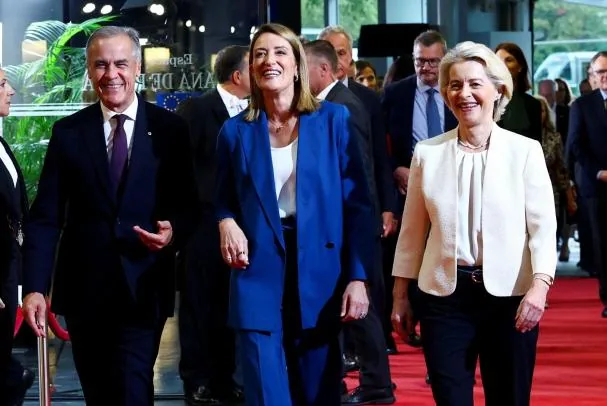
Prime Minister Mark Carney, sitting this morning in the first seat of the European Parliament, offers confidence, courage, and common sense, against the brutalism of the Trump administration. He seems more a leader of yesterday than today, exactly what Europe needs to revive its spirit.
Read more Six injured in a fight with katanas, machetes, and sticks in Lleida