








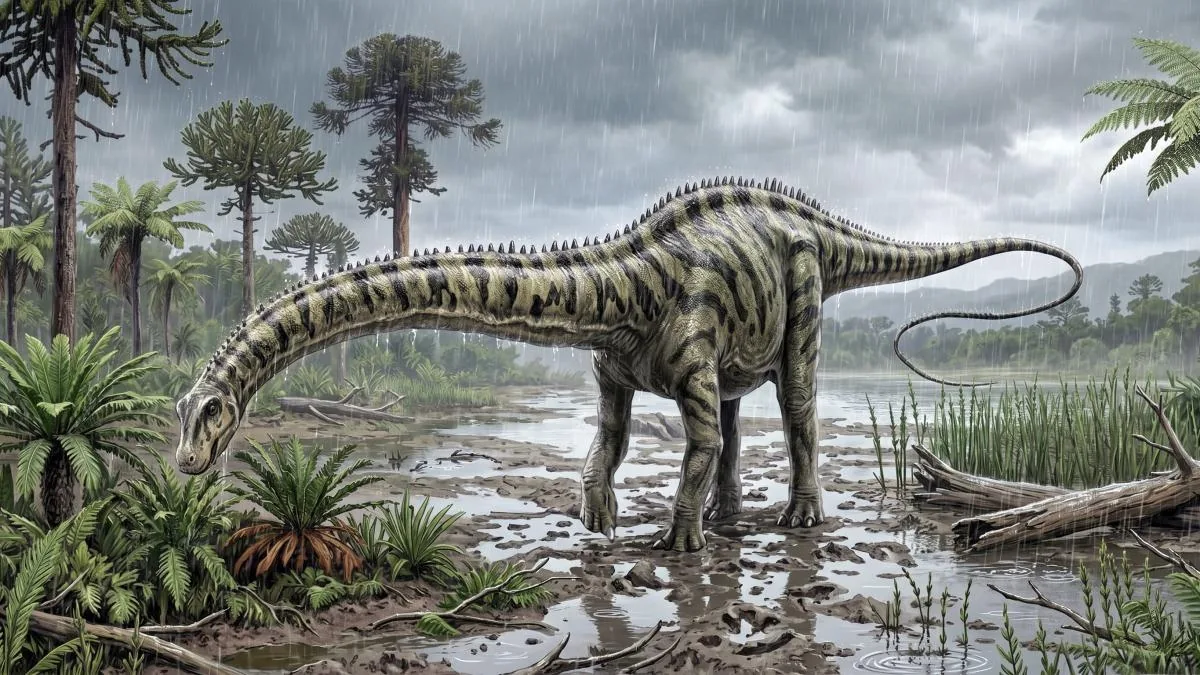
The Teruel-Dinópolis Paleontological Joint Foundation has made an extraordinary discovery in the world of paleontology. Specifically, researchers have found fossils of a sauropod dinosaur from the La Tejería site in the municipality of El Castellar. After the corresponding analysis, the remains have been identified as belonging to the genus Diplodocus.
Their discovery “challenges our understanding of the distribution of dinosaurs during the Late Jurassic,” write the researchers in the prestigious scientific journal Journal of Vertebrate Paleontology, where they have published their results.
The studied specimen from El Castellar comes from sediments dating to the end of the Jurassic period
The Diplodocus is one of the most emblematic and iconic dinosaurs. It is known to have lived at the end of the Late Jurassic period, and until now it was believed to have only inhabited the American continent. After the discovery, scientists assert that this is the first evidence of its existence in Europe.
“It is one of the most complete diplodocids discovered to date in Europe,” says Sergio Sánchez Fenollosa, author of the article and paleontologist specialized in Evolutionary Biodiversity at the University of Valencia. According to him, the excavation result constitutes one of the “strongest” paleontological proofs of episodes of dispersal and faunal exchange between both continents through the proto-Atlantic Ocean during the Late Jurassic, something that allows “a better understanding of the Iberian Mesozoic ecosystems and the diversity of sauropod dinosaurs that inhabited Jurassic Europe.”
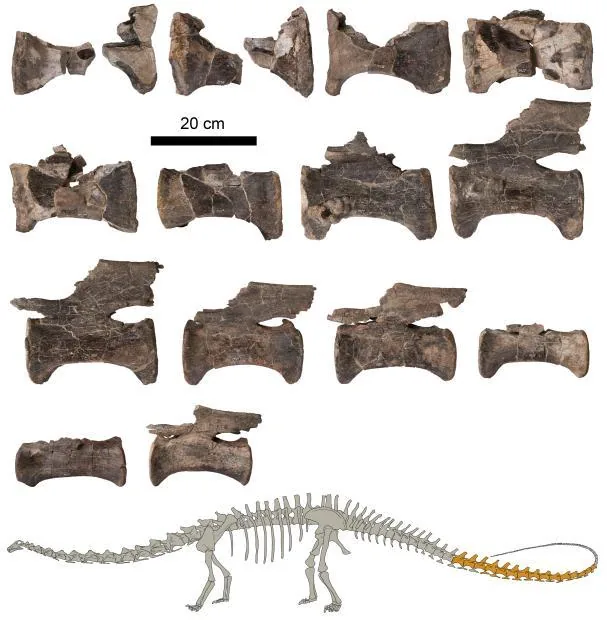
Work at the El Castellar site has been ongoing for 24 years. After several campaigns, paleontologists from the Dinópolis Foundation found 14 well-preserved caudal vertebrae (from the tail) and several V-shaped bones (hemal arches or chevrons), whose in-depth study began two years ago.
“With each analysis we saw that it had characteristics similar to the genus Diplodocus,” says Alberto Cobos, managing director of the Dinópolis Foundation, who expresses being “excited” about the discovery both personally and scientifically.
Read more Trial set for judgment against Meta for the dismissal of 2,100 workers in Barcelona
According to him, dinosaur remains from the end of the Jurassic and the beginning of the Cretaceous are relatively abundant on the Iberian Peninsula, especially on the Portuguese coast, the Asturian coast, and the Iberian mountain range. The presence of the specimen from Teruel, which lived 150 million years ago, provides evidence that these specimens could migrate then between North America and Europe by crossing temporary land bridges that emerged when the proto-Atlantic went through phases of marine regression. “They were the last to share a territory now far apart,” he summarizes.
Sauropods, popularly known as “long-necks,” were herbivorous, quadrupedal animals with long tails and necks and a relatively small head in relation to the total length of their body. Within this group, diplodocids stand out mainly for their extremely long tails.
The Diplodocus is one of the most recognizable dinosaurs in popular culture since its discovery in the United States in 1878. For this reason, and since the early 20th century, replicas of its skeleton have been exhibited in the main natural history museums worldwide, becoming a symbol of global paleontology. Its presence in exhibitions and audiovisual productions about dinosaurs has helped make it one of the most well-known dinosaurs to the general public.
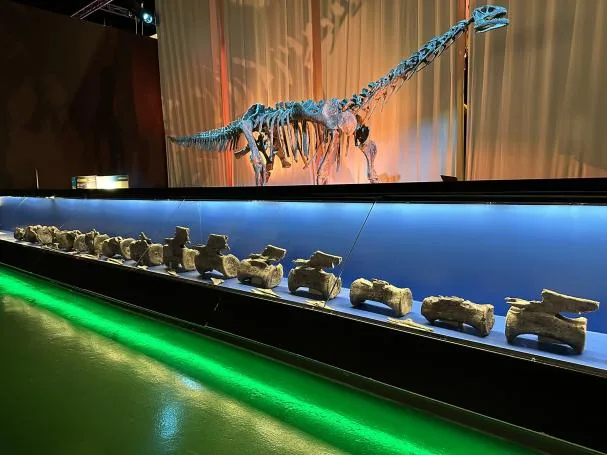
The unearthed fossils are displayed in the dinosaur hall of the Aragonese Museum of Paleontology, in Dinópolis (Teruel). Meanwhile, paleontologists continue engaged in new projects, not ruling out the possibility of new remains of this well-known specimen appearing.
Read more What we want, deep down, are classic series (and well made)