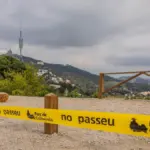






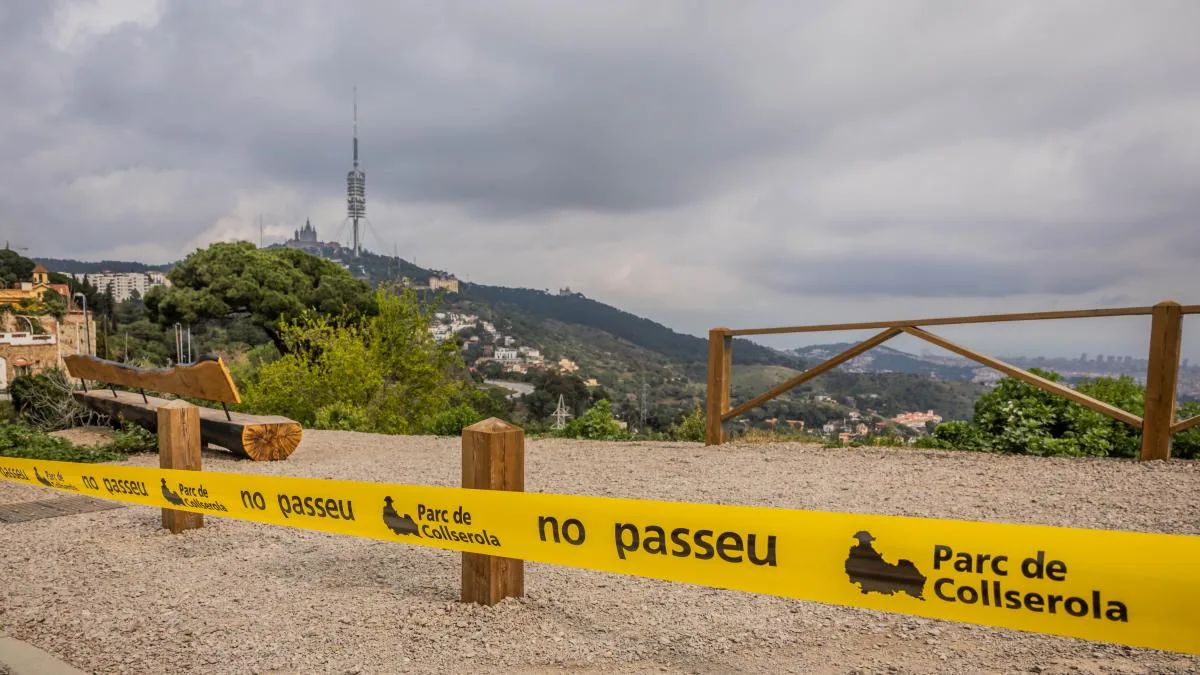
After nine months of restrictions on the natural environment, especially with the total ban on access to the green lung of Collserola on March 12, due to the swine fever crisis in 19 municipalities of Vallès Occidental, Baix Llobregat, and Barcelona, the patience of citizens, businesses, and affected entities is reaching its limit.
Read more Skin spots: why treating them from within can make a difference
After two weeks without positive cases of infected wild boars, on August 25, the Minister of Agriculture, Òscar Ordeig, announced on RAC1 a reopening schedule for Collserola: “in autumn – without specifying the month –, if there are no more positive cases.” To which he quickly clarified: “as soon as the data and experts advise, we will ease the access restrictions to the natural environment, but without risking the operations.”
The announcement of another three months of closure dashes the hopes of those affected
But this hopeful announcement faded when Agriculture confirmed the appearance of new infected wild boar carcasses in the middle of the natural park. And last Wednesday, the ‘stubborn’ minister dealt the final blow to those faint hopes by announcing on TV3 that the access restrictions to the Collserola natural park will be extended for at least another three months.
The hospitality sector is the one that feels the prolongation of the restrictions most harshly
As the consulted experts insist, “there is still much work to be done,” since to be able to say that Catalonia is a swine fever-free zone “a whole year must pass without detecting any positive cases.”
In this scenario, the citizen mobilization for the Generalitat to reopen some access points to Collserola has become a popular outcry and has increased in recent months. In June, about 200 people took part in a protest walk of civil disobedience under the slogan “We reopen Collserola,” starting on the Can Catà path in Cerdanyola and ending at Can Coll in Sant Cugat. The police identified several protesters considering it an illegal demonstration.
The Muntanyenc Club or the Sant Cugat Cycling Union have warned about the impact of the closure on their activities and demand that the Government enable “pilot zones to be able to resume Nordic walking, hiking, and cycling.” The mayor of this city, Josep Maria Vallès, has shown himself to be the most involved politician in the demand for the partial reopening of Collserola, with repeated requests to Minister Ordeig, the latest by letter, on the same day the Minister of Agriculture took for granted the maintenance of restrictions at least for the rest of 2026.
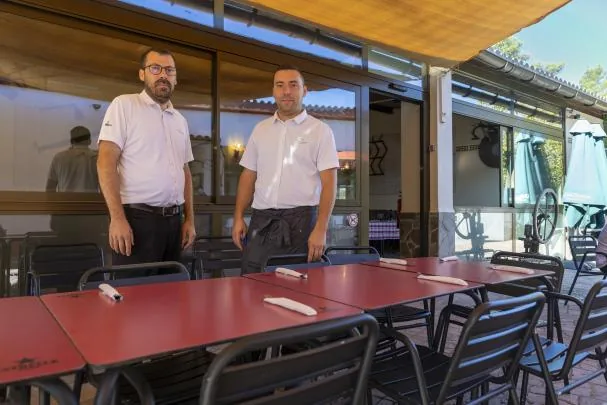
The economic blow is most felt in the hospitality sector of the park, where there are about ten restaurants, another of riding schools, and several businesses that sell products from the farmers of Collserola. Isidre Jané, head of the farmhouse restaurant Can Jané in Sant Cugat, has reached the limit of patience. Accompanied by his brother Oriol and his father Gabino – already retired –, he acknowledges they are going through a painful moment. “We are suffering a crisis much worse than the one restaurants experienced during the pandemic because then the situation was the same for everyone. Due to the swine fever, the Generalitat told us: ‘you can stay open, but we close the park.’ It has limited access so much that it has caused us terrible damage,” they exclaim. “So far, we have lost almost 50% of our income!” they lament.
Read more Pressure heats Everest
The request from Sant Cugat
Enable spaces for mental health
The mayor of Sant Cugat, Josep Maria Vallès, sent a letter to the minister in May to urgently study “with all guarantees” enabling spaces “for health and well-being.” He conveyed that the closure limits the activities of more than 5,000 people. Ordeig committed to studying it. Since then, there have been more letters. Without results.
The Janés are exhausted by the uncertainty. They have run this family restaurant, specialized in Catalan cuisine and “fork breakfasts,” for 20 years. They open from Friday to Sunday and until nine months ago it was a usual stop for cyclists and hikers. Now, their weekends are practically a desert. “Before, on a Sunday, we served about 80-90 breakfasts and now, at most, a dozen.” This 18th-century farmhouse is nestled in the middle of the forest, but it can be accessed by car, bicycle, or on foot via the Horta road, following a paved path and a stretch of track.
The aid promised a few days ago, the only positive news for businesses on the brink of ruin
“We have missed the best times of the business: Christmas – before we served 180 diners –, the calçots season, and spring, with the arrival of good weather.” Oriol acknowledges they have “felt very abandoned because we have received zero aid from the Government.” “Fortunately, the place is owned and we work with our wives. We have had to lay off three employees. When everything is resolved, it will be difficult to hire them again because they will have found other ways to make a living and it feels awful,” they protest.
Also read
The problem of the lack of aid should be partially resolved after the announcement made a few days ago by the Generalitat, which has approved a package of economic and financial measures to support companies, slaughterhouses, and pig farms affected by the restrictions derived from African swine fever, detected last November.
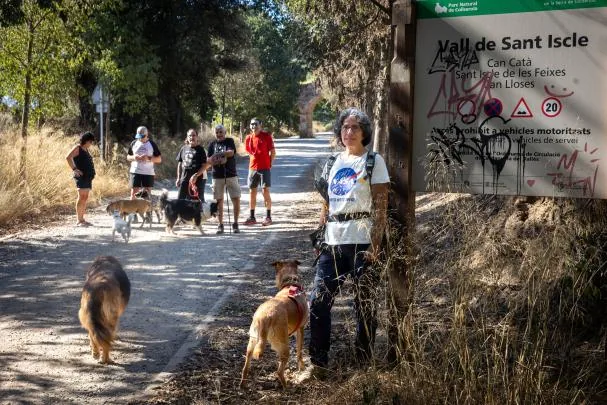
The inhabitants of the affected municipalities also regret having been deprived for so many months of a natural and leisure space of great importance in their lives. Cristina Alier, a resident of Montflorit de Cerdanyola del Vallès – bordering the park – and a regular hiker, with her dog Nika, lives with “helplessness and concern” that access for people and their pets has been banned “in such a drastic way and for so long. It is frustrating.”
Popular initiative campaigns to try to lift the ban on some spaces
Talking with her neighbors, Alier felt the need to launch the Change.org campaign “Open Collserola for mental and physical health.” It has just surpassed 8,000 signatures and she hopes “to reach 10,000 to present them to Agriculture so that it progressively and safely reopens access to the mountain range.” Alier and her colleagues understand “the importance of protecting animal health and avoiding health risks,” but point out that “the presence of wild boars has drastically decreased and, moreover, there are no large pig farms in this area that could be affected.” “And what about our physical and mental health?” they question. For the group, “it would make more sense to strengthen measures around the farms, as well as control entries, exits, and protocols for personnel and vehicles linked to them.”
Read more Grison takes off on RTVE with ‘El escondite’, his leap as a presenter