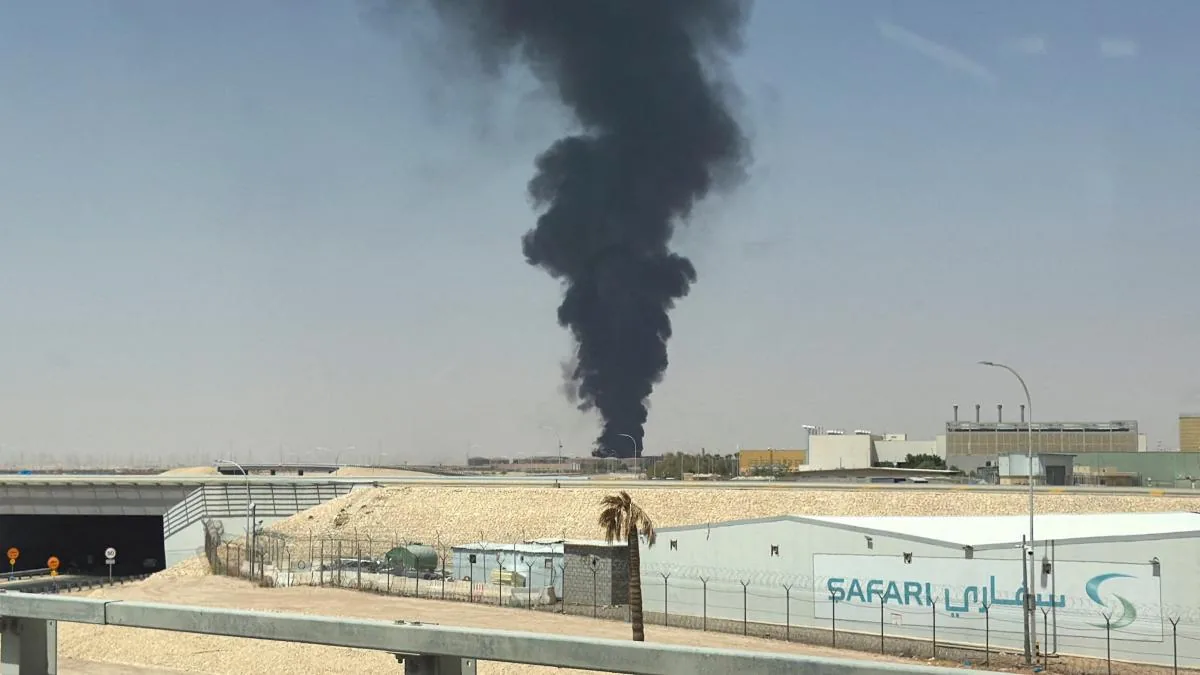
Saudi Arabia announced this Friday the closure of its East-West pipeline, a key alternative route to the Strait of Hormuz, following multiple attacks that occurred on Thursday.
Read more Strive like me, kid
The pipeline was closed as a precautionary measure, according to the Ministry of Energy on Friday in a post on X. The attacks caused several injuries and emergency teams are taking measures to secure the pipeline and assess its safety, the ministry added.
Fighting has intensified across the Middle East in recent days. The Houthis, based in Yemen, claimed to have attacked Saudi energy facilities in Abha, Najran, and Jazan, while the United States carried out attacks against Iranian tankers.
Oil prices remained virtually unchanged after the ministry’s statement, with Brent futures trading around $105 per barrel. Brent surged to nearly $110 on Thursday amid speculation about the impact of recent violence on the region’s energy supply.
The East-West pipeline has proven to be a vital supply route for Saudi Arabia’s oil exports, which were disrupted by the war in Iran. The route, with a capacity of 7 million barrels per day, quickly reached its maximum capacity after the near-total halt of tanker traffic in the Strait of Hormuz.
Read more Aragón demands the “comprehensive review” of data center regulations
The pipeline transports oil from the Persian Gulf to the Red Sea, where it is loaded onto tankers. However, this route has been affected by Houthi attacks.
The kingdom’s oil exports fell to just 3 million barrels per day in August, the lowest level recorded since early 2017, due to Houthi militia attacks on ships in the Red Sea.
As oil prices reach new highs, fuel prices are also soaring. The average price of gasoline in the United States is around $4 per gallon, the highest for this time of year, while the average retail price of diesel has surged to a record $6 per gallon.
Read more Emma Bonino, a life against the current for civil rights