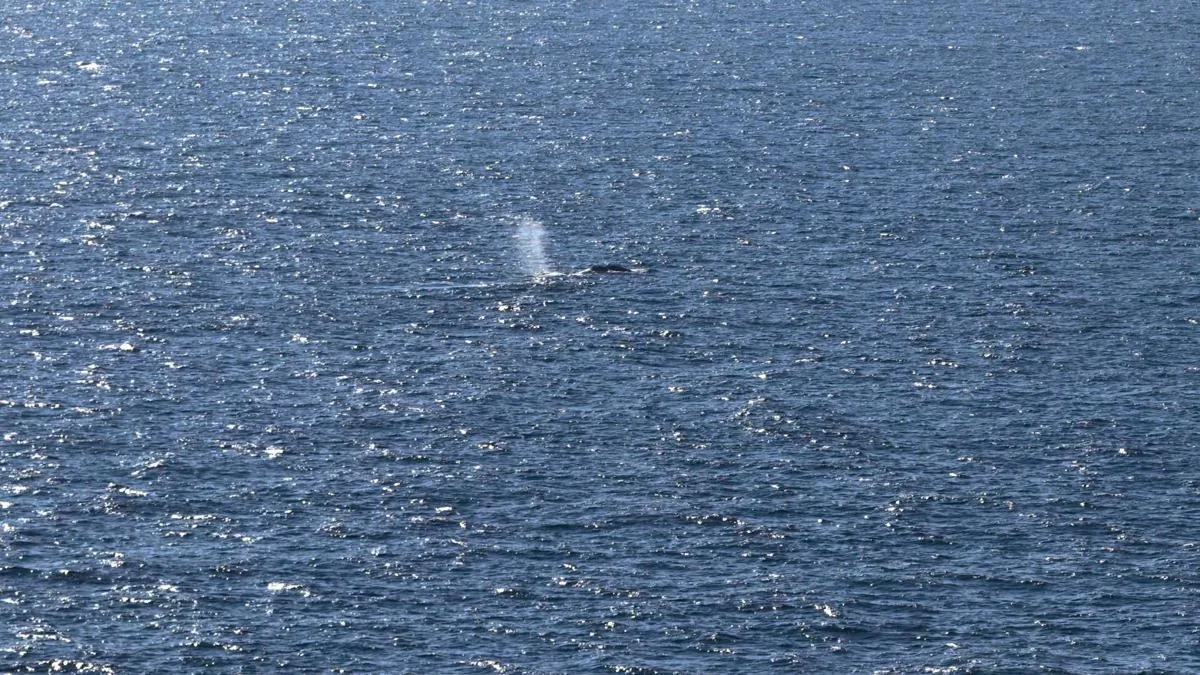
For weeks, Germany has closely followed the story of a humpback whale trapped in shallow waters of the Baltic Sea. This Saturday, that story reached its most awaited moment: the animal, nicknamed “Timmy” or “Hope,” was finally released into the North Sea in a complex operation that combined technique, private funding, and remarkable public anticipation.
Read more “We operated on two dogs at the Barcelona zoo before performing the first human transplant”
The cetacean, about 12 meters long and weighing 12 tons, was transported over several days on a barge adapted as a floating dock. The release took place early in the morning, about 70 kilometers north of Skagen (Denmark), after the teams removed the safety net that kept it protected.
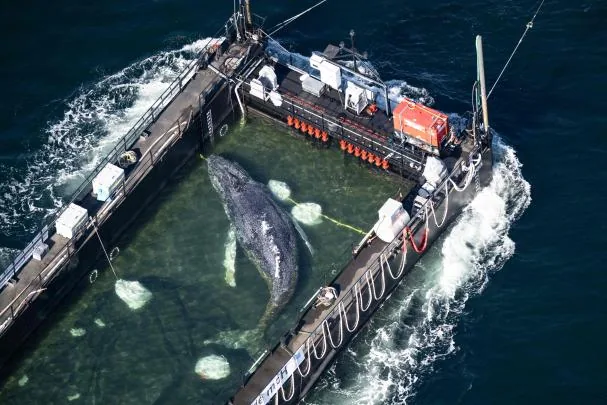
The rescue began on Tuesday, when tugboats started the transfer from the area where the whale had become stranded, near the island of Poel, in northeastern Germany. To lift and stabilize the animal, an improvised harness made from fire hoses was used, in a delicate maneuver that required constant supervision by veterinarians.
Also read
The operation, funded by private initiative and costing over 1.5 million euros, was not without controversy. For weeks, experts and authorities debated whether to intervene or let the animal follow its natural course. “Once you have looked a whale in the eyes, you are a different person,” said the regional Environment Minister, in a phrase that sums up the emotional weight of the rescue.
Read more First championship ball of the five that Barça has
The operation, funded by private initiative, cost over 1.5 million euros
Despite the release, specialists urge caution. Organizations like Whale and Dolphin Conservation warn that the real success will depend on the whale’s ability to orient itself, find food, regain weight, and return to the North Atlantic on its own.
To monitor its progress, a tracking device was attached on Friday, although no data has been released yet. For now, “Timmy” has returned to the open sea, but its story is not over yet.