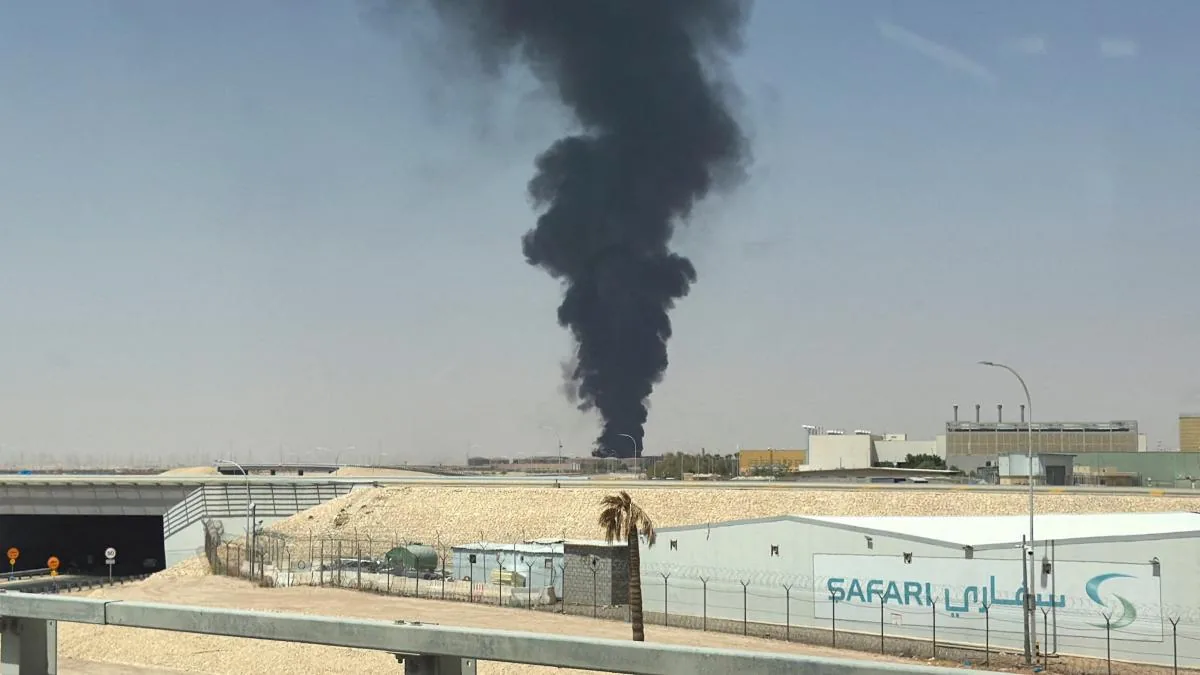
On February 28, the United States and Israeli Armed Forces launched a risky military campaign against Iran with the declared objective of overthrowing the Islamic regime, eliminating its nuclear program once and for all, and ending the threat capacity of its allied militias in the region. Emboldened by a swift and successful operation in Venezuela in January, when they kidnapped the dictator Nicolás Maduro in one night, President Donald Trump promised the American people that this would be a new “excursion” lasting “four or five weeks.” At the end of March, when the deadline passed, he said it would take “maybe two more weeks to finish the job.” Since then, Trump has repeatedly declared that the Pentagon has emerged victorious, despite the reality on the ground showing a very different picture.
Read more Inflation soars above 4% in August due to rising fuel prices
Six months after the bombings that eliminated the ayatollah and Iranian supreme leader Ali Khamenei, the regime remains standing, under the command of his son Mojtaba, and strengthened thanks to its ability to resist two of the most powerful armies in the world. Its effective blockade of the Strait of Hormuz, through which before the war passed a fifth of the world’s crude oil trade, has proven to be a successful pressure strategy against Washington, which has neither achieved its initial objectives nor can afford to let the enemy control such a critical bottleneck in the region.
Also read
A fragile ceasefire agreed upon in April and extended in June in the form of a memorandum of understanding remains theoretically in effect, although the document has expired and has been repeatedly violated by both parties. Tehran has continued attacking ships passing through Hormuz, as well as U.S. bases in the Persian Gulf, while Washington has responded to these aggressions by reimposing its naval blockade on Iranian ports and with bombings against military and civilian infrastructure in the Persian country.
True to his hyperbolic style, and frustrated by a conflict that drags on with no end in sight, Trump has repeatedly threatened to extinguish “an entire civilization” in one night, with the “largest attack since World War II” or to “send Iran back to the Stone Age.” However, he has backed down on every occasion, not only out of fear of unpredictable consequences but also because the conflict is depleting a significant part of the Pentagon’s arsenal.
Secretary of Defense Pete Hegseth informed the Senate in July of the estimated cost of the war: 37.8 billion dollars. However, independent estimates from recognized centers such as the Center for Strategic and International Studies (CSIS) place the expenditure above 100 billion. The Pentagon has requested an additional 73 billion dollars from Congress to continue the operation, a request that was narrowly approved in the House of Representatives (216 to 214) but remains stalled in the Senate.
The Pentagon’s request for 73 billion dollars to fund the war remains stalled in the Senate
But the cost is not only economic: it is also political and military. According to sources from the Department of Defense who spoke to U.S. media, and denied publicly by the Pentagon, “practically all” of the long-range precision missiles in Iran have already been used, and missile interceptors in the region are also running low, so the U.S. has had to transport more ammunition from other parts of the world, in addition to the 30 military ships deployed in the Gulf. This situation is worrying not only in Washington but also in the capitals of its allied countries, such as Kyiv, which has long been requesting more Patriot missiles, or Seoul, where Washington has reduced its joint military exercises, including an amphibious landing planned for September.
Read more Haakon VIII comes to the throne at the worst moment of the Norwegian monarchy
During the war, 18 U.S. soldiers have died and at least another 624 have been injured, according to the latest official update from August 4, although the Pentagon’s transparency has also been questioned in this area. Additionally, unhealthy living conditions have been reported on some of the aircraft carriers deployed in the region, such as the USS Abraham Lincoln, which after controversy was withdrawn and replaced by the USS George Washington, which is already in the Middle East.
The combination of high costs and failed objectives is a cocktail that could have serious political consequences for Trump and the Republican Party, which seeks to maintain control of both chambers of Congress in the upcoming midterm legislative elections, to be held in just over two months, on November 3. For this and other reasons, Trump’s popular approval ratings have fallen to the lowest level of his decade in politics, while only 31% of Americans support military action against Iran, according to the most recent Reuters and Ipsos poll.
Also read
After the failure of the military campaign and also of the interrupted diplomacy, which has generated great mutual distrust, the U.S. changed its strategy this week to total economic warfare. Treasury Secretary Scott Bessent announced on Monday a new round of sanctions against all countries that refuse to cut their formal and informal ties with Iran. In a threatening tone, he warned both allies and adversaries, including China, of reprisals that will expose them “to the full reach of American power.”
The goal of this renewed economic front is to isolate the regime, eliminating all sources of income, especially from the clandestine export of oil. However, as has happened with many of Trump’s military threats, this economic siege remains for now in the realm of warning. “We do not want to break the global financial system,” Bessent justified when asked why he had not yet activated secondary sanctions. He said the goal was to “give time” for the countries “facilitating” the Iranian regime to reconsider. “I’m not going to set deadlines, but we do not have infinite patience here,” he concluded: “The clock has started ticking.”
Read more Harald of Norway dies, the calm king