The red steps of Cannes lead to the Olympus of cinephilia, and Victoria Luengo (Palma, 1990) climbed them twice at the last edition. The late Marisa Paredes was the only Spaniard who could boast such an honor. Luengo climbed them with Pedro Almodóvar and his Bitter Christmas, and again arm in arm with Javier Bardem for El ser querido, by Rodrigo Sorogoyen, an original Movistar Plus production that arrives in cinemas on August 15.
Read more Trump extends U.S. control over Latin America in less than two years
She is in glory and in all areas: very popular thanks to the series Reina Roja, she also reached her theatrical peak with the very tough monologue Prima facie, about a lawyer specialized in sexual crimes who ends up being a victim of an assault. We talk with the actress about managing success and, above all, about the guts of El ser querido, a fresh exercise of cinema within cinema where she is Bardem’s scorned daughter, a volcanic filmmaker, like the old ones.
Premieres ‘El ser querido’, a fresh exercise of cinema within cinema where she is Bardem’s scorned daughter
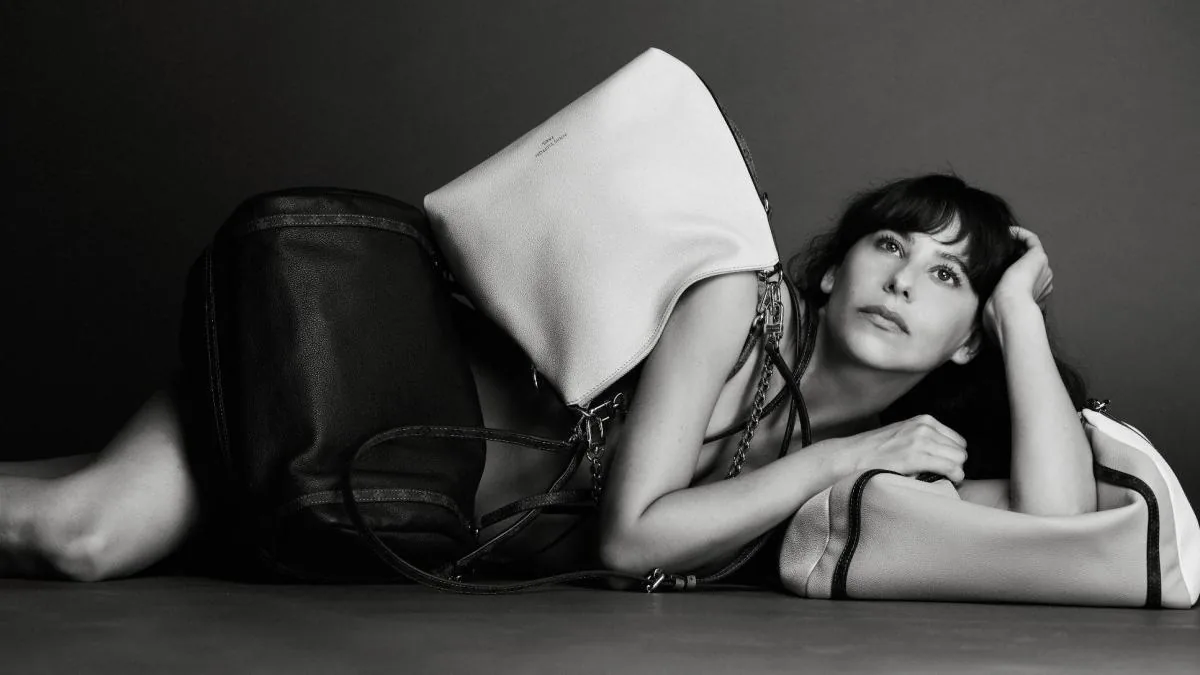
When you pose, do you create a character for each photograph?
I don’t go that far. When I started doing sessions, I didn’t feel especially comfortable because it wasn’t my medium and I thought I had to align with a certain beauty standard. But I have learned to enjoy them. It has to do with a process of self-acceptance. The things I preferred to hide seven years ago now feel like they enhance my personality. In my intimacy they can give me trouble, but now they help give dramatic weight to the photos.
You don’t look at the monitor, do you already have them in your head?
I don’t observe myself, because, as an actress, I have learned that it’s very bad to be too self-aware, and that also applies in life: it’s important not to look at yourself so much. Ways of Seeing by John Berger marked me a lot, when he talks about how women, in painting, are often portrayed looking at themselves in a mirror. I thought about how I myself, in moments of maximum intimacy like the shower, am aware of how my body would look from the outside. The more I can reduce that high self-awareness, the more connected I will be on a shoot, a performance, or a photo session.

Regarding the beauty canon, don’t you think the most interesting thing is what breaks it? That is, personality.
Beauty is in personality. I am a big fan of beauty, not only physical but of all kinds, in art, etc., and I think it’s not so much in the form as in the intention.
You say you have to let go, but as an actress, you must control your body…
You have to learn all the technique so that, once on set, you can let go to what the body already knows how to do. I did dance for years, and my body still remembers it.

Any special memory?
Many. I entered the musical theater school Memory at ten years old. I was motivated, and one of the things that satisfies me most is not having lost that enthusiasm.
Is it increasingly difficult to find a project at your level? In theater, after ‘Prima facie’, it’s complicated…
It took me a long time to settle on something because it was hard to combine and also because I wanted to have other eyes to look at besides the audience’s, but I will be at the Lliure with Marina Salas starring in Un drama romàntic, by Lucía Carballal.

We love Marina Salas.
We have been friends since we were 18. In 2010, we were both in The Pact, by Fernando Colomo. We hadn’t done anything else together. Here, in a comedic tone, we will talk about love, a subject that raises many questions for me.
What does it feel like to be in an Almodóvar film? It’s such a codified world that it almost seems like science fiction.
Of course, with a single shot, you already know it’s an Almodóvar film. Being part of that language is fascinating. But he has also been a pioneer, worldwide, in placing women at the center and portraying them with their flaws and virtues. Just speaking like one of his characters, I felt like the women from all his films were speaking.
Read more Health denies healthcare collapse in Ceuta and places the emergency on the street

You are known as an intense actress. You once posted a photo of Gena Rowlands, and it fit perfectly…
That is indeed a compliment. When I discovered her in A Woman Under the Influence it was the first time I asked myself, watching a performance: how did she do it? There is something very interesting in the little awareness she seems to have about what is happening around her. She is there, but she doesn’t care to be there. That completely fascinated me.
In ‘Chavalas’ you were with Ángela Cervantes and Carolina Yuste, who also stand out for their strength, is it generational?
Maybe women from another era had that same power, that same desire to show themselves in a more raw or less produced way, and they couldn’t because all decisions were made by men.
It’s important not to look at yourself so much
Was that solidity what convinced Sorogoyen that you could face Javier Bardem?
Maybe he thought I would be able to hold his energy… But, in this case, he didn’t offer me the role with the film already written, but about five years ago, he came to see me with Isabel Peña in Bilbao, where I was touring with Principiantes, by Andrés Lima, based on Carver’s stories. We went to a very good restaurant (it’s the best way to go on tour, eating well in good places in all the cities of Spain), and I told them I had a complex story with my dad, and I shared some situations with them. At that moment we already dreamed: “Can you imagine if my father could be Javier Bardem?”.
Emilia’s journey, your character, is about accepting that absent father.
Yes, she is going to stand in front of a camera so that her dad, for the first time in his life, looks at her for twenty days straight, because being seen by your dad is what every daughter wants all her life, to be looked at and validated. It’s unconscious, but it’s in Emilia’s decision. Just as there is admiration for her dad. There are sequences where they are both in love that I love.

There is a gesture, when he runs his hand down her back: that’s everything.
That gesture gives her life. The problem is that she thinks she is falling in love with her father again, when it’s the same man who hasn’t been there her whole life.
And he still isn’t.
And he never will be. She just needs, as I do, to understand things to be able to process them. If I don’t understand them, I don’t process them. It’s impossible.
Photographer: Pepe Herreros. Styling: Florence Revillaud. Photography assistant: Lora Semova. Makeup and hair: Alba Esteban for Armani Beauty. Production: Agnes&Co

My favourite things
A book: I’m reading Yoga, by Emmanuel Carrère. He is a master.
A movie: Le ravissement, by Iris Kaltenbäch. I loved discovering this director, who seems great to me.
A food: Well-made steamed cockles. It’s not so elaborate, but it’s what I like most.
A sport: I do strength training to stay healthy and because it’s good for endometriosis.
A trip: Iceland.
Read more The second miracle of Ferran Torres