‘La Vanguardia’ begins today in Beirut a tour that will end in Jerusalem, passing through Damascus, Amman, Tel Aviv, the kibbutz Be’eri, near Gaza, Ramallah and Taibe, a small Christian community in the heart of Palestine. The journey explores the reconstruction of communities at war. In a context of endless conflict, reconstruction does not wait for peace. Starting over under the bombs and on the material and social ruins is a physical, political, and psychological necessity, an attitude of resistance and a reaffirmation of dignity. The strongest take advantage of destruction to reaffirm their power and amass a fortune, and the poorest adapt. In this sense, the proposal of a Mediterranean ‘riviera’ for Gaza is emblematic. The population that has survived is usually a nuisance for the designers of the ‘perfect future.’ The common good disappears. Reconstruction, in any case, is not a hope, but a way of life, and in this starting over enemies recognize each other.
Dahiye has lost nearly 500 buildings in the last war against Israel, but not its pulse. This city of at least 700,000 inhabitants, divided into 16 neighborhoods, which is part of the southern suburbs of Beirut, remains the main domain of Hizbulah in Lebanon. Much of the future of the country and the region is decided here.
Read more Network 764, the dark online ecosystem that extorts minors to commit violence
In Haret Hreik, the richest neighborhood of the impoverished Dahiye, terraces and shops maintain the rhythm of life and revolution. On September 27, 2024, Israel killed Hasan Nasralah here with a bomb of nearly a thousand kilos. The leader of Hizbulah is today a martyr and his portrait is everywhere. For example, on a mural near where he died. He appears against a celestial background alongside Ali Khamenei, the supreme leader of Iran also a victim of a targeted assassination, and other Shiite leaders, all with raised fists. The challenge is immortal.
The weakness of the Lebanese state and resistance against Israel sustain the Shiite organization
A very thin old man passes by the border of the leaders. He wears a gray t-shirt on which can be read, in worn white letters, a fundamental statement of martyrdom: Unstoppable.
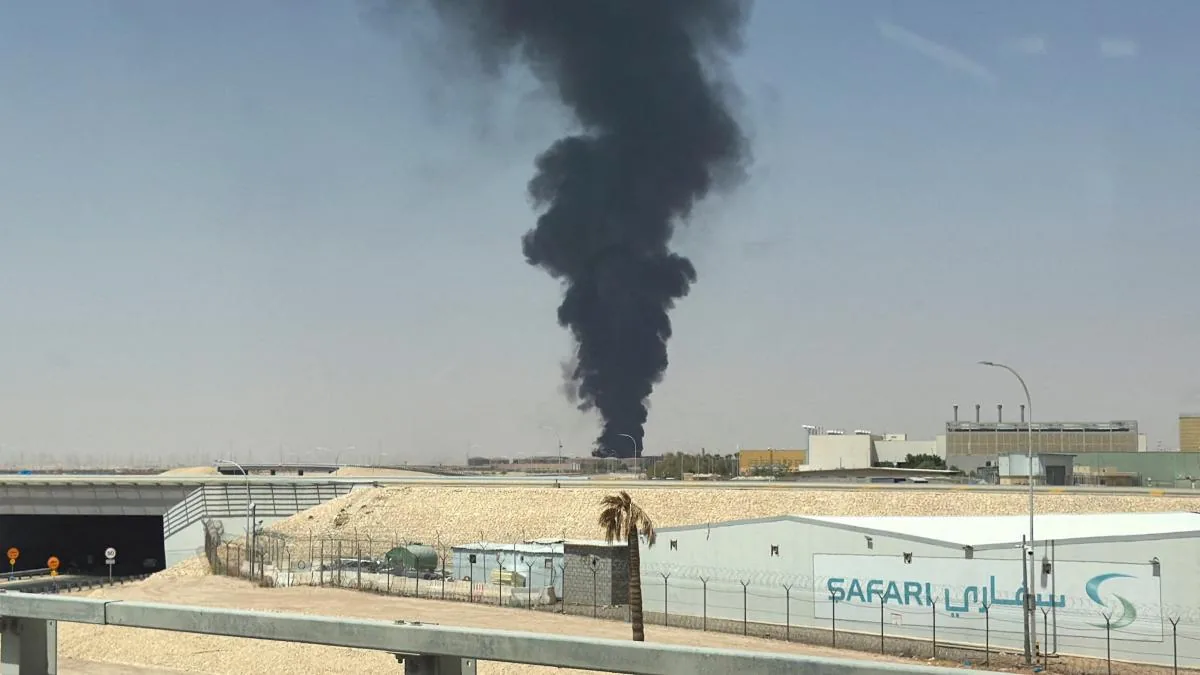
Here and there wave the black flags of mourning and the red ones symbolizing spilled blood, martyrdom, and thirst for revenge. The cleaning brigades have removed the rubble from the demolished blocks. Reconstruction should start at any moment, but it does not. Hizbulah has run out of money.
“There is no money for reconstruction and the government does nothing to get it,” says Abir Saksouk, an architect leading Public Works, a small studio that records every bombed building, both in Beirut and in the south of the country. “Documenting destruction is essential to be able to rebuild justly, that is, so that the population recovers what it has lost.”
It is not easy. As we see in Beirut and it is also evident in Gaza and Damascus, war is an opportunity that the victors do not miss to consolidate their power. “The government – according to Saksouk – has bowed to the demands of Israel and the United States, and does not want Hizbulah to lead the reconstruction as happened in 2006.”
Hizbulah is much more than an armed group allied with Iran to fight Israel. It is, above all, a civil, political, and administrative organization, offering state-like services to Lebanese Shiites, approximately one in three inhabitants. It is financed with about 700 million dollars annually coming from Iran and with several businesses, ranging from gas stations to exchange houses. Al Qard al Hassan is its main financial institution, and Jihad al Bina, the company managing reconstruction. Both face serious difficulties. It is no longer so easy to bring dollars. The government has banned flights from Iran and strengthened customs inspection.
In Lebanon almost everything is paid in cash and in dollars. The Central Bank, like all state institutions, is opaque and weak. Hizbulah has taken advantage of this dollarized economy to consolidate a parallel state that, in many aspects, is more efficient and sustainable than the Lebanese state itself.
“Hizbulah is blamed for everything, but it is unfair,” says Roula Khoury, an architect who has participated in several reconstruction projects. “The system favors corruption and speculation, but blames Hizbulah for everything that goes wrong.” Why? “Because it succeeds where the state fails. The Shiites trust Hizbulah, but the Lebanese have never trusted their government. In fact, they do not want strong institutions. They do not trust.”
This lack of trust is compensated by private initiative. Urban planner Amira Solh, who for 17 years headed the urban planning department of Solidere, the public-private company that rebuilt the city center, defends a model that is now very criticized. “The state was weak and had no money – she maintains –. There was no other way to rebuild.”
Read more Does the far right grow more in rural areas?
The Solidere project triggered speculation and gentrification. Many neighbors could not afford the new homes and had to leave. Solh acknowledges that “the model needs a system capable of guaranteeing the common good within the framework of private interest.”
This balance, however, is very difficult to achieve, as is evident in Martyrs’ Square. Here was the line of confrontation during the civil war, which lasted from 1975 to 1990, and much remains to be done here. There are vacant lots and a half-finished building that everyone knows as the Egg. The projectile wounds on the blackened concrete make it a symbol of resistance, but also an example that war is a permanent state. The new owners, some Saudi investors, see no benefit in preserving this icon of brutalist architecture. It should have been a cinema and they prefer it to be a shopping center.
Against the Solidere model, which took three decades to rebuild downtown Beirut and still has Martyrs’ Square pending, Saksouk defends Hizbulah’s, which after the 2006 war rebuilt Dahiye in only six years. She assures that “it is more egalitarian and sustainable.” “The goal – she adds – was for people to return to their homes as quickly as possible to send Israel the political message that everything destroyed would rise again as it was. The destruction could have been used to improve urbanism, but then the process would have been much longer and not all neighbors would have been able to recover their homes.”
Hizbulah now faces a much greater challenge. Israel and the U.S. strangle its finances and families who have lost their homes cannot receive the annual compensation of 14,000 dollars. The destruction of Dahiye is joined by that of the south of the country, mostly Shiite and therefore also Hizbulah’s domain.
Saksouk speaks of ethnic cleansing. Not only because of the destruction of entire villages, but also because of the use of phosphorus bombs on fields that will take years to regain fertility.
It has been two years since Kamel Mohanna went to Khiam, his hometown near the border with Israel. “I am 83 years old and I have seen it destroyed three times. We have rebuilt it three times, but now it seems there will not be a fourth. Nothing remains.”
Mohanna is a tall man who has dedicated his life to reconstruction. He presides over Amel, one of Lebanon’s main humanitarian organizations, and speaks from the moral height of someone who has managed to eliminate sectarian differences. “We try to offer a model of trust in which the we replaces the I,” he explains to me in his Beirut office, convinced that this is the way, but at the same time very aware that it leads to no end. “My whole life has been an emergency – he says – and in these circumstances the best solutions to move forward are not always the most rational.”
Rebuilding what risks being demolished again is not very rational, but it is important for the defeated to recover dignity and keep fighting. We have seen it in Beirut and soon we will see it also in Syria, Israel, and Palestine.
Read more Ayuso loses her armor