Exactly 30 years ago today, more than 600 vacationers were enjoying their holidays at the Las Nieves campsite in Biescas, Huesca. In the mid-afternoon, the sky turned black, and the first drops invited people to seek shelter in tents and caravans. The rain intensified, but not as much as at the head of the Pyrenean Arás ravine, where up to 200 liters per square meter fell in one hour, with a peak of 500 in eight minutes. The torrent dragged stones, logs, and mud, destroyed bridges and dams of the artificial channel, and overflowed to sweep away the tourist complex, located on the alluvial fan of the ravine. 87 people died, 183 were injured, and it took almost a year to recover all the bodies.
Read more Iris Tió’s ambition knows no bounds: “I like to see the medals, but what motivates me is the gold”
Sergio Murillo, then a 16-year-old teenager, lost his parents, Francisco and Presentación, and his younger siblings, Susana and Alberto. “I was saved because I got stuck between some branches at the edge of the ravine and a man pulled me out,” recalls this architect from Pamplona, where he lives with his wife and three children. His youth worked in his favor to rebuild his life and move forward, but without giving up a legal process that became a nearly decade-long ordeal for the victims.
With the criminal case dismissed, not without controversy, the National Court ruled in 2005 that the flood was a “foreseeable” and “avoidable” event and ordered the Ministry of the Environment and the Aragonese Government to pay 11.2 million euros to the victims’ families, although more than a dozen received no payment for failing to appear in time during the process. Among the main pieces of evidence against the Administration were two technical reports advising against building the campsite in that flood-prone area, but these were ignored in the resolution of the case. The ruling also absolved the other two defendants: Luis Bardají, director of the complex (deceased in 2021), and the Biescas City Council.
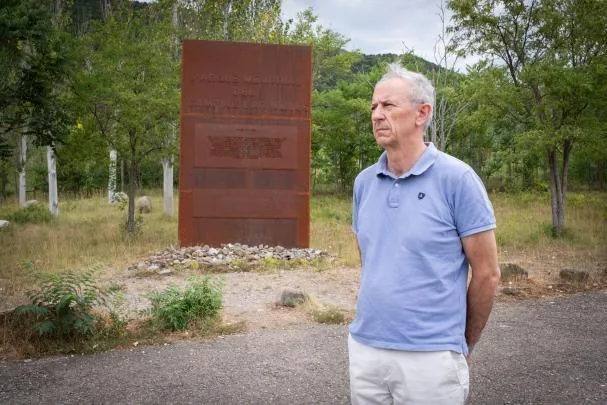
“It was a painful process,” criticizes the now-retired lawyer Elena Melero, who represented ten families and believes the ruling did not deliver justice. “The culprits, who had names and surnames, were not punished, and not all victims were compensated. How can we be satisfied?” she points out. She agrees with Sergio, her client. “The responsibility of those in charge was diluted into an abstract entity like the administration; that is the thorn that remains stuck in us,” he says.
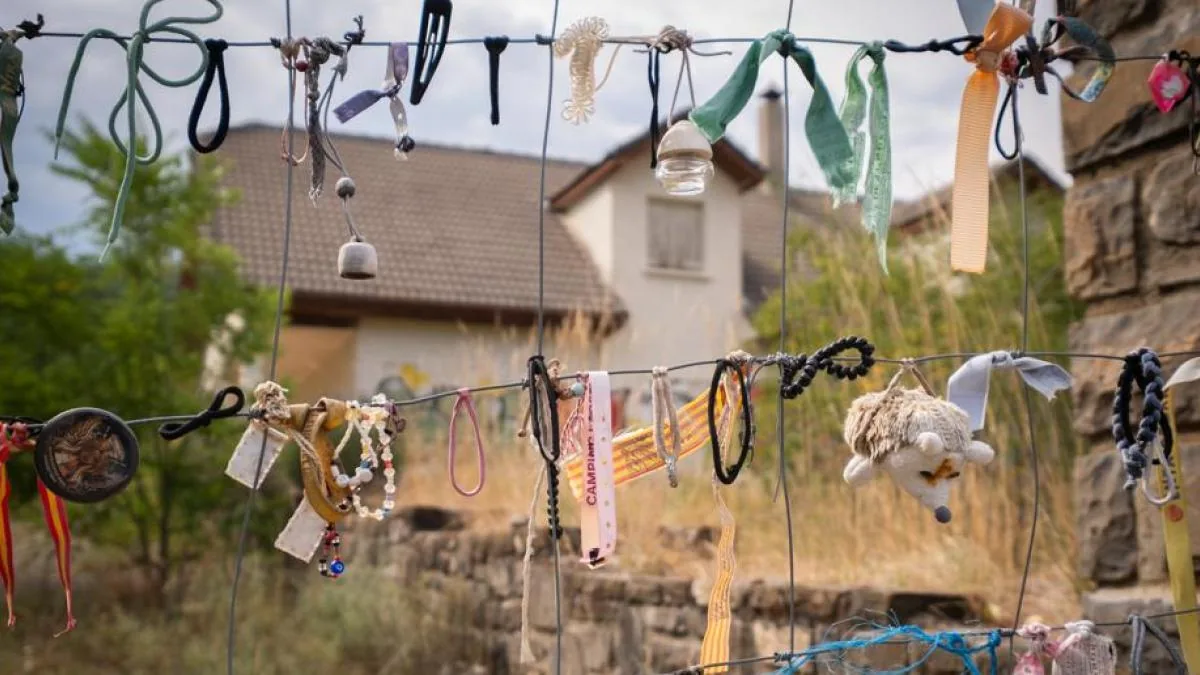
The weight of the tragedy is still felt at the scene. Of that postcard campsite, only the reception building remains standing, now closed and covered in graffiti. On a nearby fence, visitors have hung bracelets, ribbons, or stuffed animals as an improvised tribute. Next to it, at the request of a survivor, the City Council inaugurated a memorial park in 2016 to dignify the area, featuring a monolith inscribed with the names of the victims.
Biescas prompted a profound reform and tightening of camping regulations in Spain
Luis Estaún, then a young 27-year-old mayor, still shudders when walking through the place. “It was like seeing a small city devastated,” he comments. Amid the initial chaos and lack of resources, the former mayor emphasizes the wave of solidarity with those affected, especially from local residents and vacationers in the area.
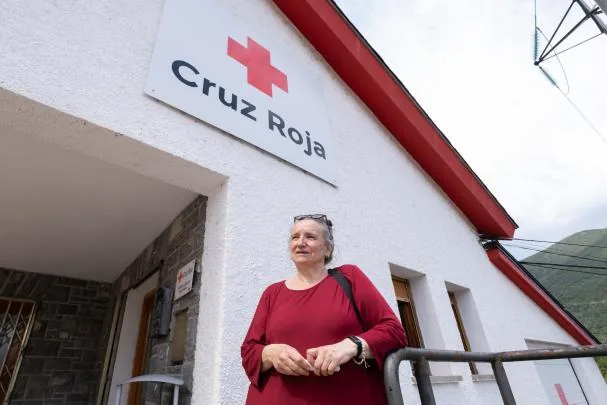
Some helped with rescue tasks; others donated clothes and food or took relatives to the makeshift morgue at the Jaca Ice Palace to identify bodies; and many families sheltered the displaced in their homes. “The town responded and fully committed,” confirms Teresa Maza, a Red Cross volunteer who prepared hundreds of meals in the village school kitchen during those days.
Read more Trump will be able to intervene militarily in eighteen Latin American countries
Also read
The flood at the campsite marked a before and after in the legislation of tourist campsites in Spain, promoting restrictions, eliminating those in flood-prone areas, and requiring self-protection plans. “This tragedy should never have happened; these were needless deaths,” criticizes Emilio Leo, former head of Civil Protection in Huesca, now retired.
It also revolutionized the sector of prevention and response to major tragedies, then in its infancy and without the current technological means. According to Leo, following Biescas, the land law was modified to prohibit building in areas subject to natural risks, the implementation of other measures was accelerated—such as the launch of the 112 emergency number and the territorial restructuring of fire stations—and psychological and social support protocols for victims were established, applied in later crises like the 11-M attack in Atocha. “In 30 years, the change has been spectacular,” he emphasizes.
No public tribute for the 30th anniversary
The Biescas City Council has decided not to organize any official event on the occasion of the 30th anniversary of the flood. Its mayor, Lorena Cajal (PSOE), defends that this date is experienced “with great respect” and “pain” in the town, but also with the need to “look forward” and not relive the catastrophe every year.
As in previous years, the Council will tidy up the memorial park for all those who want to visit and argues that its “greatest tribute” to the victims is the recent approval of a municipal action plan for floods, which identifies vulnerable areas and establishes the response and operation to follow in an emergency. “With it, we move from ‘never forget’ to ‘never again’,” she adds.
Still, the 2024 DANA disaster, with 230 victims, made it clear that irregularities are still committed and that much work remains to be done. “It comforted me to think that what we suffered helped raise awareness of the risks, but that was undone when I saw what happened in Valencia,” Murillo confesses.
The National Court ruled in 2005 that the flood was “foreseeable” and “avoidable”
For him, as for the rest of the victims, these are bitter days. “It still hurts in my soul,” he admits. That is why, more than public events, he prefers to take refuge in his family and try to get through it as quietly as possible, hoping that such catastrophes will never happen again. “It seems we only learn the hard way,” he suggests.