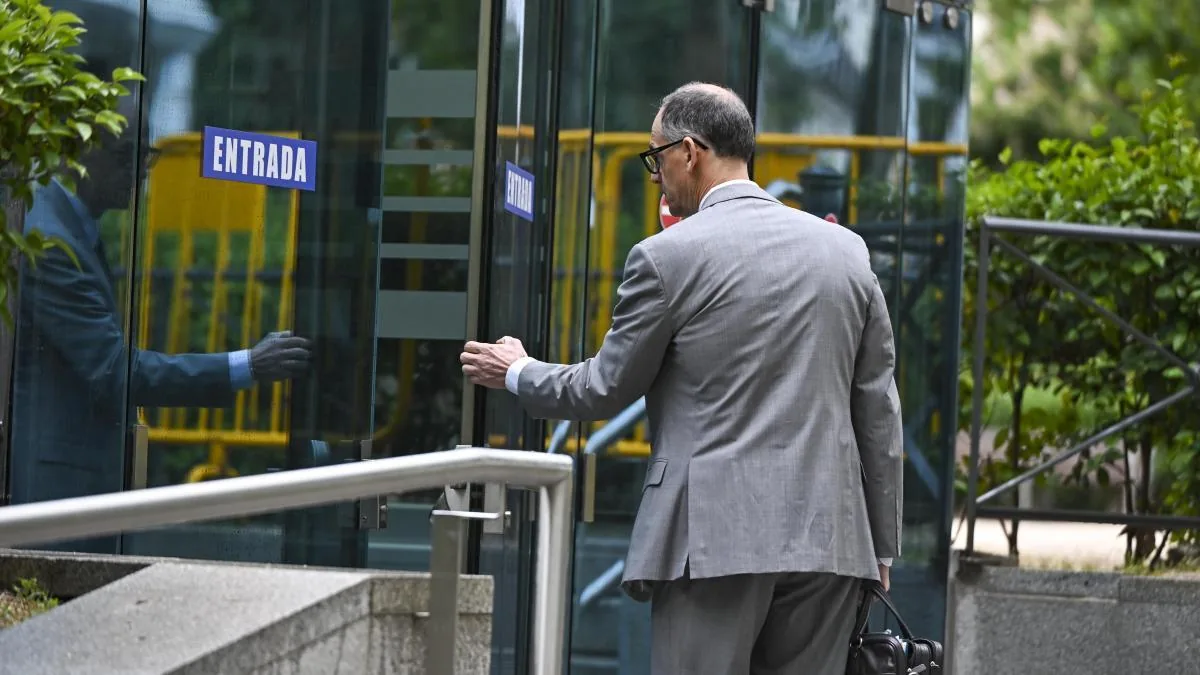
After almost six hours answering questions in the trial for the ‘Operation Kitchen’ held at the National Court, the chief inspector of the National Police Manuel Morocho was eager to talk more. During the two sessions that his testimony lasted, the agent who led investigations such as Gürtel or the Bárcenas Papers recounted how he corroborated the existence of “a police operation without judicial authorization” on the former treasurer of the Popular Party Luis Bárcenas, how he suffered pressure not to include the name of the former Prime Minister Mariano Rajoy in one of his reports, how the Ministry of the Interior at the time deployed “a strategy to dismantle” his police group, and how he found “indications” that his office and vehicle were monitored to carry out surveillance on him. “I don’t know if I can say something,” he asked the president of the court, Teresa Palacios, when she was dismissing him. At that moment, a nearly unanimous “no” was heard from the defendants’ bench, almost complete. “The PP’s black beast,” as he recalled they called him yesterday, left without revealing that “thing” he still had to say. Although what he did say, exposing Kitchen, was not few.
Read more Koldo denies the payments and gifts from Aldama
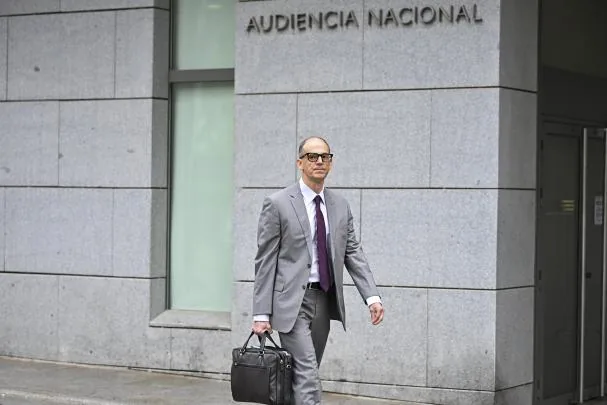
The former inspector of the Economic and Fiscal Crime Unit (UDEF) —now assigned to a police station in northern Madrid— has continued to strike at the core of the defendants who maintain that the police operation around Bárcenas in 2013 only sought to find more money that the former treasurer might have hidden, like the fortune found in Switzerland. Morocho, who led the investigation coordinated by the National Court, explained this Thursday that, after discovering the hidden assets of more than 20 million euros, “the line of work was set,” so efforts had to be focused on analyzing the information coming from the Swiss country or tracking other tax havens. That was where the efforts had to be placed at that moment, and not on surveilling the Bárcenas.
—Following the SMS published in El Mundo [between Bárcenas and Rajoy], was it considered to intervene his phone?
—No.
—Nor to search his office or carry out surveillance?
—No, there were no grounds to take such an invasive decision against fundamental rights. We had a line of work. That’s what we dedicated ourselves to, not to speculate…
As yesterday, the interrogation did not focus exclusively on the “parapolice” device to steal compromising information from Bárcenas so that it would not end up in the hands of the judge, as the Anti-Corruption Prosecutor’s Office claims. Morocho recalled how his group, focused on investigating the parallel accounting of the Popular Party, was sabotaged with a “strategy” to dismantle it. Those obstacles would have borne fruit because, according to the chief inspector, there were certain reports that could not be completed in the hands of the judge due to lack of human capacity. A “sought strategy,” which involved offering the officers under his command much more attractive assignments (mainly in terms of remuneration). Morocho, using his notes, listed the cascade of departures: three fewer agents in 2013 (out of the 11 they had), another in 2014, five more in 2015…
Read more Puig reiterates that there is no guarantee that the deal with Estée Lauder will go ahead
Also him. The former deputy operational director (DAO) Eugenio Pino, who sits on the bench for allegedly orchestrating the irregular operation, offered him a post at the UN in Guatemala. José Luis Olivera, former head of UDEF also accused, offered him supposed “gifts” such as going to Kenya to deal with piracy issues at sea that kept him away from his investigations for a time.
At one point in his testimony, Morocho took out a license plate from a police car, to show it in the room, which he found in his office, along with material that could have been used to screw it in. Morocho’s interpretation of this finding, along with other “indications,” is that he was investigated: both his office and his car were monitored to carry out surveillance and monitoring. The fear of the tentacles of the Interior Ministry was such that, according to the investigating judge, he took precautions such as working with an external laptop to avoid “information leaks” or discussing sensitive and critical issues for the investigation at a point outside his office.
–—I was investigated to see if my conduct was ethical or not and, if something had been found, they would have blackmailed me.
Read more BBVA earns 11% more and announces more share buybacks