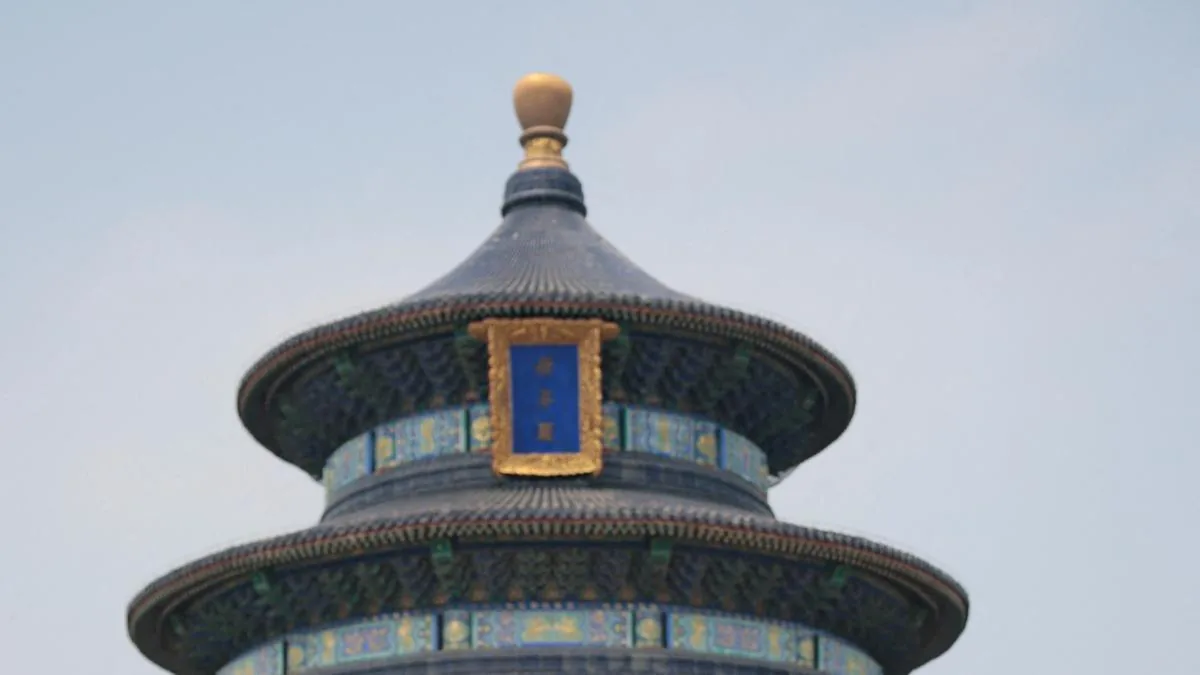
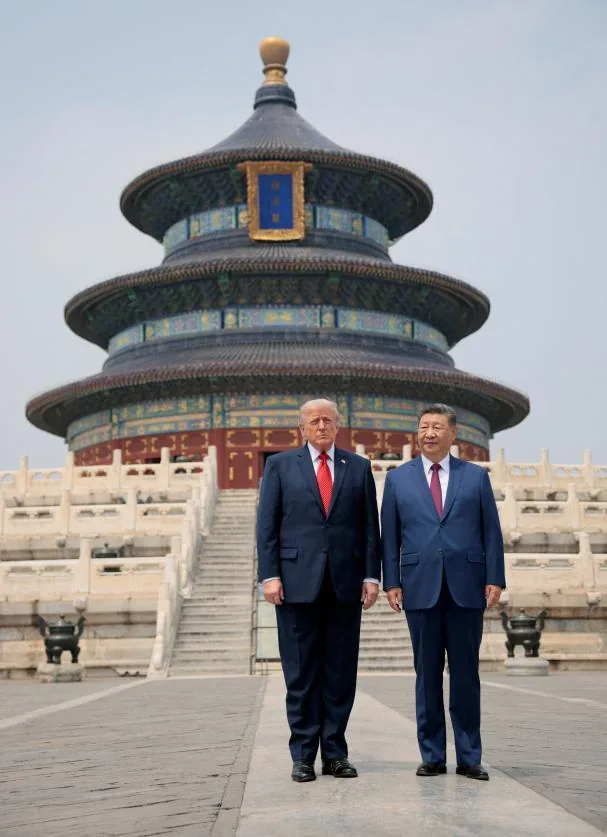
Just minutes after the first meeting of the summit between China and the United States began, Xi Jinping issued a warning to Donald Trump about Taiwan. If Washington mishandles the island issue, he told him, the two countries could enter “an extremely dangerous situation.” No joke for someone like Trump, whom China treats with the utmost respect he deserves by giving him access to the Temple of Heaven, among other symbolic gestures.
Read more Trump and Xi Jinping: the summit begins with many interests at stake
Xi’s words reveal the confidence the Chinese president has in his strength. That, this time, the cards are playing in his favor. True: China has demographic problems, and exports from its manufacturing industry are not advancing at the pace it would like. It managed to stockpile oil reserves for when things got bad in Iran. But one day those reserves will run out, and its discomfort with the closure of the Strait of Hormuz is great.
That said, the ideologists of the Communist Party have not tired of repeating that China is the rising power, the one that guarantees global stability against the adventurism of the United States. For them, the great Western power is in decline, and Donald Trump, with his adventurism and unpredictable decisions, only accelerates it.
Right at the start of the meeting, Xi warned Trump of the danger of mishandling Taiwan
Returning again to the poker game they are playing, Trump arrived at the summit with few cards. The United States remains the leading superpower, a year ahead in the artificial intelligence race. But, after the coup in Caracas, which emboldened him so much, the Republican has bogged down in the Iran war, which he entered due to delusions of grandeur and misinformation from Israel. Today the White House suspects that this war cannot be easily won, and that this will only increase the rejection of its voters.
Nor does the economy bring much joy to Trump. It is true that the stock market is at stratospheric levels, boosted by investments from AI giants. Without those investments, growth is somewhat more mediocre, and that is how the most disadvantaged sectors experience it, those suffering inflation in basic products in such an unequal country. Among the worst-off sectors, one of those who have most enthusiastically supported Trump, are the farmers. That is why Trump trusts that China will give him a break by buying more soybeans. And that it will commit to industrial investments in a country where tariff policy has not reversed its deindustrialization (as he promised).
China and the United States have reasons to understand each other. Their economies are still too dependent. But Xi will not lower his guard. He still vividly remembers the tariffs of up to 145% that Trump imposed to curb their imports. China emerged from that situation with the threat of cutting off rare earths and other strategic minerals to the American (and global) industry. In October, they reached a one-year truce in Busan (South Korea). Business logic indicates they should renew it, but everything will depend on the mutual trust the delegations can convey.
China has reasons to help in the Iran conflict, but is in no hurry
Trump will ask Xi to help resolve the Iran mess. Beijing is interested in opening Hormuz. It needs Iranian oil. But if the economy leads it to that conclusion, politically and militarily it sees it differently. For Beijing, it must be the United States that makes the greatest effort to get out of the hornet’s nest it got into without consulting anyone. If there is an agreement for China to collaborate, it will be costly for Washington. Beijing exerts great influence over Tehran. It is its main client and supplies it with technological components. But China thinks of being an active part in the country’s reconstruction, and therefore bets on the regime’s survival. And, of course, it has no intention of eliminating Iran’s nuclear program. That is, China could collaborate, but the outcome would have a bittersweet taste for Washington.
Will Iran be the bargaining chip for Taiwan, the island that Chinese leaders dream of unifying with the mainland within five years? You never know. The Asian allies of the United States (from South Korea to Japan) fear what Trump’s reaction will be to China’s pressures on the island. In its way of playing the long game, Beijing does not ask for much, only a change in Washington’s language towards the island. They want them to stop saying that the United States “does not support” Taiwan’s independence, to saying that the United States “is against” Taiwan’s independence. It seems like a nuance, but it is important. How far could Trump go? No one knows.
U.S. Asian allies fear Trump’s unpredictable reactions
Trump went to Beijing with a large delegation of businessmen. Among them, Tim Cook, from Apple, because it is in China where the iPhone supply chain was built; Elon Musk, who has always coveted entry into that market; and Jensen Huang, from Nvidia, whose chips the Chinese covet, although he travels as Trump’s personal guest. That is perhaps the only sure thing about this summit: business. American tech industry men have always demanded preferential treatment from the Washington administration to beat China in the AI race. But it is self-interested patriotism. When it comes to doing business, they are the first to forget their commitments.
In summary, the U.S. president may leave Beijing with a series of investment and collaboration commitments. But the fury and shine that accompanied the first months of this second Trump term seem to be fading. The summit will be a reality check for the president and, in the end, he will also realize that there is someone else out there who thinks they can do it better than him.
Read more The City Council entrusts exclusively to the court the resolution of the VPP scandal in Alicante