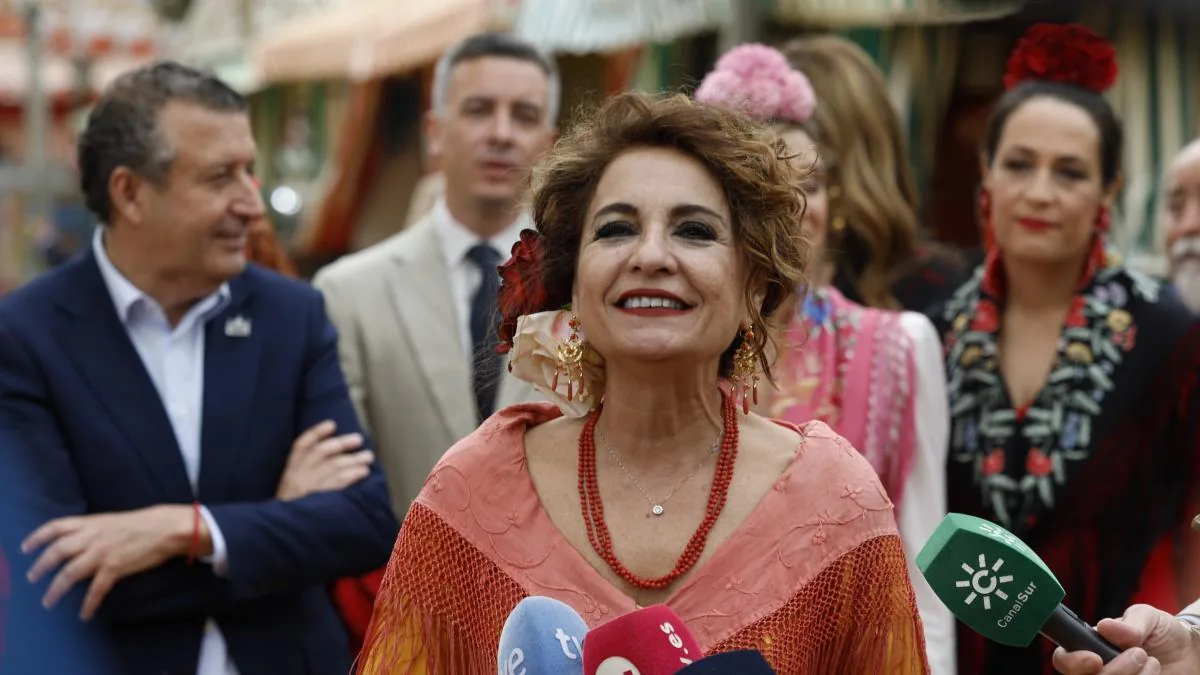
To be the leader of the PSOE, it is necessary to have the support of the membership in Andalusia and Catalonia. Due to their weight in affiliates, they constitute the two key strongholds to control the party. As long as Salvador Illa holds the presidency of the Generalitat and has the absolute backing of the PSC, Sánchez will have that flank more than covered. But Andalusia has long been the most complicated and decisive territory in the party’s congresses. And that is where María Jesús Montero comes into play, the president of the Government’s go-to person for everything.
Read more The opposition mocks the risk Ayuso faced in Mexico: “Were they killing her with tequilas?”
Of all the ministers Sánchez has dispensed with during his time at Moncloa, Montero has received the most praise in her farewell from the president. If he has always been considered a cold politician, the day he announced the dismissal of his vice president, a certain emotion could be glimpsed in his words. Montero left the Government and will not return, unless there are sudden changes of mind. If she has not yet left her seat in the Congress of Deputies, it is not so much because she is thinking of returning if the Andalusian results are bad, but to link her immunity with that of a deputy in the Andalusian Parliament. In times when politics is played as much or more in the courts as in the chambers’ tribunes, Sánchez does not trust that any judge might act in that interval.
Montero is her boss’s envoy to organize the Andalusian territory for upcoming battles, whether near or medium-term. In his day, José Luis Rodríguez Zapatero managed to become the secretary general of the PSOE thanks to his supporters negotiating with Manuel Chaves’s Andalusia that voting freedom would be given to affiliates to choose in the federal congress between Zapatero, José Bono, Matilde Fernández, and Rosa Díaz. From Andalusia came the stumbling blocks so that Sánchez would not reach leadership and the fierce dispute with Susana Díaz. And from there come the darts from the remnants of felipismo. For the current PSOE leader, controlling that stronghold is more than essential. For that task, he has chosen one of his most trusted people, Montero.
Montero will have the protection of being the number two of the PSOE throughout Spain
The result of these Andalusian elections, which is clear that the PSOE will not win by any means, is relevant to determine with what strength the candidate starts to execute Sánchez’s mandate. All polls indicate that it will be below what Juan Espadas obtained in 2022, which was already the worst in history for the socialists in that community. If those predictions are confirmed, Montero will have to work hard to take control of the party in her land, which she still does not fully control by any means. There will be internal discussion. That is why the candidate will not give up the position of deputy secretary general of the PSOE throughout Spain, that is, her position as Sánchez’s number two in the entire party. That is the protection, the coverage she needs to face a bad result and try to rebuild its consequences before the next two tests.
Read more Sánchez will meet with the Pope in the Vatican before Leo XIV’s visit to Spain
Because if these Andalusian elections are important, the municipal elections next spring are even more so, regardless of when the general elections are. This electoral cycle has been conceived by Sánchez as a way to place his pawns in the main strongholds to contest those two electoral calls. Sending his ministers to the different territories, even though they may suffer wear from having been in government and their results are modest, is a future investment for the PSOE leader, whether he manages to renew the presidency of the Government or moves to the opposition.
Another matter would be if the Andalusian candidate’s debacle were such that it would be impossible to redirect. For now, Montero’s campaign has sought to mobilize those who voted for the PSOE in the 2023 general elections and who seem more likely to stay home this time. More than half a million Andalusians chose the PSOE ballot in those general elections hastily called by Sánchez in the middle of the heatwave when a year earlier, in the Andalusian elections, they did not. That is why the PP candidate, Juanma Moreno Bonilla, avoids polarizing so as not to awaken those “sleeping” socialists. The current president of the Junta’s strategy is to encourage his own without arousing fear in left-wing voters. The tactic is reflected, for example, in recording a video singing the anthem of his campaign, presenting himself as someone who exudes sympathy and good vibes, while Montero tries to turn the elections into a plebiscite on the darkest point of the PP’s management, which is healthcare and the breast cancer screening crisis. We will see this Sunday which strategy proves more effective.