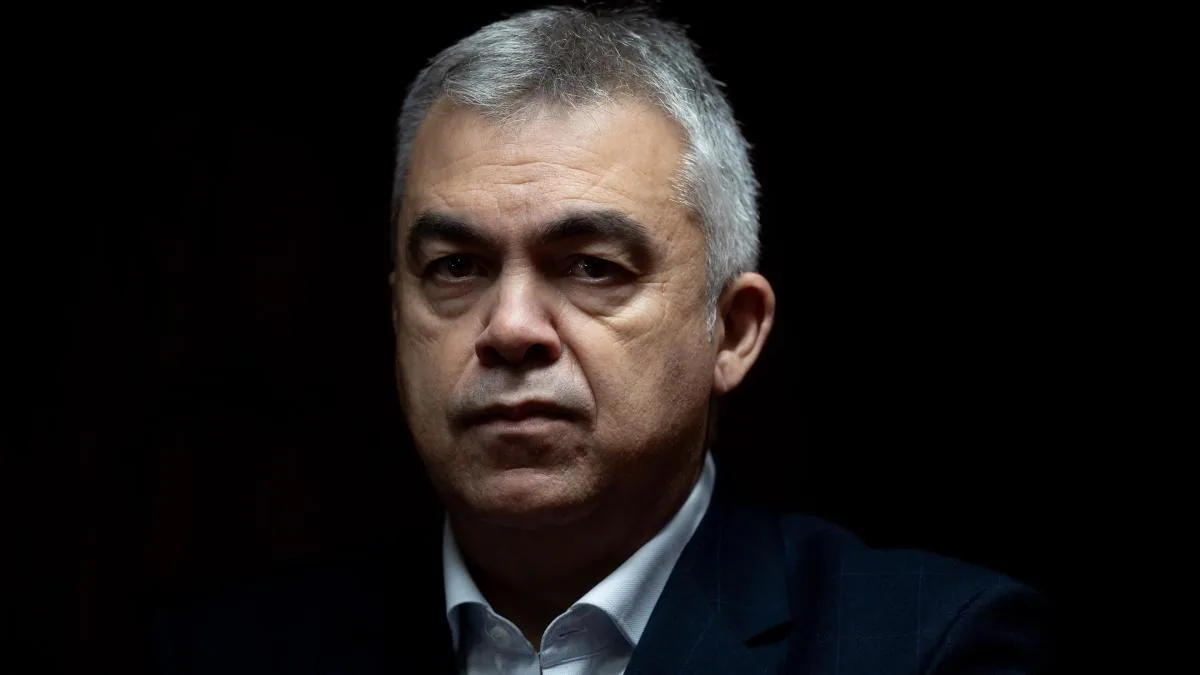
The alleged “plumbing” plot would have started with a clear directive and an “ultimate goal”: “to protect the interests at stake” of the socialist party and, directly or indirectly, of the Prime Minister, Pedro Sánchez. The mastermind would be Santos Cerdán, then the strongman of the president, and it all began when his wife, Begoña Gómez, was charged. What can be inferred from the reports of the Central Operative Unit (UCO) of the Civil Guard included in the case file, to which La Vanguardia has had access, is that Cerdán already had other dangerous connections prior to that April 2024 with Leire Díez and the former president of SEPI Vicente Fernández. In fact, they are being investigated by the National Court for rigging public contracts.
Read more The UCO registers Tubos Reunidos in Bilbao and requests information about its rescue from SEPI
Díez, in turn, was doing her work with another businessman, Javier Pérez Dolset, who had accessed all the documentation of former commissioner Jose Manuel Villarejo for various interests.
When the news broke that Sánchez was taking a few days to reflect in April 2024, Díez offered Cerdán information that could help the “president.” The next thing known is that the Navarrese called her to meet “urgently” at the PSOE headquarters in Ferraz.
The “ultimate goal” of the plot
It was to protect the interests at stake of the PSOE and the Prime Minister
From that moment they began a “coordinated” “work” to find people who could provide them with information against all those involved in investigations affecting the PSOE or the president’s circle, that is, members of the UCO, the Anti-Corruption Prosecutor’s Office, and judges.
The project led by Cerdán and executed by Leire Díez became increasingly ambitious and they even sought compromising information against the then president of the Criminal Chamber of the Supreme Court Manuel Marchena to prevent him from halting the amnesty law for the procés.
The pact with Villarejo
Providing information about Judge Marchena to promote the amnesty
Díez came up with the idea of turning to former commissioner José Manuel Villarejo, one of the main representatives of the State’s sewer under Mariano Rajoy’s government, who has been in unconditional prison for more than three years, faces several convictions, and has about thirty ongoing cases. The case file includes exchanged messages between Díez – who held positions at Enusa and Correos – with Villarejo and his lawyer. The pact was that the former commissioner would deliver to Díez “the audios and payments involving Marchena and the role of the PP in everything that has been called the Patriotic Police implicating the entire Rajoy government leadership and even Feijóo, buying the 2012 Galician elections.” A document about Díez’s plan explained that “the recordings pending delivery are truly explosive,” documentation which, by the way, is not found anywhere.
Read more A Serbian peacekeeper dies and two Spaniards are injured in southern Lebanon
In return, Díez was supposed to speak with the Attorney General’s Office, led by Álvaro García Ortiz, to mediate with the prosecutor handling the Villarejo case and support her appeals. The “plumber” – as she describes herself – even assured the lawyer that she had already gone to the Attorney General’s Office and that they would call him: “I’ll tell you. The FGE will receive you. I’ll tell you what they told me.” The reality is that when the lawyer spoke about the matter with the case prosecutor, he said it must have been a “broken telephone,” that he knew nothing, and in fact did not support her appeal. All that, Leire Díez called the “breaches” from above, who did not fulfill the commitments she made and for which she was paid, mainly with people having legal problems.
The former Barça president
Sandro Rosell maintained contacts with Díez about negotiations with the former commissioner
The messages reveal how the plot, to attack those who formed part of the sewer during the PP era, counted on her in exchange for certain benefits. As Díez told Villarejo’s lawyer to convey to the former commissioner: “We both defend our country; may the term patriotic fill us with pride and not shame.” Another character appearing in this story is the former president of Futbol Club Barcelona, Sandro Rosell, with whom conversations with Díez are recorded. He was also aware of the alleged negotiations with the Attorney General’s Office: “I’m going to call the berets (referring to Villarejo). They want to make a deal. Now.”
The plot also approached former Secretary of State for Security Francisco Martínez, involved in the Kitchen operation, linked to the State’s sewer during Rajoy’s era. He could provide information about what his government did, but in exchange there had to be a pact with the Prosecutor’s Office. Martínez himself – currently accused – had previously been approached – according to his own explanation to Díez – by another lawyer, “Gonzalo,” linked to Catalan independence. The “plumber” downplayed it because she was the one with real negotiating power: “So, shall we be on the right side of history, Paco?” Given the reality of the situation, with Martínez currently sitting in the dock, that negotiation also did not materialize.
The plot, on one hand, sought compromising data to annul judicial cases and, on the other, sought dirty laundry of other parties and governments. In fact, they also approached Koldo García, former advisor to former Transport Minister José Luis Ábalos. In his case, the idea was for him to appoint a lawyer from the plot, Ismael Oliver, to control the procedure he had open for the mask case and which a year later would end with the indictment and imprisonment of Santos Cerdán himself. And all this, with the knowledge, according to the UCO; of the “presi.”
Read more Teachers vote ‘no’ to the educational pre-agreement