The strategy to curb common crime, but above all the armed groups that increasingly control more territory, will probably be what tips the balance in the second electoral round in Colombia. It will also be the biggest challenge for the next four years of government of whoever wins the contest.
Read more Colombia will stage an epic battle between the classic left and the new populist right
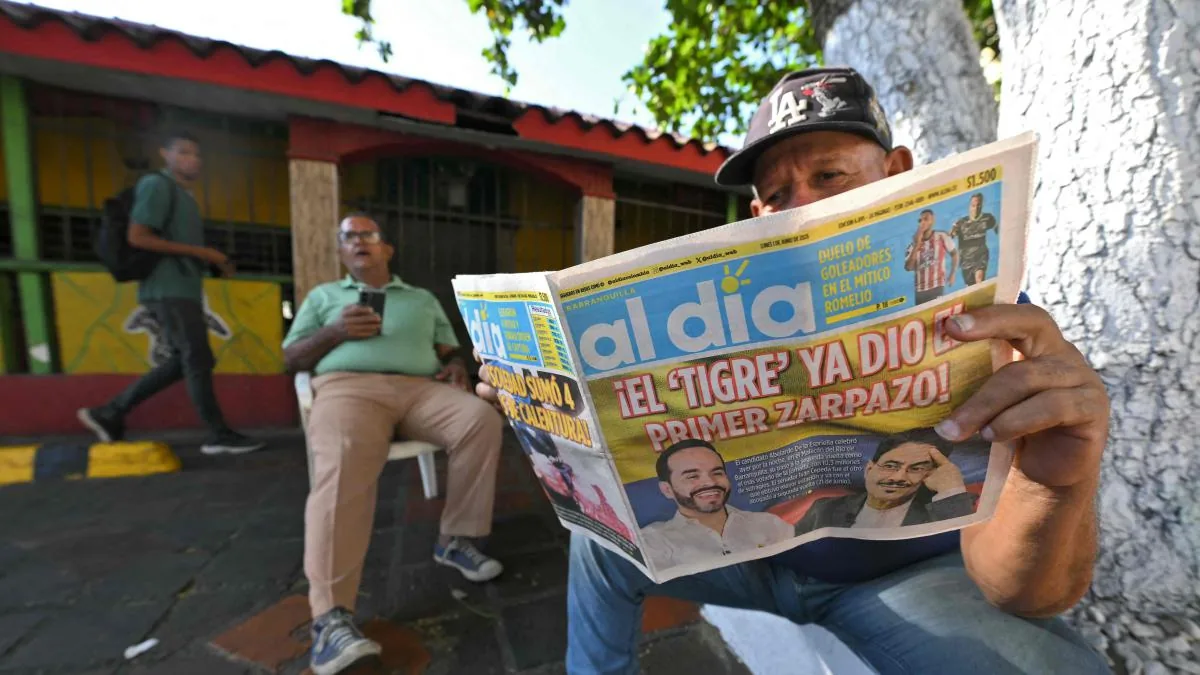
The media lawyer Abelardo de la Espriella proposes a shock plan in the style of Bukele in El Salvador. Iván Cepeda, senator of the ruling Historic Pact, proposes to continue the legacy of the current president Gustavo Petro. The problem is that, so far, Petro’s strategy of simultaneous dialogue with dissident armed groups has not worked. On the contrary, fear and a sense of alarm have taken hold in areas such as Cauca, in the southwest of the country. The militarized roads and warnings from taxi drivers and other passersby when setting foot in Cali attest to this. So do the WhatsApp chains where videos of the latest attacks with trucks flying through the air, explosive attacks against traffic agents, and license plates of vehicles supposedly used by these dissident armed groups of the FARC are shared. It is no wonder, in the first five months of 2026 there were 54 massacres with 233 dead.
It is not only the FARC dissidents who terrorize the population. The Gulf Clan and the ELN (National Liberation Army) are also part of this list of groups that control drug trafficking corridors while disputing and gaining more and more territory. Abelardo de la Espriella promises that with an air offensive backed by the United States and Israel and with the construction of ten maximum security mega-prisons financed with private capital, he will manage to disarm these groups. But the truth is that during the last five years these groups have doubled their members, according to the CORE Foundation.
Alongside the rise of armed groups, coca leaf crops, the base material for cocaine production, have not only increased but reached their historic maximum in 2025, according to the UNODC, the United Nations Office on Drugs and Crime. In response, the United States withdrew Colombia’s certification as a key ally in the fight against drug trafficking – although it later granted an exemption to avoid cutting funding abruptly. Washington took the opportunity to label Petro’s policies as disastrous and ineffective. During his government, crop eradication fell drastically: from 103,257 hectares in 2021 to 8,051 in 2025.
Read more The witnesses say that the Sant Roc gunman shot the minors
All candidates agree on policies of forced or voluntary eradication, crop substitution, seizures, etc. However, the problem arises in the execution of these techniques. Manual eradication exposes the “eradication workers” to threats and violence from armed groups. Furthermore, due to distrust towards the State, many oppose eradications and negotiations occur on the ground to count more eradicated crops than were actually eradicated.
Another hot potato the next president will inherit is the health system crisis. According to the latest CNC (National Consulting Center) survey, almost 4 out of 10 Colombians want health to be a government priority for the next president. The system is on the brink of collapse, with a lack of appointments, specialist doctors, and absence of medicines. Currently, the EPS (Health Promoting Companies) – private or mixed companies similar to mutual societies – finance medical care and act as intermediaries coordinating, authorizing, and paying for medical services. However, dissatisfaction is widespread. Daily, about 5,700 complaints are filed with the National Health Superintendency. It is estimated that the debts EPS have with hospitals and other health providers amount to about 6 billion euros and there are about 20 million people in EPS intervened by the government, leaving them in a situation of instability. EPS argue, on their part, that the problem is due to the little money the State recognizes per patient. According to their reasoning, the amounts are not enough to cover all procedures.
Under these circumstances, medical guilds and the hospital sector consider that, to start, the real amount of debts must be determined and a mechanism to normalize the flow of resources established. From the political side, proposals to solve this crisis paint a complex and polarized scenario. De la Espriella’s candidate proposes an injection of just over 2 billion euros into the sector. Cepeda proposes reversing the privatization of the health system with a “structural reform,” the same one presented by the Historic Pact that was unsuccessful in Congress. Huge challenges for the next occupant of the Casa de Nariño as these are structural issues whose discontent has lasted for decades.
Read more Teachers, doctors, Rodalies and politics