








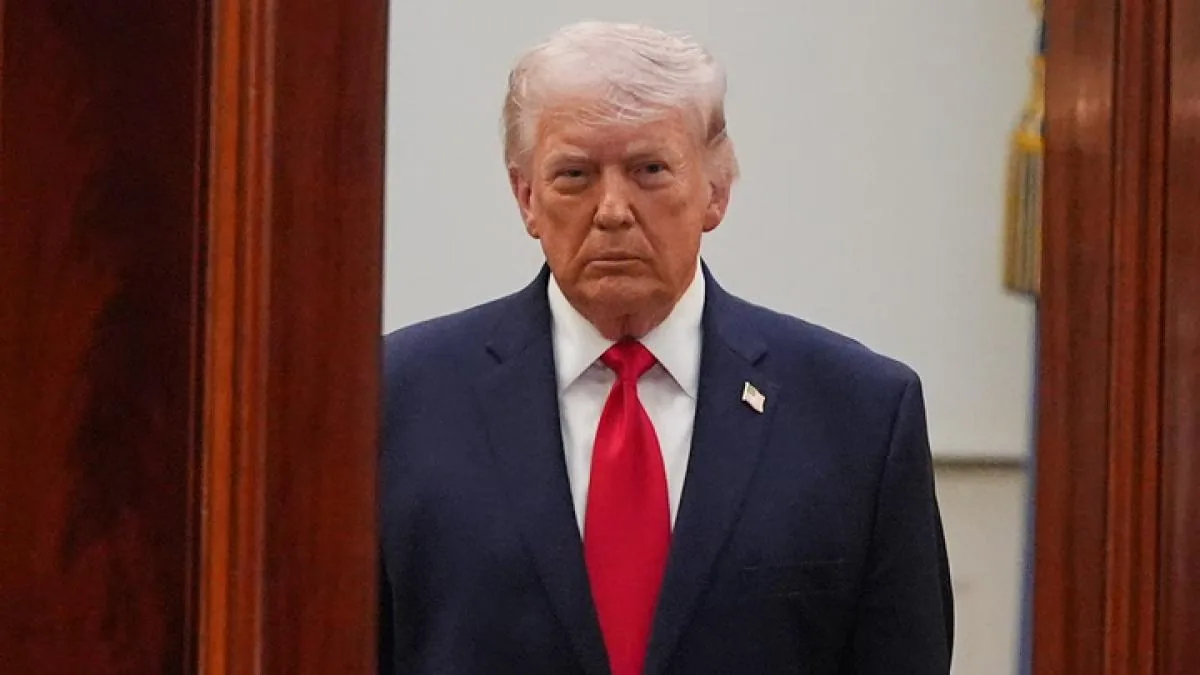
The pressure that the U.S. president, Donald Trump, wants to exert on Germany, from where he has just withdrawn his troops, also extends to trade agreements. Yesterday, out of nowhere, Trump announced that he will raise tariffs on European cars again, from 15% to 25%, claiming that the European Union is not complying with the agreements of the Joint Declaration signed by both parties last July.
Announcement or threat, the European Union responded today, Saturday, that it is fulfilling the commitments made with the United States and reserves the right to respond to protect its own interests. “The EU is fulfilling the commitments of the Joint Declaration” and “we keep the U.S. Administration fully informed at all times,” a spokesperson for the European Parliament Commission told Europa Press.
Thus, the spokesperson warned that “in case the United States adopts measures incompatible with the Joint Declaration,” they will keep all options open to protect the interests of the European Union.
The Joint Declaration between the European Union and the United States is a trade framework reached in July 2025 that, among other points, establishes maximum tariffs of 15% on most exports and commitments by the EU to purchase U.S. energy worth 700 billion euros, in an attempt to avoid a trade war.
This new tariff increase is especially burdensome for Germany. It could mean a production loss of almost 15 billion euros for its economy, according to the Kiel Institute for the World Economy (IfW), which reported this on Saturday to Reuters.
The Kiel Institute’s estimate highlights the vulnerability of the largest economy in the European Union to U.S. import tariffs, which have already cost the German automotive industry billions.
“The effects would be substantial,” said IfW president Moritz Schularick, and production losses would amount to about 30 billion euros in the long term, according to the institute’s analysis. “Germany’s already slow growth rate would be greatly affected,” noted Julian Hinz, an economist at the IfW.
The institute currently forecasts that the German economy will grow by 0.8% this year. Other European economies with significant automotive sectors — including Italy, Slovakia, and Sweden — could also suffer significant losses, it added.
The chief advisor to the German Finance Minister, Jens Suedekum, told Reuters that “the EU should just wait and see what happens for now. It is well known that Trump rushes to suspend or withdraw his grandiose tariff threats.”
He also added that the U.S. president must explain why he believes the EU is not complying with the current trade agreement, while noting that it is also unclear whether there is a legal basis for the latest tariff threat.