The Education Department of the Community of Madrid has put the continuation of the language assistant program, especially for English, for the 2026-2027 school year in doubt, due to various court rulings and investigations opened by the Ministry of Labor’s inspection in other autonomous communities regarding possible irregularities in the hiring of such personnel.
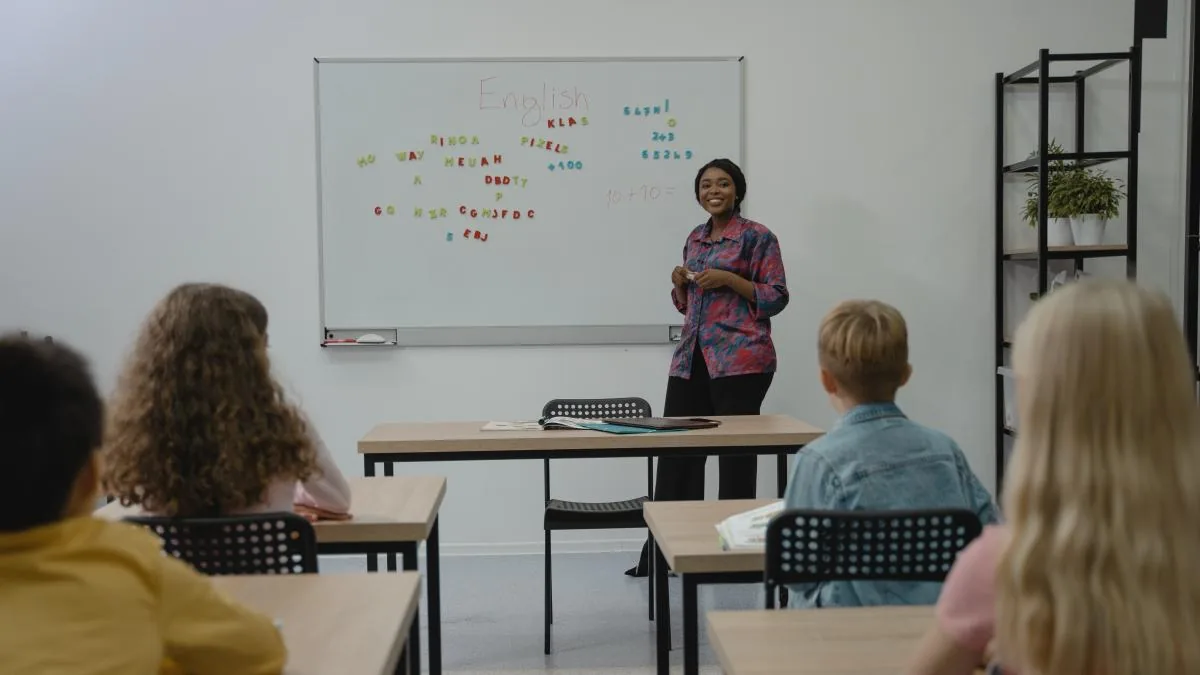
These young people, mainly English speakers from thirty different nationalities, come to Spain to collaborate in schools and institutes supporting the main teachers who teach their classes in English and some experimental programs in other languages.
One of the issues on the table is that according to the Ministry of Education, they come through exchange programs with other countries, but the Ministry of Labor has conducted inspections, for example, in Aragón, because there were court rulings concerning the tasks performed by these assistants.
Since 2024, if the assistants are hired as interns, they should receive specific training and the companies that hire them must contribute to social security.
Figures for the Community of Madrid
During recent years, there are about 2,750 conversation assistants, mainly in English, French, German, or Italian, providing support to 400 schools and nearly 200 institutes in the Community of Madrid, which are part of the Spanish-English bilingual program that began in the 2004-2005 school year, as well as other programs in other languages. They access educational centers through three channels: the community quota, the Ministry of Education quota, or through the Fulbright program. They work 16 hours a week in the centers and earn about 1,000 euros per month.
The Education Department, led by Mercedes Zarzalejo, through the director general of human resources, Miguel José Zurita Becerril, has already informed social agents that this program might not be activated for the 2026-2027 school year due to irregularities, according to various sources familiar with the facts.
From the human resources general directorate, it is estimated that Madrid could face a fine of 38 million if it does not regularize the situation of this personnel, since performing educational tasks requires meeting certain safety criteria within the labor world and contributing to social security. Apparently, so far, the Madrid Administration has been required to provide the relevant documentation to prove that these young people also receive training.
Various sources indicate that the Ministry of Education is coordinating with the different Autonomous Communities the methodology to properly hire these assistants.
Some autonomous communities, such as Andalusia or Aragón, have eliminated much of these linguistic support positions due to court rulings reporting irregularities in some hirings. They now limit hiring through the programs currently in force at the Ministry of Education.
Requirements to be an assistant
To participate in these programs, candidates must have a university degree, a certificate proving no criminal record, and another certifying the absence of sexual offenses. Then, EU citizens must provide the European Health Insurance Card and their identity card or passport. Non-EU citizens must provide a passport, visa, and health insurance. Accommodation, food, and round-trip transportation expenses to their country of origin are their responsibility. Once selected by an external body, the Ministry of Education, Science and Universities transfers their data to the general subdirectorate of bilingualism and assigns them a place in the schools. Most assistants collaborate with one center, although some may be assigned two. The monthly payment is made by the centers, about 1,000 euros per month. It is very important that they have the appointment letter because it verifies that they will serve as conversation assistants in Spain. This document is signed by the director general of bilingualism and teaching quality and includes a barcode to verify the document’s authenticity. The Community of Madrid’s program runs from October 1 to June 30. The Ministry of Education quota period runs from October 1 to May 31, and Fulbright assistants from September 15 to June 14. To be legally in Spain for those two years, non-EU citizens apply for the Foreigner Identity Card (TIE) and EU citizens must obtain the Union Citizen Registration Certificate (CRCU). Additionally, they must open a bank account in a Spanish entity to receive their monthly allowance.
These English assistants come to Madrid to support oral exams at the centers, prepare students in pronunciation for Cambridge tests, etc. Officially, according to the ‘Conversation Assistant Guide’ of the Community of Madrid, their functions are “to promote the development of students’ oral skills and act as cultural ambassadors of their country. Besides conversing with students always in their mother tongue, they coordinate with teachers to prepare tasks included in the class planning, as well as provide linguistic support in the classroom. They also help with grammar, pronunciation, and intonation aspects.” However, they cannot be responsible for managing groups, nor face behavioral and discipline problems of students alone. They also cannot prepare or correct exams, tests, or controls, nor perform supervision duties in playgrounds or dining areas.
Are they interns or staff?
One of the issues on the table is that in Spain, since 2024, interns contribute to social security through the companies that hire them; whereas in these cases of language assistants, they do not. This is one of the main problems perceived by the sector and the companies involved in finding these natives.
The Madrid Education Department points to the Ministry of Education, since for more than 20 years it has authorized the arrival of this type of personnel, as Spain also sends students with similar programs to do internships in other countries. Therefore, the Ministry is clarifying to the Autonomous Communities the correct hiring methodology for this type of support in educational centers, as has happened, for example, with scientists.
The result is that this May there is much uncertainty among the management of educational centers in the Community of Madrid due to rumors that next year they will not have this support staff.
The unions’ solution
The major unions point out to La Vanguardia that the solution is to “hire interim teachers to perform these tasks, as there is a job pool,” although the cost would be higher than the current one. In their view, this is “structural staff in the centers of the Community of Madrid, since the current teachers cannot perform more than their 25 hours already taught in classes.” Therefore, education sectors of the major unions detail that “this is a legal fraud because they arrive as assistants, i.e., interns, but work as teachers, teaching about 16 hours a week.”
In the first year, assistants attend a day organized by the general subdirectorate of bilingualism and are given access to a mandatory online course to learn their functions and provide methodological training throughout the academic year. They also have to submit a paper at the end of the course and complete a survey designed by the program management team to renew for the second year.
The key is to know whether Zarzalejo’s team will continue with the current hiring system, suspend it, or seek other formulas to maintain bilingualism in public schools, one of the flagship initiatives of Isabel Díaz Ayuso’s government in recent years.