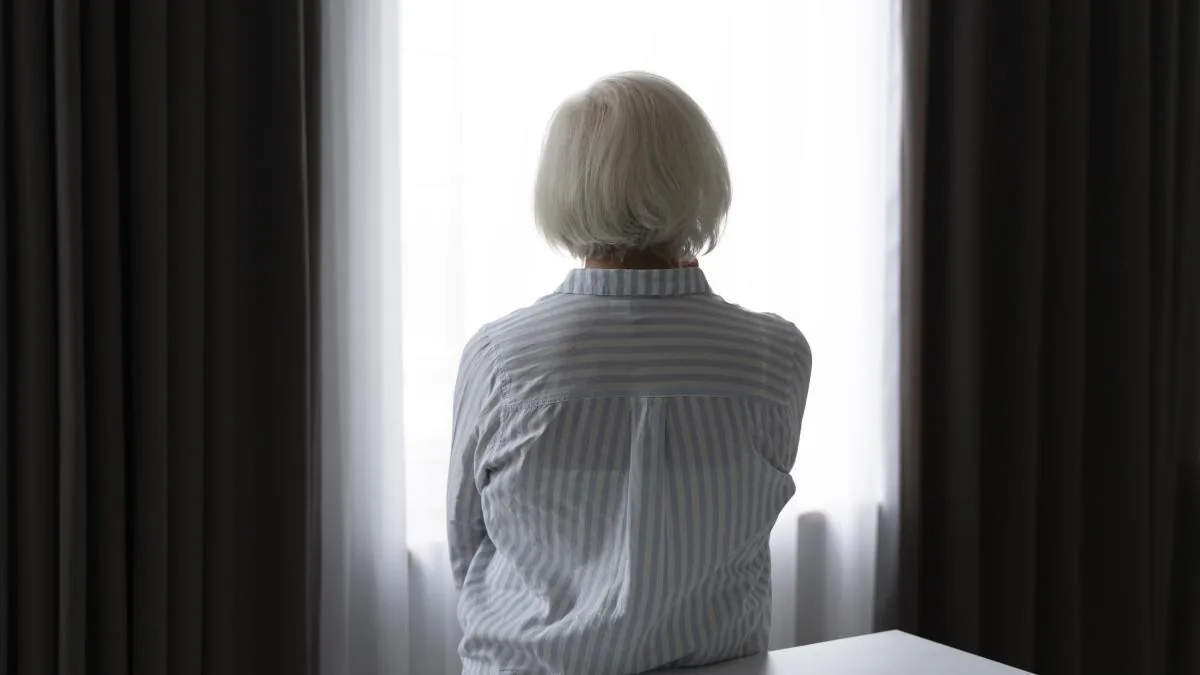
“This is the cross I have been given” or “marriage is a lottery and it is for life.” These phrases, still repeated today by older women, reflect one of the less visible realities of sexist violence: resignation and learned helplessness. In this population group, the ‘culture of endurance’ lasts for decades, often within a context of control, humiliation, and abuse normalized by the generational culture to which they belong.
Read more Israel lashes out at Lamine Yamal for waving the Palestinian flag
Various specialists debated this issue yesterday at the II Conference on Violence against women in situations of special vulnerability, organized by the Fundación Hospitalarias. The meeting addressed the factors that contribute to the invisibility of gender violence in older women, as well as the social, institutional, and personal barriers that hinder their identification as victims and limit their ability to seek help.
The factors of vulnerability
“A woman may find herself in a situation of greater vulnerability due to factors such as economic and emotional dependence, fear of retaliation, loneliness or social isolation, as well as ageism,” detailed Jordi Muñoz, president of the Association for the Research of Elder Abuse EIMA. In addition, there may be physical, psychological, or cognitive limitations associated with age.
According to the study Women over 65 years old victims of gender violence, carried out by the Red Cross and Carlos III University for the Government Delegation, 40% of the surveyed women victims of violence had been suffering abuse for more than 40 years and 27% between two and three decades.
Also read
Furthermore, fatal victims over 60 years old have more than doubled since 2019, rising from 9% to 18.8% in 2025. Despite the increase and greater social awareness, gender violence against older women remains deeply invisible.
For Marisa Rebolledo, an expert in prevention and care of gender violence, this reality is partly due to low reporting, but also to a combination of cultural, social, and generational factors.
Read more A non-aggression pact hovers over Kitchen
They maintain hope that their aggressor will die before them to escape that spiral of abuse
Marisa Rebolledo
Coordinator of the Ágora Team
“Many have endured decades in silence, within relationships marked by gender roles. They are afraid to report and to break the family nucleus,” she assured. They also do not recognize themselves in that violence, as they were raised under the idea that marriage was for life, where separation meant a social and economic stigma, especially during the Franco era. Another key role is working on their knowledge of their rights, since many grew up without gender violence laws and basic recognized rights did not exist.
This resistance to change and fear of the unknown, typical of age, make “many women perceive rebuilding their lives as more traumatic than remaining in the situation of violence.” Additionally, Rebolledo pointed out that “they find it hard to project their future five years ahead and maintain hope that their aggressor will die before them to escape that spiral of abuse.”
Furthermore, the expert expressed that the family environment does not always support or understand a possible separation or does not support the mother’s decision.
Mónica Ramos Toro, feminist geroanthropologist, warned that the lack of recognition of gender violence in older women not only affects the victims themselves but also families, professionals, and society in general: “The idea persists that those who suffer this type of violence the most are young women.” Ramos exemplified this invisibility with a comparison about healthcare detection: “If a young girl appears in the emergency room with a broken arm after falling down the stairs, we don’t believe it; well, we don’t believe it, by default, in the 80-year-old,” thus avoiding attributing it to aging.
The majority of caregivers of dependent people are women and they don’t kill anyone
Mónica Ramos
Feminist geroanthropologist
Finally, the coordinator of the Unate Social Group wanted to condemn the so-called “crimes of compassion,” that is, cases in which men who care for their dependent partners end up killing them and, subsequently, some take their own lives. “Regardless of whether there was prior violence or not, that is gender violence,” she stated firmly. And she added: “The majority of caregivers of dependent people are women and they don’t kill anyone. If they do, either they have to learn to care, or we must include this perspective in the dependency law, which we are not doing,” she concluded amid applause from the attendees.
Read more The trial against the Pujol family is ready for judgment