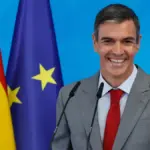
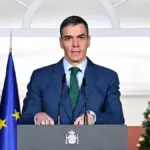



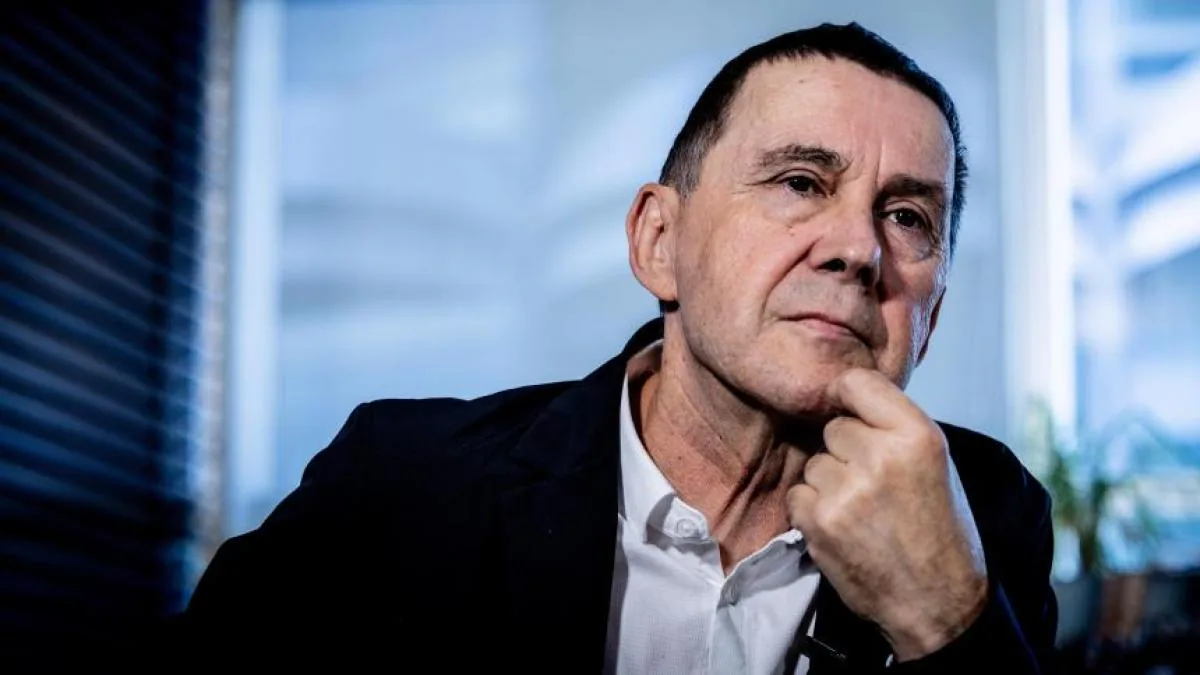
The Spanish political board is always moving, but the vibration is special these days. There are pieces that may fall to the ground. In this context, La Vanguardia interviews Arnaldo Otegi, leader of EH Bildu, the most stable and silent ally of President Pedro Sánchez.
Read more Explanations no matter the cost
The great scandal
You cannot judge the Zapatero case without taking into account the context and the U.S.
The most reliable ally, even today?
I would not define Euskal Herria Bildu as a reliable partner, but as a responsible political agent. In the last general elections it became clear that in Euskadi and Navarra people voted mostly so that the Spanish right would not govern. That was the mandate. From there, we proposed the vote of investiture of Pedro Sánchez based on three premises: the application of ordinary penitentiary legislation to ETA prisoners, social policies in favor of workers, and addressing the national question in democratic terms. We have been responsible, and we will continue to be. We do not set red lines, we do not approach negotiations in terms of public agitation, and we want to be a political agent that fundamentally serves our people. We have been consistent and coherent.
The President of the Government who negotiated the end of ETA, José Luis Rodríguez Zapatero, is currently under judicial investigation for an alleged crime of influence peddling and money laundering; the PSOE is in a very compromised situation politically and electorally, as we have just seen in Andalusia; you lead some polls in the Basque Country, disputing primacy with the PNV, and more than 70% of ETA prisoners are in semi-freedom status. What does this balance tell us?
Regarding the indictment of President Zapatero, I think it should not be detached from the context. We are facing an attempt to return the PSOE to the old regime pacts, to classic bipartisanship. Any analysis that does not take this into account is mistaken. Let’s add the external factor, the United States factor. That said, Zapatero will have to give his explanations. Prudence.
Prisoners.
Look, what is being applied is ordinary penitentiary policy. If Basque prisoners had always been applied that legislation, more than 90% would be in semi-freedom conditions, but they wanted to apply an absolutely extraordinary regime to them.
Are you going to change your position as a result of the Plus Ultra case affecting Zapatero?
We remain waiting. We are a bit oriental in this sense. We prefer to let things rest. We maintain our relationship with the PSOE, and a good relationship with all the political agents who made the investiture possible, I mean the confederal left (Sumar and Podemos), Junts, ERC, BNG… We have to intensify that dialogue.
Do you maintain contact with Junts per Catalunya and Carles Puigdemont?
We have never lost contact. We see each other once or twice a year.
Do you plan to see him soon?
Yes, I think we will be with him again shortly.
What is Bildu’s relationship with the PNV at the moment?
We have always wanted to maintain an open political relationship with the Basque Nationalist Party. It is true, we are in competition, but there should also be room for collaboration. We aspire to a Basque state pact, which also includes the Socialist Party and the confederal left, which is quite a minority in the country. It is not a tactical issue. Let’s get to the heart of the situation. We are at the beginning of a revolution, the artificial intelligence revolution, which can be much more disruptive than the industrial revolution, which was so important in the Basque Country in its day. If we add to that the challenge of growing authoritarianism, the old ways of doing politics, exclusionary governments become a thing of the past. It is time to make inclusive governments, broad-spectrum governments, with the broadest possible programs. I do not see the PNV willing, but we will keep insisting. Soon it will be ninety years since the first government of lehendakari José Antonio Aguirre (October 9, 1936). These are times for broad-spectrum governments, broad alliances.
If I understand correctly, you are proposing that PNV and EH Bildu run in the next general elections with a certain common program.
Read more Is Spain corrupt?
A minimum program. We believe that in the next Spanish general elections the Basque national democratic will should be able to be reflected with a shared minimum program, which would not lead to the obligation to form a single parliamentary group. And I add: a progressive government in Spain also needs a minimum program, which includes plurinational reform. We must not wait. The remainder of the investiture must have a purpose. We have to talk about it. We have to intensify contacts.
And here appears Gabriel Rufián.
I return to the previous answer. The debate should be neither about people nor about acronyms. Program. What is the political, social, plurinational program that will shape that project? It is not just about stopping the right, about beating them at the polls; it is about giving projection to a widely shared mood.
They would have to add Adelante Andalucía.
A debate in program terms could facilitate things. What does the spark of Adelante de Andalucía reflect? What has happened in Great Britain? In Wales, the sovereignist left has won. In Scotland, a broader spectrum sovereignism. In Ireland, the left sovereignism. What happens? People need to feel that they are part of a community in a world of artificial and volatile identities. People appreciate kilometer zero politics: concrete responses to concrete problems, proximity, contact… Against the national priority advocated by the far right; plurinational, popular, sovereignist, and anti-authoritarian priority.
Will we see a party like Aliança Catalana in Euskadi?
I do not see it. There are very minority sectors that could be there, but the strong presence of the independentist left prevents them from crystallizing today. I do not see on the horizon the possibility that a phenomenon like Aliança Catalana progresses in the Basque Country. I say this also with some caution, because no one is vaccinated against those phenomena.
Have you corrected your discourse on immigration? What is your position?
We have always defended and continue to defend that anyone who lives and works in the Basque Country and wants to be Basque is Basque. When they accused us of being exclusive nationalists, I told them: tell me the name of another country that proposes to grant nationality on the terms we propose. We do not formulate the equation immigrants equal insecurity. We permanently flee from that equation, which is an evil approach. Thirdly, we believe that the phenomenon must be regulated, there must be rules. Rights and duties. We believe that welcoming immigration makes us better as a people. This is our political position. We are not do-gooders, we do not say everyone is good. We say everyone must understand that there are rights and duties. We all agree on that, but that applies equally to someone coming from sub-Saharan Africa as to someone born in Ataun (municipality of the Goierri valley, in Gipuzkoa). That is the rule we give ourselves as a community. This is our position.
To conclude, what is your personal relationship with the new president of the PNV, Aitor Esteban?
Well, we have a formal relationship. The truth is I do not know him much, since he has done much political life in Madrid. We had a very good relationship with Andoni Ortuzar, former president of the Euzkadi Buru Batzar. We do not need to be friends, but we need to understand each other. That is, we both belong to a national political culture, abertzale. We will compete, obviously, but we need to compete and collaborate, compete and agree.
Read more The lifting of the secrecy of the summary opens a new scenario for Zapatero