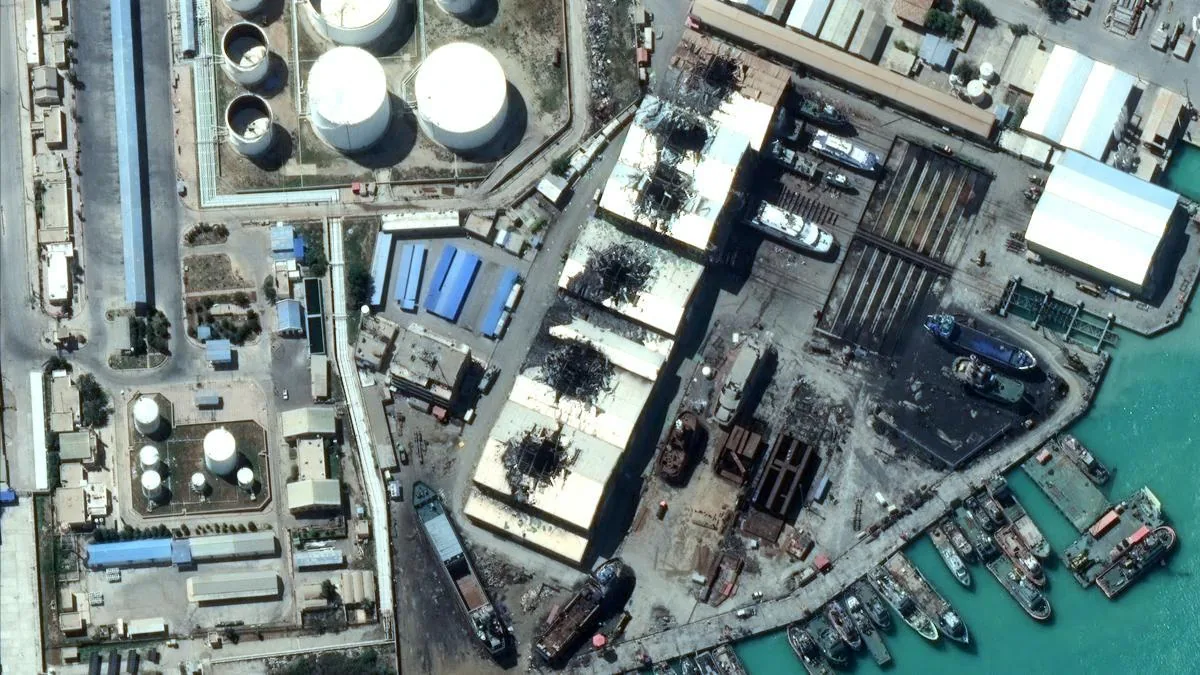
The meadows of Bushehr’s maritime corridor are full again. The heat has subsided, and the sun begins to set over the blue waters of the Persian Gulf. Entire families spread blankets in any free space, preferably under the palm trees. They have everything they need to spend a couple of hours enjoying the sea breeze: gas stoves on which they heat the food they have prepared, thermoses full of tea, and there are even those who load their hookah. A few have taken to the sea with their parachutes to kitesurf, taking advantage of the breeze at this time of year, and several children play on the beach. “Everything seems normal, but nothing is,” describes Amin – as he wants us to call him – who shows us videos and photos taken in Bushehr a few days ago in Tehran, when the ceasefire had already begun.
Read more Iran clings to the Strait of Hormuz
Foreign journalists based in Iran have not yet received permission to visit attacked cities outside Tehran.
“People are on the streets, but trade is dead, many have lost their jobs, and almost no one has money,” continues this local businessman who lives halfway between Bushehr and Tehran. Many of his friends, he recounts, have received calls from their employers telling them they have lost their jobs. Fishermen went forty days without going to sea, and many had nothing to eat. Businesses closed, and the city’s port, which handles large commercial ships, remains inoperable.
The port remains inoperable, and the economic crisis caused by the war has led to layoffs
The situation became even more complicated since Donald Trump announced a blockade for ships arriving at or departing from Iranian ports, such as Bushehr. “Shipping companies are not yet announcing their new cargo trips; everyone is taking precautions,” Amin confirms. This halt has an even greater impact on this city of nearly 300,000 inhabitants. Many families are living on pensions.
He himself has had problems; he is thinking of pawning some jewelry to survive what he calls a “temporary” situation. “It had never happened to me before,” admits Amin, who, like others who collaborated on this report, has agreed to help rebuild life in this Persian Gulf city, which has been one of the most attacked during the war.
“I think only Tehran and Isfahan were bombed more, but Bushehr is smaller,” says this man. He recalls from the war days that fighter jets, especially American ones, flew over the city several times a day to the point where children would play to see who could spot them first. After all, their American bases in the Gulf countries are only kilometers away from Qatar, Bahrain, or Kuwait.
Bushehr is a fundamental enclave on the trade route with neighboring countries
He reconstructs the story of one of his friends who is part of that sector of the Iranian population that wants the end of the Islamic Republic. Bushehr, the merchant recalls, is no exception in Iran, and its inhabitants are divided between those who support the system and those who have broken ranks with the Islamic Republic. Within this group, there are dozens of tendencies, but Amin’s friend is part of those who believed that attacks by the United States and Israel could bring “beneficial changes.”
“But a single detail made him change his mind,” he explains. It all happened one afternoon when he was walking by the sea and felt a fighter jet in the sky. By its course, it was clear that the pilot was returning to his base. Suddenly, he began to perform acrobatics, as if he were enjoying the moment. “It was as if he was happy to have completed his mission without understanding that human beings live below,” he reconstructs. Since then, he changed his mind and believes that Iran must stand up to Donald Trump.
Bushehr’s strategic importance is due to multiple reasons. First, it is one of Iran’s most important cities on the Persian Gulf and fundamental to the trade route with neighboring countries, with whom it has a relationship dating back centuries. Some families are divided between different countries. The “lanchas,” those typical wooden boats of this part of the world, have historically sailed these waters, carrying vegetables, fruits, fish, and all kinds of products back and forth across the Persian Gulf.
The city is located opposite Kharg Island, from where 90% of Iranian oil is exported
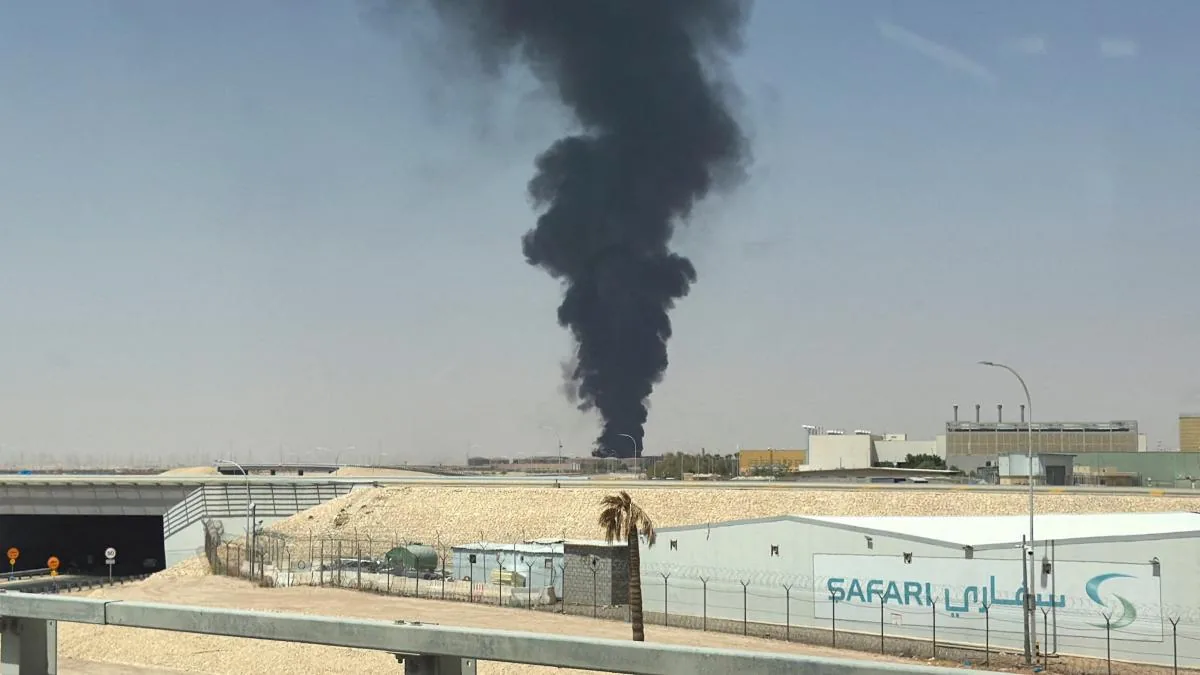
Additionally, Bushehr is located opposite Kharg Island, from where 90% of Iran’s oil is exported, and hosts multiple bases of the Iranian army and Revolutionary Guard. This includes the air force and navy, which have ports near the city. The same ones that, according to its inhabitants, were attacked again and again during the war. The same happened with the airport, where civil and military aviation share runways. “The airport lobby is destroyed; they attacked it, and we don’t know why,” says Mehdi, a local musician who agrees to speak by phone from Bushehr.
But what makes it an essential site for Iran’s national security is that on its outskirts stands Iran’s only nuclear power plant, where fighter jets permanently targeted. Although they did not cause damage to the facilities, they did fire very close, and also repeatedly destroyed anti-aircraft defense positions located in adjacent areas. The official Russian nuclear energy company, Rosatom, which operates the plant, decided to evacuate thousands of its employees during the war.
This decision by the Russians increased tension among the population. The greatest fear its inhabitants had during the war was that the plant would be affected and there would be a radioactive leak. Rahele, who works for a local distributor, also says by phone that the hardest moment was one day when one of the television channels broadcasting in Persian from abroad assured that there was a possibility that the nuclear plant would be attacked. That day she had gone for a walk by the port, not far from where the plant is located. Everyone jumped into the car. “We didn’t think; we just started driving, but we didn’t know where we were going; we were just escaping,” she recounts. She says she will never forget the moment. “I understood what it means to escape a war without thinking about what you leave behind,” she adds.
The greatest fear its inhabitants had was that a radioactive leak would occur
What worries him most now is what will happen in the coming days. “I believe the war is not over, that it will resume, and none of us are prepared to endure more war,” he says. He confirms, however, that with the ceasefire, life has returned to the city. That the music silenced during the forty days of mourning for the supreme leader is heard again, that the promenade is full, and that some smiles are seen again. “There is life, but the economy is dead, and no one knows how it will recover,” he concludes.
Read more Jódar, we have to wait a bit: Fils blocks his way to the Godó final