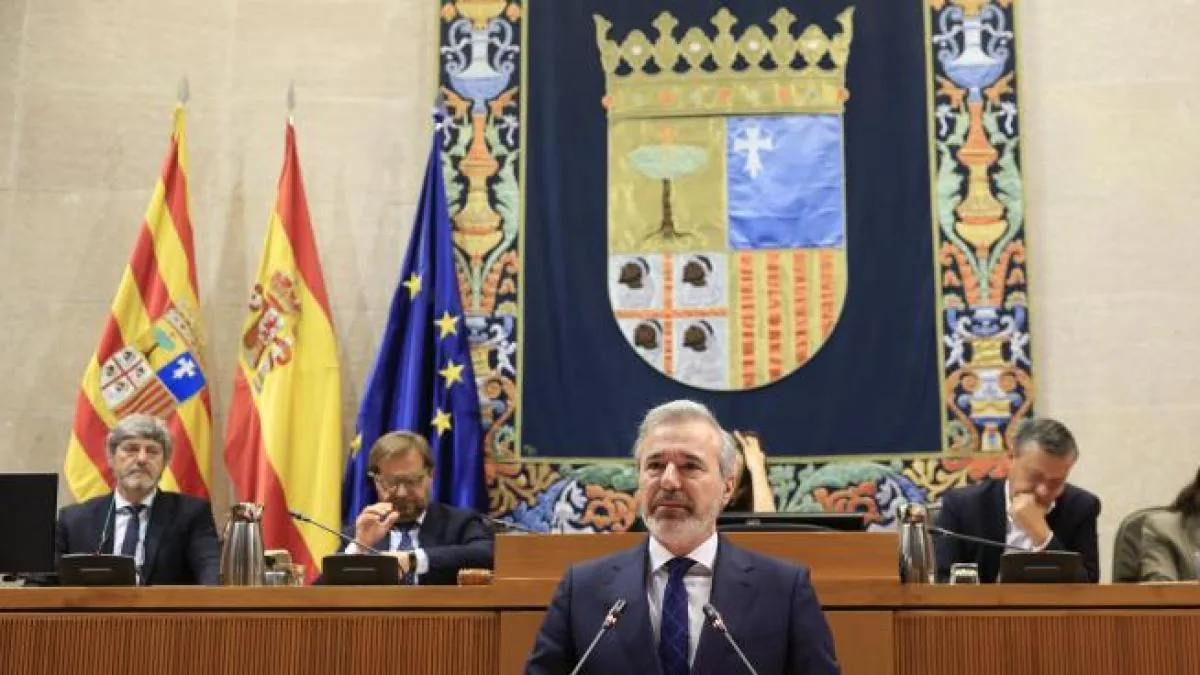
The popular Jorge Azcón is again president of Aragón. After almost five months of institutional deadlock in the community, the popular leader has renewed the position with the support of his 26 deputies and the 13 from Vox (one was absent), which in February doubled its representation and has made that new weight count both in the ideology of the government program and in its organizational chart, where they will hold a vice presidency and three ministries (Deregulation, Social Welfare and Family; Environment and Tourism; and Livestock, Agriculture and Food).
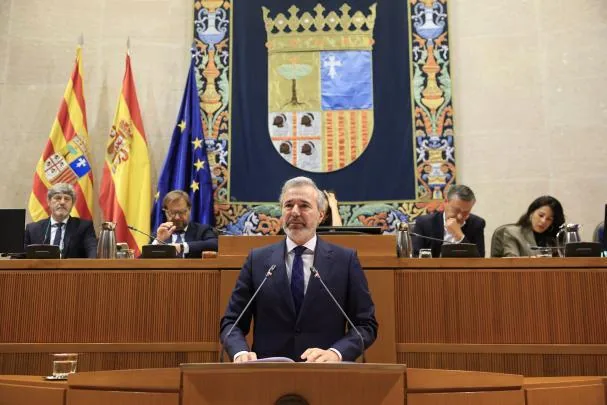
“Second parts were never good is a phrase made for cinema, not for politics,” since “decisions are made with greater knowledge of the cause and always thinking of the best,” defended the popular moments before voting for his second coalition government with the ultras in three years.
Azcón is the first popular to manage to repeat in office in this community of 1.4 million inhabitants. In December, he called elections pushed by Génova to sink the PSOE and free himself from his dependence on Vox, which prevented him from passing the budgets. He achieved the first objective – former minister Pilar Alegría dropped to 18 deputies, her historic low – but not the second, losing two deputies along the way.
After two and a half months of negotiations in the strictest silence – “discretion and slow cooking,” he proclaimed again and again – both groups gave birth to an agreement last week, ten days before the deadline to call elections again ended.
Aragón
Azcón defends the legality of the principle of “national priority”
Since then, the popular has insisted on defending that pact tooth and nail, which he defines as the “natural fruit” of the election results, and especially the inclusion of the controversial principle of “national priority” for access to aid and public housing, which faces opposition from the central government, the Church, or even leading popular figures such as the Andalusian Juanma Moreno Bonilla or the Madrid-based Isabel Díaz Ayuso.
Despite the criticism, Azcón assures that the application of this principle is linked to a “real, lasting and verifiable” rooting in the territory and that it will be applied in accordance with the “strictest legality,” with all decisions taken endorsed by the Executive’s legal services. The agreement “does not speak of those born in Spain nor does it require any nationality,” he insisted today.
However, his partners in Vox continue to emphasize nationality. “We are not afraid to say it: first the Aragonese and the Spaniards,” said their regional leader, Alejandro Nolasco, this Wednesday, for whom “public aid cannot become an opaque lottery that ends up harming precisely those who have contributed the most with their effort, work, and taxes.”
Nolasco, author of a book about the Blue Division and more than likely vice president of the new Government, began his speech attacking the left-wing groups and their criticisms of the lack of democracy in the government agreement, and compared it to what was experienced in the Second Republic, when the PSOE and the Communist Party “staged a coup” in Asturias after the right’s victory. “The left has always been like this: it only recognizes democracy when the results are favorable to it,” he pointed out.
Furthermore, the ultra also warned Azcón that the government agreement between them “is not a blank check,” so they will be “firm, constructive, and demanding” in fulfilling what was signed.
The opposition parties have been much more critical, attacking an agreement forged in Madrid under the supervision of the national leaderships of the two signatories.
For the socialist Pilar Alegría, this agreement opens the door to a “process of discrimination” that will segregate between “first and second-class citizens.” “It normalizes the anti-coexistence discourse and legitimizes the targeting,” she insisted. The former minister reproached him for “bowing to Vox’s mandate” and assuming their “frameworks, approaches, and demands” while the ultra formation tries to surpass them electorally. “They have won the elections by going backward. They will try to devour them from within,” she warned.
For his part, the representative of Chunta Aragonesista, Jorge Pueyo, criticized the “pact of shame” for containing a “catalog of irregularities” and leaving the already proclaimed president “handcuffed.”