With his military offensive on Iran, Donald Trump created a problem that did not exist before the war: the blockade of the Strait of Hormuz.
Tehran has turned the de facto closure of this maritime route into its main pressure tool in the current conflict. The blockage of the corridor that channels 20% of the world’s oil and liquefied natural gas traffic is a headache for everyone, and the ayatollah regime is playing with it. It will hardly give up such an effective weapon, especially considering that at any moment it could be subject to new attacks by Israel and the United States.
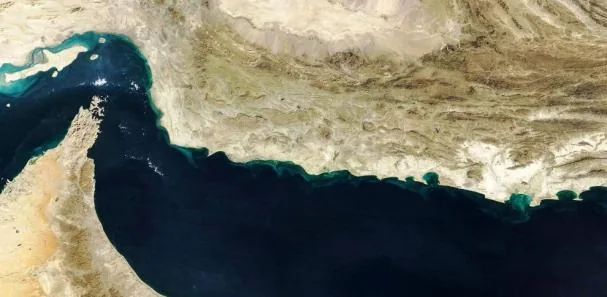
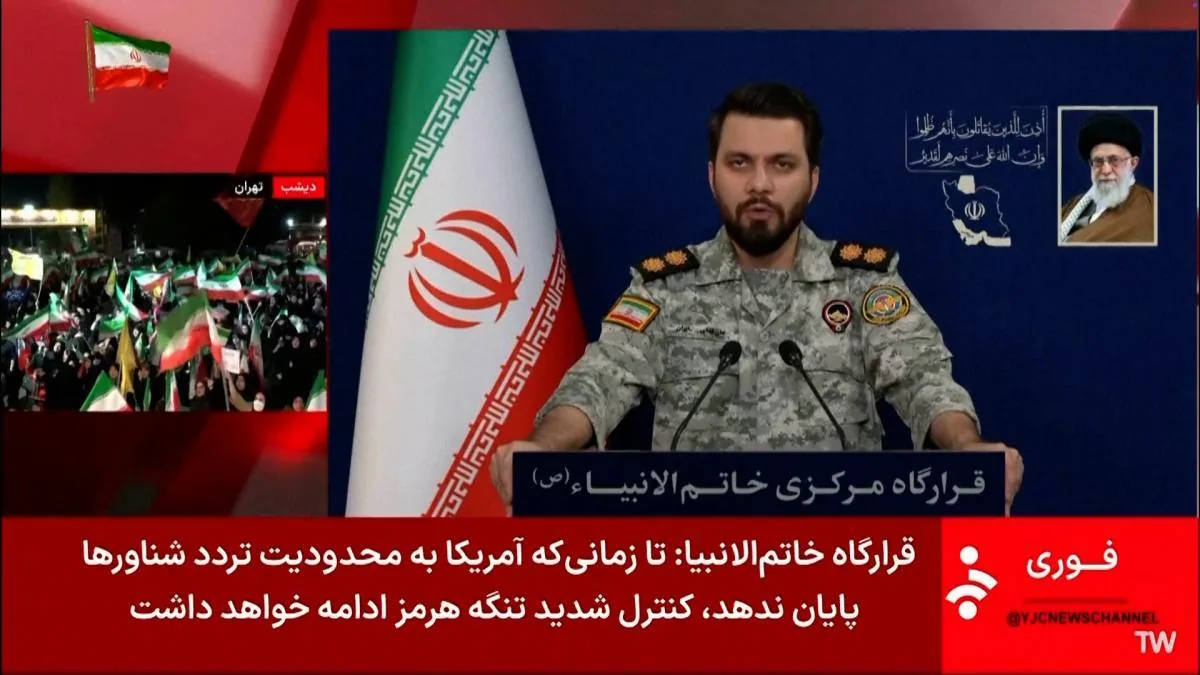
The two-week ceasefire agreed by Washington and Tehran on April 8 should have served to reverse this situation, at least temporarily. Both Trump and Iranian Foreign Minister Abbas Araghchi assured that the truce implied the reopening of Hormuz. But the reality is different. Yesterday, a day after Araghchi insisted that the strait was open, the Iranian Revolutionary Guard stressed that the route remains under its “strict management and control,” and to prove it, fired at two Indian-flagged vessels attempting to cross without authorization. According to the paramilitary body, the closure will be maintained until the United States desists from its siege on Iranian ports. Nothing has changed then: Iran is now dictating the rules in the waters of the Persian Gulf.
Tehran says that only commercial vessels carrying cargo not linked to “hostile” states can transit through Hormuz. Likewise, since the conflict broke out, all vessels must follow a “coordinated route” by Iranian authorities: vessels must navigate through waters close to the Persian country’s coasts and pass by Larak Island, where the Revolutionary Guard has set up a checkpoint where, if Tehran deems it necessary, a millionaire payment is demanded in exchange for obtaining permission to complete the crossing. Mahmoud Nabavian, a member of the Iranian Parliament, confirmed on Friday that this toll – illegal, according to international law – remains in force.
To justify the establishment of this route through Iranian territorial waters, the ayatollah regime argues that the central area of the strait – where vessels used to circulate before the war broke out – is riddled with mines. It is not known to what extent this is true, but, logically, no ship wants to be the first to check.
Complex situation
To the restrictions imposed by Tehran, the US blockade of Iranian ports must now be added
Furthermore, since last Tuesday, vessels wishing to cross Hormuz must also overcome the blockade imposed by the United States on traffic entering and leaving Iranian ports. A measure that Trump adopted after the failure of the negotiation round held on the 11th in Islamabad, and which the US president has already said he intends to maintain until his “transaction” with Iran “is 100% complete.”
To make this siege effective, the Pentagon has deployed more than a dozen military vessels in international waters of the Gulf of Oman, as well as a significant air contingent. Planes and drones fly over the area to alert of the presence of vessels susceptible to being blocked.
Read more Jódar, we have to wait a bit: Fils blocks his way to the Godó final
Maritime tracking platforms indicate that Washington-sanctioned vessels that had crossed the strait towards the Indian Ocean have had to stop or turn back due to the presence of the US fleet. This is the case of the Chinese tanker Rich Starry, which on Tuesday was heading to the open sea from Hormuz and was ultimately forced to return to the Persian Gulf. However, there are indications that some sanctioned ships might be circumventing the blockade.
As maritime risk analyst Tomer Raanan, from the specialized portal Lloyd’s List , summarized a few days ago, “confusion reigns.”
All this means that maritime traffic in Hormuz remains at a minimum, as in the weeks prior to the ceasefire coming into effect. If before the war, nearly 135 vessels transited through the strait daily, now rarely more than a dozen do so, according to data provided by tracking platforms.
Shipping companies believe that the situation in this strategic maritime corridor is far from normalizing. The Intertanko association, which groups independent tanker owners, stated on Friday that the controls imposed by Iran and the United States prevent talk of an opening of the strait, so their recommendation was to avoid the area as much as possible and postpone any journey that involves entering Hormuz.
Meanwhile, the ceasefire in Lebanon opens the door to new negotiations between Washington and Tehran. Should a meeting be held again, the issue of Hormuz will be on the table, but Iran has already made it clear repeatedly that its sovereignty over the strait must be respected. This is stated in the ten-point plan that the theocratic regime presented to the White House to frame the peace talks, where explicit reference is made to Iranian control of Hormuz. Trump said that plan was “viable,” so there might be room for an agreement on the matter.
For Iran, there is no turning back. The war has given it the key to Hormuz. And now that it has it, why would it hand it over, when it is its life insurance?