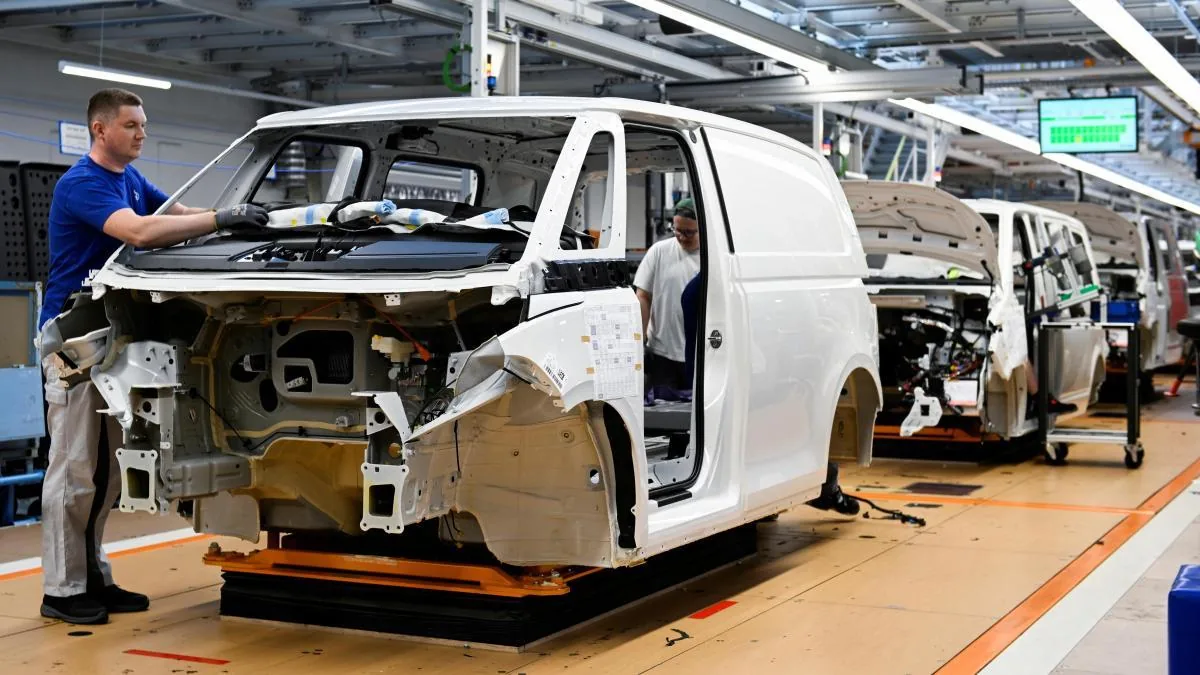
Germany is in crisis. It is not a crisis like the one suffered by the countries of southern Europe from 2008 onwards, as the toxic assets of the US financial market impacted European finances, and the government of Angela Merkel decided to lower a firewall curtain to protect its banks, its industry, its savers, and its internal political consensus. That firewall curtain was called the Austerity Policy and the southern countries were affectionately nicknamed PIGS. Courtesy of the Anglo-Saxon economic press, whose eyes gleamed at the possibility of the euro collapsing.
Read more Spanish triumph without celebration
Germany is now in crisis because four of the pillars of its economic model are in a fragile situation: the price of energy, the automotive industry, trade with China, and the quality of its infrastructure. These four pillars have come under stress in the short span of four years. We could say it all started with the Russian invasion of Ukraine in February 2022. Germany was abruptly forced to give up Russian gas, a fuel it had begun acquiring at a good price in 1973 during the great oil crisis and the Ostpolitik of the Social Democratic Chancellor Willy Brandt. Ostpolitik, the rapprochement to the East that caused so much suspicion in Henry Kissinger, the powerful Secretary of State under Richard Nixon. Half a century later, the Russia-Germany gas connection had two major undersea highways in the Baltic Sea, the Nord Stream pipelines, which one day in September 2022 exploded due to charges of plastic explosives placed by expert divers. The energy now consumed by German industry is more expensive. This price increase has reduced its competitiveness in the international market.
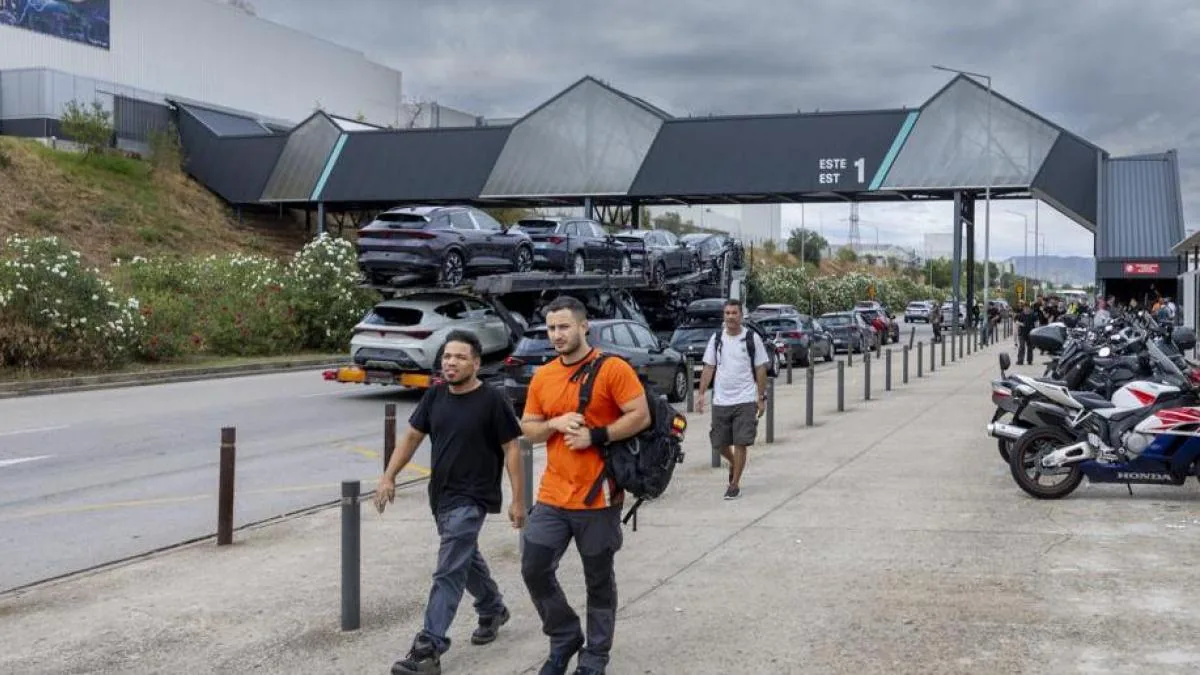
Trade relations with China have also become complicated. China is flooding Europe with very cheap products (cars, electric vehicles, steel, manufactures, consumer goods), which harm German exports. Instead of selling more German cars in China, agile Chinese automotive companies are conquering the European market with lower-cost electric cars for customers who fifteen years ago learned the hard lesson of austerity. The looming employment crisis at the Volkswagen automotive group is alarming. For the first time, the German government accuses the People’s Republic of China of distorting the market with heavily subsidized products. Germany has finally realized that many of its infrastructures (railways, roads, bridges, internet connection) are falling behind and need renewal. Germany, for example, has less fiber optic network than Spain, a country very advanced in this area, with coverage reaching almost 96% of households.
They have broken with Russia, trade relations with China are increasingly tense, their automotive industry faces serious structural problems, and the United States government interferes in their electoral processes to favor Alternative for Germany, a rising far-right party that this year may start winning regional elections. German Chancellor Friedrich Merz, a member of the CDU, a conservative party with a historic Christian democratic affiliation, has formally asked Washington not to interfere in German territorial elections, after learning that the US State Department has just created a five million dollar fund to finance civil groups and think tanks sympathetic to Trumpism in various parts of the world. Attention to the elections in the state of Saxony-Anhalt, former East Germany, scheduled for September 6.
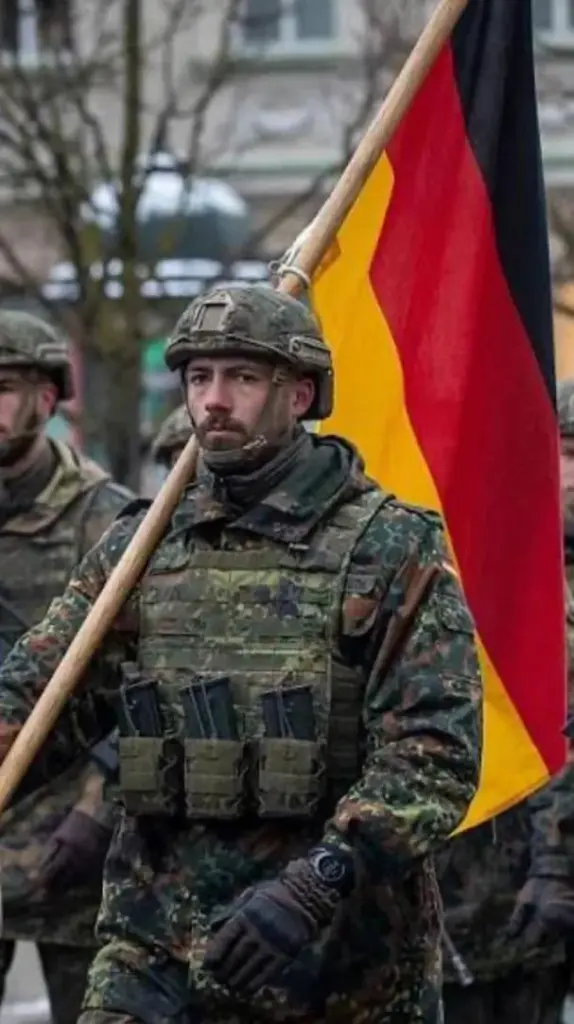
The German federal government is trying to react with massive investment in infrastructure (500 billion euros over a decade) and a strong commitment to rearmament as a technological lever. German rearmament. Those are big words. Germany also seems determined to accept the French nuclear umbrella if France continues to offer it next year. 2027: presidential elections in France, and legislative elections in Italy, Poland, and Spain.
Germany is rearming, while in Poland, Finland, and the Baltic republics fear is spreading of a possible Russian military attack in the next two years, depending on how the war in Ukraine evolves. Much tension is accumulating in the geographic quadrant defined by Berlin, Warsaw, Vilnius, Riga, Tallinn, Helsinki, Saint Petersburg, Minsk, Moscow, and Kyiv. Spain is far from that quadrant, but it is useful to visualize it to understand some of the things currently happening in Europe.
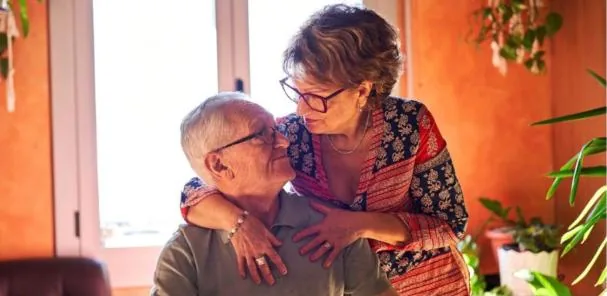
In this context, the German government has just announced a pension reconsideration plan. The coalition government formed by the CDU-CSU and the SPD (conservatives and social democrats) commissioned a group of experts to study formulas to guarantee the system’s sustainability, and they have just delivered their conclusions. The first proposal is to create a mandatory private capitalization system, complementary to the public system: workers and companies must allocate up to 2% of the annual salary to this pension. Additionally, the retirement age will continue to be delayed, reaching 67 years in 2031, and linked to life expectancy. The perspective is to reach 70 years. Lower pensions in a country where only 51% of retirees own their homes. In Spain, the home ownership rate among those over 65 rises to 85%.
There are nerves and in Germany they are starting to talk about pensions in Spain, that charming country that just won the Football World Cup, giving a lesson in teamwork, harmony, and style. That country that regularizes immigrants – most of whom have spoken Spanish since childhood – and refuses to spend more than 2% of its wealth on military expenses. A country whose GDP continues to grow above 2%, while Germany’s growth does not reach 0.5%. A Spain that has established special relations with China in recent times. A sunny and hot Spain that this year will again break records of tourist attendance and where foreign investors seeking second homes are increasing, because of what might happen in their countries. Polish investors, for example, are already among the main buyers. Spain, a calm rear country. A safe country, with calm people, with very tense, very tense, very tense politics, especially in the oven that is Madrid, which is a world unto itself. “Sánchez, son of a bitch.” “Feijóo, you don’t get it.” A country whose pensions are revalued each year according to inflation.
“German contributions to the EU must be drastically reduced. We cannot continue to allow our hard-earned money to disappear into European social assistance budgets while infrastructure crumbles in Germany, industry relocates, and small and medium-sized enterprises suffer the consequences of high energy costs. The federal budget must no longer be used as a personal waste by Brussels.” This recent text from the AfD reflects a widely held idea in Germany, the Netherlands, and other northern European countries about the welfare states of Spain, Italy, Greece, and, to a large extent, also France. They believe they are too generous. Is that really so? Home ownership tells us something about this.
CaixaBank Research recently published an analysis of the wealth of European families, based on successive waves of the Household Finance and Consumption Survey of the European Central Bank. It is worth stopping to compare Spain and Germany. In Germany, only 49% of households own their homes, while in Spain that figure exceeds 75%. In the lower income brackets, barely 26% of Germans own their homes, compared to a European average of 50%. In southern Europe the picture is very different: 75% in Italy and almost 80% in Spain. 54% in France.
Even more revealing is the comparison of ownership regimes among those over 65. Based on data from the Bank of Spain, CaixaBank Research estimates that 85% of those over 65 own their homes in Spain. In Germany, also with official data, the Pestel Institute places that percentage at 51.3%. A difference of 33 points. There is a factor to consider when evaluating this differential: in former East Germany there was no private property. After reunification in 1990, its workers reached retirement without home ownership; their children inherit little. The discontent in the eastern states now surfaces strongly. When it comes time to inherit, there is nothing. That resentment has given wings to AfD.
Read more Trump and Infantino contaminate football for the sake of business
A little-known fact: although Spanish per capita income is still much lower than German, the median net wealth of Spanish households (€196,365 in the second quarter of 2024) is very close to the German and exceeds the French (€171,000). This paradox is explained by housing: its price has risen much more intensely in Spain than in Germany since 2014, and already represents 64.2% of the total net wealth of Spanish households, compared to only 52.1% in Germany.
The Pestel Institute study was commissioned by the German trade association for building materials, and is based on a central thesis: home ownership is a key instrument against poverty in old age.
Are pensions sustainable in Spain? The relevance of pensions in relations between the European Commission and the Spanish government became evident during the Recovery Plan negotiation. Recall, Spain would receive 80 billion euros in grants from the EU that it did not have to repay, but in return had to undertake structural reforms. That was the basic principle of the Next Generation EU funds, a principle often forgotten.
The plan included more than a hundred reforms, but the Commission demanded special ambition in three: labor market, tax reform, and pensions. In the labor market case, the goal was to reduce temporary employment; tax reform was to increase tax revenue to approach the community average, and in pensions, to guarantee the system’s long-term sustainability. The government decided not to undertake a deep tax reform, did not want to touch that hornet’s nest, and barely approved a labor reform that today almost everyone considers successful as it has reduced temporary employment.
The discussion about pensions was tremendous. The Commission’s initial bet was to impose cuts, but the government bet on the opposite: guaranteeing pension increases according to the CPI. The meeting point was not easy. Instead of reducing expenses with cuts, they bet on increasing income. For this, structural reforms were undertaken to bring the actual retirement age closer to the planned one, limiting early retirements; self-employed were incorporated into the general system and a more flexible transition between work and retirement was facilitated, making it viable to combine receiving part of the pension and working.
To increase income, two instruments were created. The Intergenerational Equity Mechanism (MEI), a new additional contribution paid by all workers and companies, which started at 0.6% in 2023 and will gradually rise to 1.2% in 2050. Additionally, the so-called solidarity quota has been launched, paid only by the highest salaries. It is an additional contribution, starting at 1% in 2025, which will gradually rise to 6% in 2045. Paying this quota does not generate the right to a higher pension: it is purely solidarity-based, it enters the system but does not translate into more benefits for the payer.
The Commission doubted the revenue forecast defended by the team of then Minister José Luis Escrivá, current governor of the Bank of Spain, and demanded an automatic control mechanism beyond parliamentary majorities. It was established as an insurmountable barrier that net pension spending does not exceed, on average, 13.3% of GDP for the period up to 2050. Every two years, AIReF (Independent Authority for Fiscal Responsibility) must review the system’s viability. If income is lacking, it must be corrected. The law provides for an automatic increase in social contributions if there is no agreement in Congress. The European Commission thus guarantees a mechanism to control pension spending in the Kingdom of Spain. That is no small thing.
In the midst of a crisis of historical perspective, Germany is reformulating its pensions. The best country in the European rear guards them. Spaniards are far from the Eastern front. They do not imagine being at war in two years. They are calm people, they have a football team that invites continued belief in teamwork, their political atmosphere is unbearable, but in their heated debates these months they hardly discuss the economy. No one talks about pensions, although the psychological massage that tries to present retirees as freeloaders living like maharajas has already begun in Spain. 42% of the Spanish population is over 50 years old. 54% of the Spanish electoral roll has already reached half a century of life. And the gap between homeowners and precarious young tenants is growing throughout the country.
(Penínsulas bids you farewell until next September 1. This edition was collaborated on by geographer Santiago Fernández Muñoz, expert in geopolitics and public policies, partner of SILO).