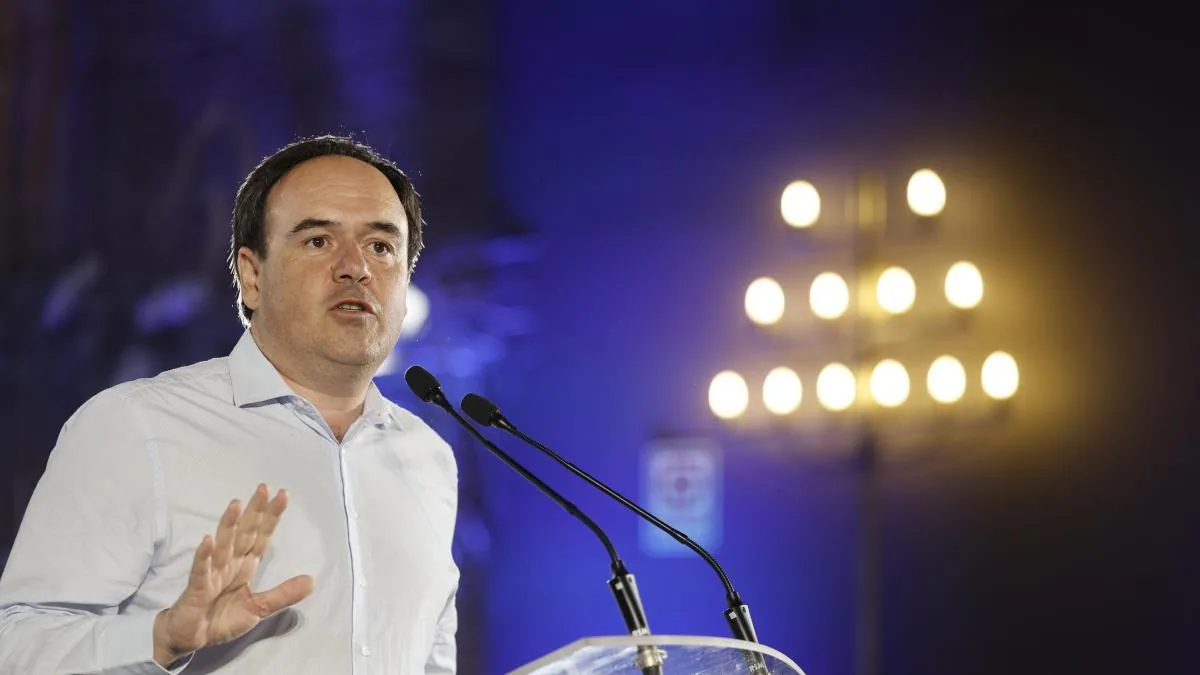
Most of Vox’s amendments have been accepted or agreed upon, with some exceptions, Pérez Llorca has secured new Budgets for the Generalitat Valenciana for 2026. The new accounts, which will be voted on and approved next week barring any surprises, serve the Valencian president to confirm his ability to establish solid agreements with his far-right partners, ensure the stability of the Consell, and assert his profile against those who, also from Génova, doubt his ability to be the PP candidate for the Generalitat in the upcoming regional elections. That said, Vox’s support has come at a high price: it is the first time that in regional budgets the obligation to establish the “national priority” in aid, among others, for housing or social services, is recorded in writing, filtered by the PP with the idea of prolonged “rootedness.” Along with the accounts, Llorca has also secured Vox’s backing for the Law of Fiscal, Administrative and Financial Management Measures and Organization of the Generalitat, known as the Accompanying Law to the 2026 Budgets. The PP and Vox also rejected all amendments from PSPV and Compromís.
Read more Housekeeper arrested in Barcelona for stealing jewelry and money worth 390,000 euros
Having seen the debate over three days on the amendments to the Budget Law, it is confirmed that the harmony has been complete between the PP and Vox, with the exception of the far-right’s demand to cut, and strangle, the Acadèmia Valenciana de la Llengua (AVL) and to reduce aid to the Valencian employers’ association. In both cases, Pérez Llorca’s party has opposed, although we will have to wait for next week’s final vote to verify that no last-minute moves occur on these matters either. In all other respects, the complicity has been total, even on controversial measures such as reducing aid to Cruz Roja Valenciana to finance studies linking immigration and crime, incorporating the concept of “national priority” in access to certain benefits for the most needy, or agreeing on cuts aimed at UGT and CCOO to redirect those resources towards employment programs in municipalities affected by depopulation.
The image projected during the parliamentary process has been especially revealing. The PP and Vox have barely staged disagreements, quite the opposite, with abundant mutual praise. The popular party’s qualifications have been limited to semantic issues or some aspects related to youth policies, but the political message has been unequivocal: there is a stable majority capable of pushing forward the main legislative initiatives of the Consell. It is no coincidence that the president of the Budget commission, the socialist Toni Gaspar, summarized what happened with a phrase as graphic as “total synchrony.” Because that is exactly what has been visualized during these days.
The incorporation of the so-called “national priority” also constitutes a political precedent of enormous scope. It is no longer just a discursive claim of Vox, but a criterion expressly included in the role of public accounts to guide access to certain housing and social services policies. The Valencian PP has accepted turning one of its partner’s main ideological banners into a budgetary norm, taking a step that until just a few months ago seemed hard to imagine.
For Pérez Llorca, however, the political balance of having partnered with Vox is clearly favorable. The president needed to demonstrate that he was capable of governing, negotiating, and offering stability after months of uncertainty. He has achieved it. Against those who questioned his leadership from Madrid or fueled the idea that the Valencian PP could face a replacement before the elections, Llorca now presents an asset that weighs heavily in politics: approved budgets, a cohesive parliamentary majority, and an agreement that guarantees the continuity of the legislature. Isn’t that also what is sought in the rest of the autonomous communities where the PP needs Vox, and what Alberto Núñez Feijóo has even verbalized if one day he needs the far right to govern?
If the understanding between PP and Vox works in Valencia with the budgets, it is reasonable to think that Génova will use this experience to facilitate similar agreements in other autonomous communities where both parties need to understand each other
That is why the significance of this pact goes far beyond the Comunitat Valenciana. What is happening these days could become a political laboratory for the rest of Spain. If the understanding between PP and Vox works in Valencia, it is reasonable to think that Génova will use this experience to facilitate similar agreements in other autonomous communities where both parties need to understand each other. It is even possible to interpret that the Valencian formula anticipates the type of relationship that could occur in the future if both forces added up a sufficient majority to govern Spain. Valencia thus ceases to be an exception to become a possible model to follow again. And that is probably the main political victory that Pérez Llorca will be able to show when these budgets receive final approval. That said, at the cost of having ceded to the political framework that Vox desired.