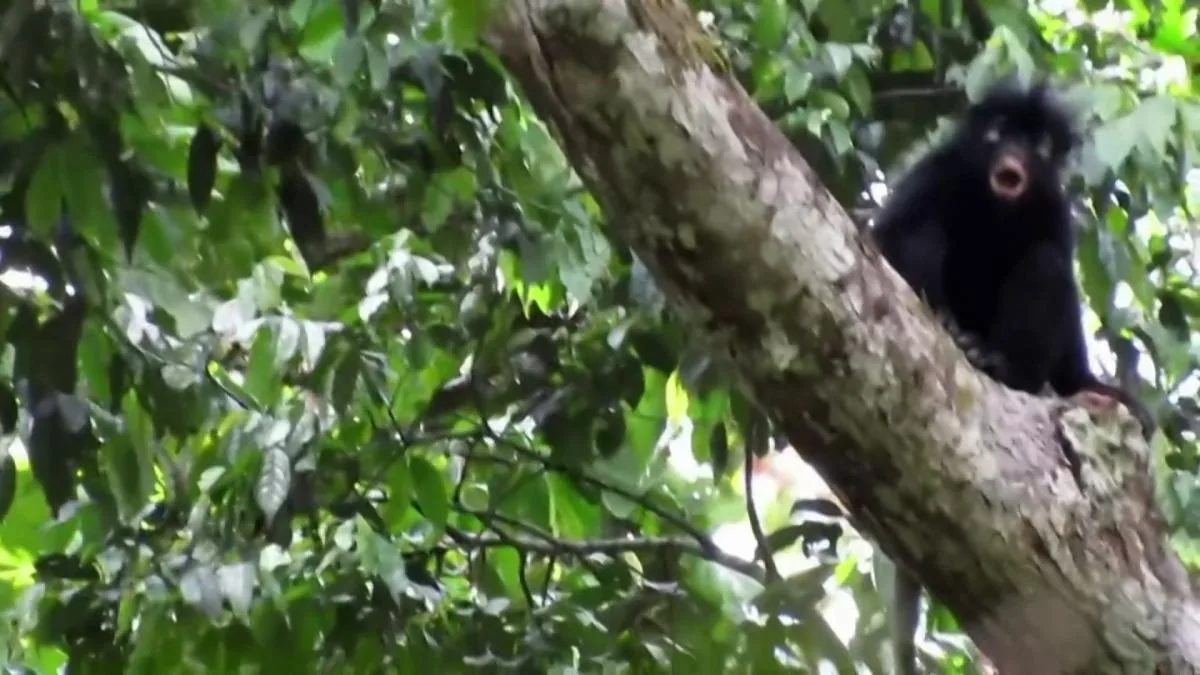
An international team of scientists has made a discovery that researchers had been pursuing for almost 20 years: the identification of a new primate species deep in the jungle of the Democratic Republic of Congo, made possible by the sighting of two adult females and one male.
Read more Atlético responds to Laporta: “We will not accept any offer for Julián”
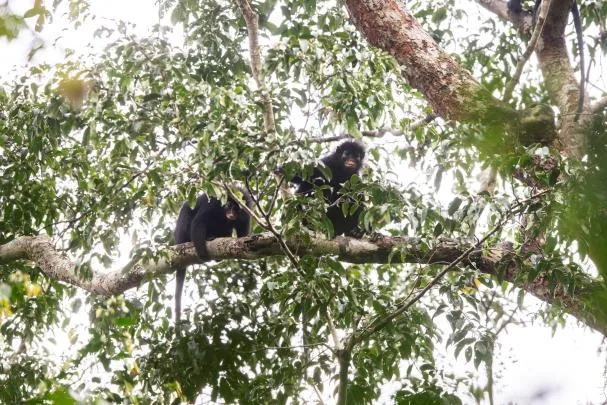
The new species is part of the subfamily Colobinae, genus Colobus, endemic to Africa, with six species already recognized. It adds to a series of discoveries that in the last 75 years have been elevated from subspecies to species, including at least four hominids and six cercopithecids.
Its closest known relative is Colobus satanas, found more than 1,200 kilometers away, in west-central Africa, in what experts consider a divergence that occurred between four and five million years ago.
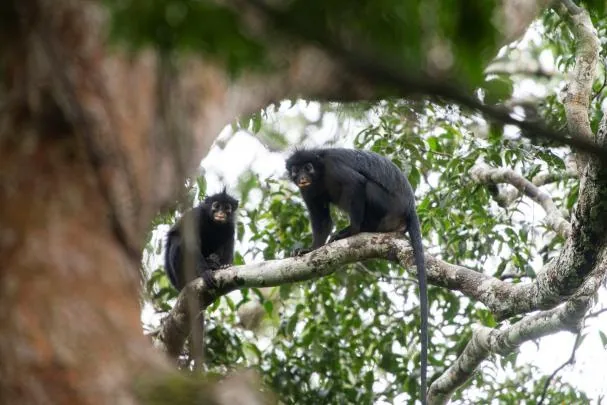
The new species is “a rare and cryptic monkey, little known even by local communities,” say the experts in the study published in the scientific journal PLOS ONE. The primate has a very striking appearance, with black fur that reflects light, although it is not very dense, and a body size difference of between 6 and 12.5 centimeters between males and females.
The peculiar characteristic of this new monkey is its face, which the researchers describe as follows: “The dark and hairless face is marked, in both males and females, by a striking area of bare skin ranging from pink to creamy orange that surrounds the mouth.”
Also read
This unique trait creates a kind of mask of differentiated color. The color distinction does not end there: specimens of both sexes also have a white perianal patch between pale orange callosities.
The vocalization of this primate is recognizable because the pale coloration around the mouth produces a striking visual effect when roaring. The roars are heard at all hours of the day, but especially in the morning, when the specimens communicate more with each other.
A search spanning decades
The first evidence of this species dates back to 2008, during an expedition in Lomami National Park, when Ashley Vosper and Bernard Ikembelo, also present in the recent discovery, photographed an unidentified monkey high in the forest canopy on the east bank of the Lomami River; a snapshot that, however, did not allow the new species to be identified.
Read more Brussels softens its ‘toll’ for polluting amid industry pressure to lower energy costs
Ten years later, a new sighting allowed the primate to be captured again in an image showing the characteristic pale markings around the mouth and the white perianal patch.
The same species
Comparisons between the photos taken in 2008 and in 2018-2019 showed that the monkey sighted belonged to the same species as the unknown specimen observed a decade earlier.
Years of observations and studies on this very rare species, carried out by scientists between 2018 and 2022, with 114 detections and 89 visual sightings, have finally allowed this primate species to be classified.
A species in grave danger
According to the study, it lives in a known distribution area limited to 1,700 km², while most other species of the genus have much wider distributions, exceeding 60,000 km².
The researchers themselves have proposed a provisional classification on the IUCN Red List of endangered species. It is a group that, according to the researchers, has not been hunted in recent years, but still faces a very high risk: habitat loss, human population growth, and increased hunting in its distribution area are projected as threats for the coming decades.
The protection of parks and jungles like Lomami, in Congo, is essential for the preservation of rare and unique species such as Colobus congoensis.
Read more Junts keeps its distance from the PSOE after the European ruling that supports the amnesty