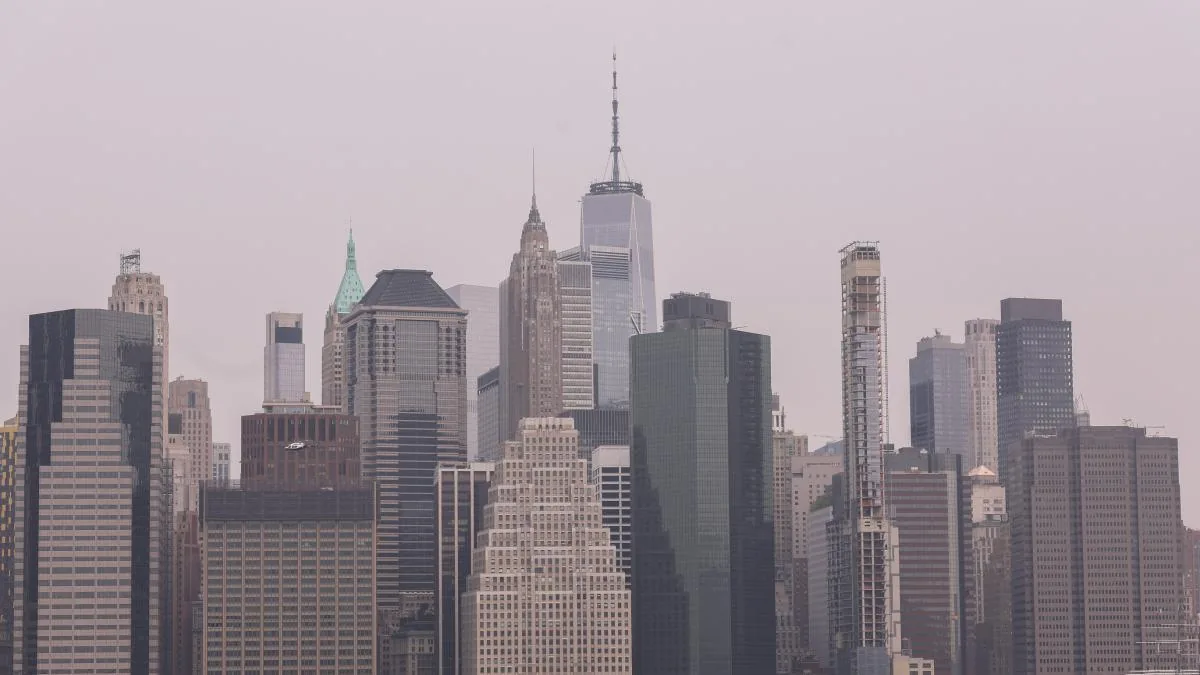
Conversations on a stairwell of neighbors in Manhattan’s Upper West Side. One of the residents made this comment upon leaving the elevator. “When I left the office, it seemed like we were in the apocalypse, the sky had a strange color, leaning towards brown,” he said.
Already in the lobby, another tenant spoke with the doorman. “I was about to call the firefighters. In the bathroom, I had the sensation that it smelled like fire, as if something was burning,” he confessed.
He didn’t call. But he was right. Both Wednesday afternoon – what a strange afternoon, first a tropical storm and then that fade to darkness, that biblical Good Friday – and this Thursday gave the impression that the Big Apple was surrounded by flames and smoke. Smell of burning.
Except that the smoke enveloping the Big Apple was coming from about 1,000 kilometers away, in southern Canada or northern Minnesota.
“Smoke from wildfires can affect the air quality in New York City. People at higher risk, including children, older adults, pregnant people, and those with chronic illnesses, should limit the time they spend outdoors and stay in cool indoor spaces.”
This is the advice reiterated on the information posts that the city hall has distributed throughout the metropolis. There was a certain reminiscence of the pandemic era. Many people wearing masks reappeared. “I have trouble breathing,” commented an elderly woman walking her dog in the Hudson River Park, where the scene looked hazy and even the Washington Bridge appeared blurred in the distance, ghostly.
Parts of the metropolis were covered in haze from distant wildfires, creating conditions that could cause coughing or difficulty breathing in some people.
The air quality in some parts of the city ranged Thursday morning between “unhealthy for sensitive groups” and “moderate,” according to a real-time map produced by the United States Environmental Protection Agency (EPA) and other federal agencies. There had been an improvement compared to Wednesday, when measurements ranged from “unhealthy” to “unhealthy for sensitive groups.”
However, Mayor Zohran Mamdani issued a public alert for this Thursday predicting temperatures climbing up to 34 °C, while air quality was expected to fall back into the unhealthy category throughout the day.
Mamdani recommended New Yorkers “stay in air-conditioned spaces whenever possible, limit time spent outdoors, stay well hydrated, and be attentive to the well-being of their neighbors.” And he repeated the message from the information posts, with special attention to people with heart or lung problems, pregnant people, and babies as they face the greatest risks.
“The combination of dangerous heat and unhealthy air represents a serious threat to the health of New Yorkers,” warned Mamdani.
This phenomenon of smoke from northern fires, especially in Canada, had already occurred recently on other occasions, as these fires are increasingly larger, which scientists attribute to the growing impact of the climate emergency.
The dense band of wildfire smoke could be seen in satellite images extending from the U.S. Midwest and Canada, crossing the Great Lakes region, southern Ontario, and New England, reaching New York. Some of the smoke even moved over the Atlantic Ocean and rose again toward Canada’s easternmost coast.
Meteorologists warned that the smoke would keep skies darkened in broad daylight across much of North America and that air quality indexes would reach dangerous levels in numerous places.