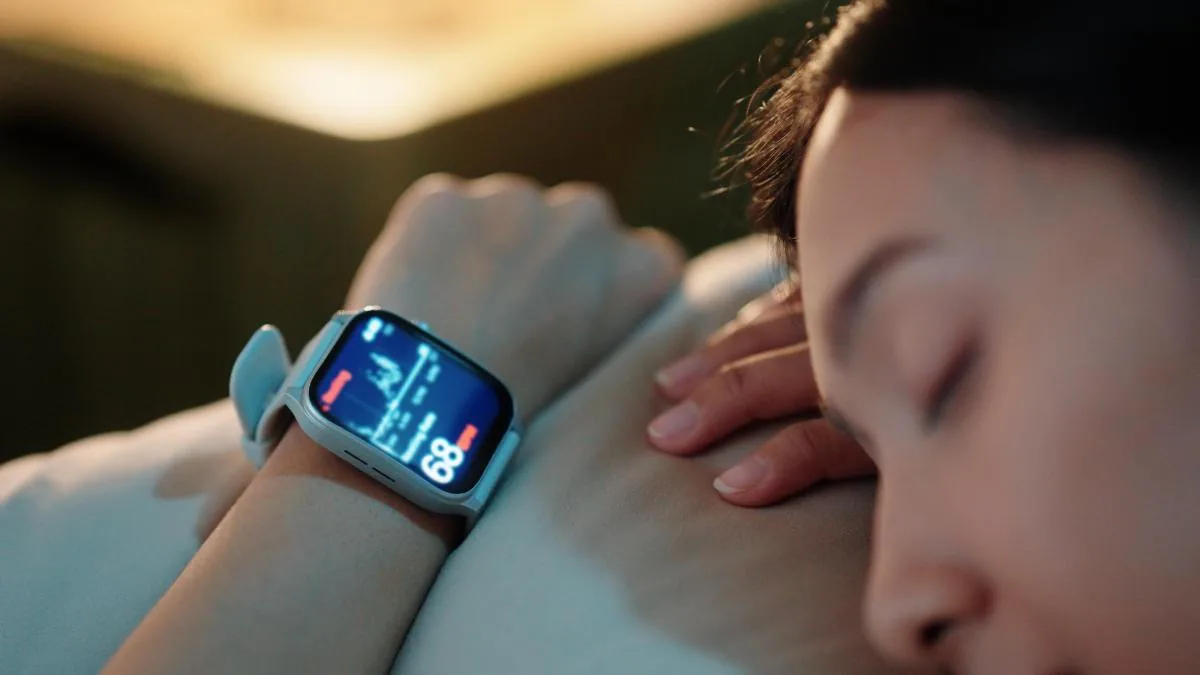
What the watch says, is it gospel? To what extent should we take into account the health parameter measurements that a smartwatch can provide? There are people capable of altering their habits and behaviors simply to meet the goals set by their wrist device, as they consider skipping them to be detrimental to their health.
A clear example of this technological pseudo-slavery is the so-called sleepmaxxing. In general, maxxing (maximizing in English) is a viral trend and lifestyle, popularized on platforms like TikTok and Instagram, that involves taking to the extreme the optimization or obsession with improving a specific aspect of one’s life. Sleepmaxxing, then, would be making the most out of sleep hours, strictly following the indications of our bracelet or smartwatch.
Recently, a new sleepmaxxing technique known as mouth taping (taping the mouth shut) has gone viral, which forces the person to breathe through the nose while sleeping. This practice carries significant risks and is not advisable to carry out without prior medical evaluation.
Anyway, what is usually done to optimize sleep in general terms is to be guided by a smartwatch, a bracelet, or even a health ring. But, how reliable are they and can we trust what a non-professional device tells us?
Dr. Odile Romero is head of the Neurophysiology section and coordinator of the Sleep Unit at Vall d’Hebron Hospital in Barcelona. From her practice, Romero firmly states that “these watches do not make any diagnosis. None. These devices usually have accelerometers to measure movement. Then they have algorithms that, based on movement, say whether the patient is asleep or not. There are more complete ones that also measure heart rate and complement the sleep analysis.”
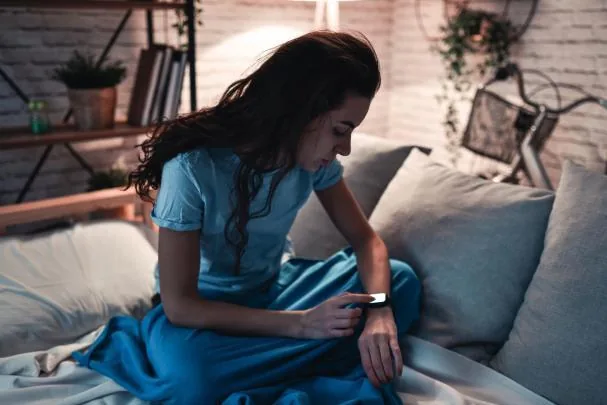
Are smartwatches useful for anything?
Most smartwatches offer sleep measurement parameters that report the hours we have slept, the time spent in each sleep phase, heart rate, and blood oxygen saturation during the night. In some cases, we will also have respiratory rate.
If we use a high-end model, it can indicate heart rate variability, warn of possible apneas, or even detect snoring. However, the professional warns that we should not take what the watch says literally, as there may be cases where the measurements are inaccurate. Does this mean that what the watch tells us is useless? Not at all.
“From a professional point of view, the only thing they are good for is to observe an evolution. That is: if today the watch tells me this and in two months the same watch tells me something else, there has been a change, there has been an evolution,” clarifies the doctor.
Also read
“It can be good for assessing evolutions, but never for making a diagnosis,” she continues. “I would not say that a patient has an insomnia problem or a sleep disorder based on what a watch tells me. The watch can detect awakenings because the patient moves a lot, but maybe those are movements caused by respiratory events.”
The neurophysiologist confirms that higher-end watches provide more accurate measurements, but she does not venture to recommend one that is more precise than the rest. However, she reiterates that the most important thing is that it is always the same one, to be able to compare today’s data with that of a few weeks or months ago.

Medical use devices are different
In the professional field, Dr. Romero explains that devices called actigraphs are used, which are validated as medical measurement instruments but do not have smartwatch functions. “They don’t even tell the time,” she warns, “but they measure all kinds of light, skin temperature, and movement, and from there, they organize the data through an algorithm.”
“Actigraphs help us perform the initial monitoring of a patient for a week, in cases of suspected circadian disturbances, rotating work shifts, or phase delay,” she adds. “And based on the results, we schedule a nocturnal polysomnography.”
In conclusion, the head of the Sleep Unit at Vall d’Hebron Hospital admits that measurements from the same smartwatch can help detect changing patterns in sleep over time, and that upon any anomaly warning the device may give us, the best course of action is to see a doctor to confirm the detection of a possible pathology.
Read more In 2027, 115,000 jobs will be created to care for 417,000 new dependents