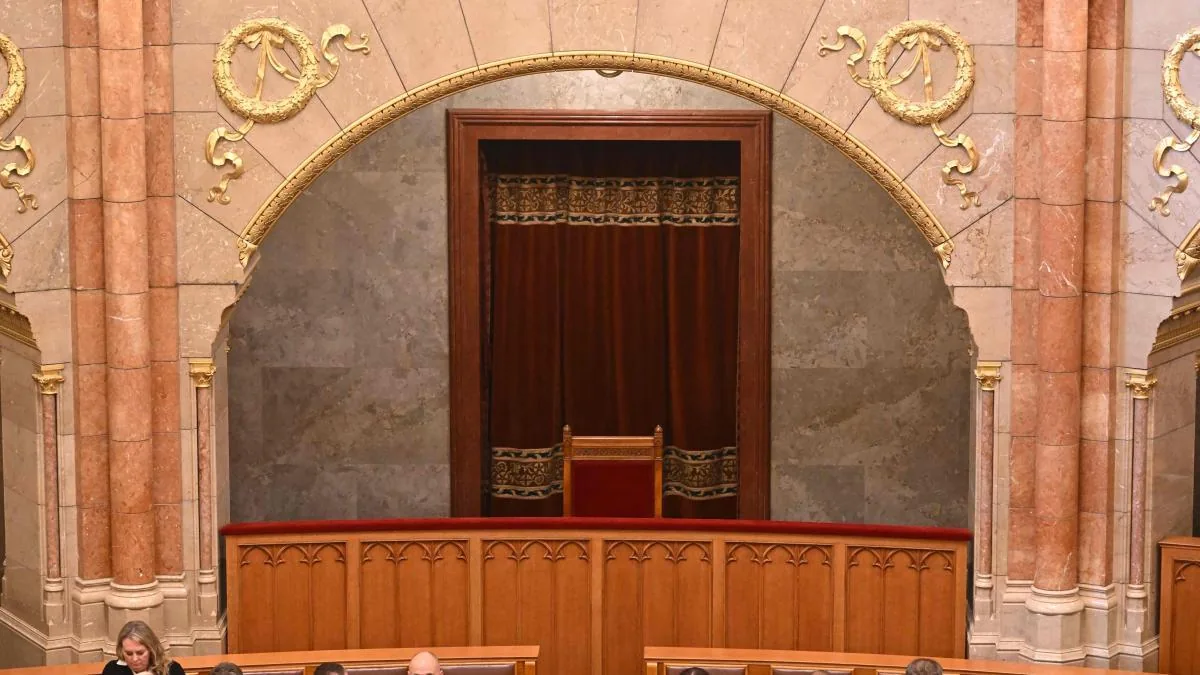
When the Prime Minister of Hungary, Péter Magyar, took office on May 9, he uttered a phrase about his electoral victory that underpins his current actions and future plans. According to Magyar, in the general elections of April 12 – in which he overwhelmingly defeated the previous prime minister, Viktor Orbán – “the Hungarians expressed that they want changes, not just a change of government, but of system.”
Read more Trump says China hacked records of 220 million voters in 2020 and the “deep state” hid it
Consequently, Péter Magyar has launched a process to dismantle the power system built by the ultranationalist Orbán during his 16 consecutive years. The new conservative leader’s plan initiated this month includes a reform of the Constitution, changes in public media, temporary limitation of mandates for parliamentarians and Constitutional Court judges, and an amendment – approved by Parliament last Monday – to remove the president, Tamás Sulyok. In a speech in June, Magyar, a man of grandiloquent rhetoric, dubbed the entire process as Operation Purifying Fire.
The amendment aimed at Sulyok, whom Magyar calls a “puppet” of Orbán, was approved by 139 votes in favor and 6 against out of the total 199 seats in the chamber. As head of state, it is up to Tamás Sulyok himself to sign the new constitutional amendment within five days, a deadline that expires this Friday. If he does not sign it, the prime minister warned, Parliament will initiate a removal procedure against him, and then elect another president for a maximum of five years or until a new Constitution comes into force in the Central European country.
Some critical voices
NGOs like Amnesty International question the expedited method to remove President Tamás Sulyok: “It is not right,” as it lacks legal guarantees
However, Sulyok has another option at his disposal to avoid signing it yet: to refer the amendment to the Constitutional Court – which is currently composed of judges appointed during Orbán’s governments – to assess its possible unconstitutionality.
On the very night of his electoral victory in Budapest, Magyar already called on Sulyok to resign, and faced with his refusal, pushed the current procedure, backed by his strong parliamentary majority. “The question is whether this force will sweep away the principles of the rule of law recognized and demanded internationally,” Sulyok said in a statement on the Sunday before the vote. Péter Magyar said at a press conference that Sulyok would cease to be president around July 20.
The expedited method has raised doubts and criticism. Amnesty International (AI) Hungary considers that the procedure to remove Tamás Sulyok “is not right,” as it lacks legal guarantees. In a statement a few days ago, the Hungarian branch of this human rights NGO condemns President Sulyok’s conduct but maintains that the amendment “ignores the fact that Tamás Sulyok also has the right to a fair trial, and his removal is only possible with appropriate legal guarantees.”
Read more The Slovenian Slavko Vincic, in charge of refereeing the World Cup final between Spain and Argentina
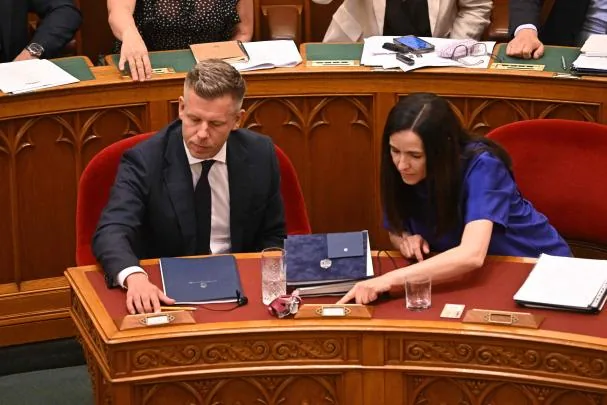
Also before the vote, the Hungarian Civil Liberties Union (TASZ) wrote that the controversial term limits for parliamentarians – which the constitutional amendment sets at a maximum of 12 years, that is, three legislatures – should be removed as it is not an urgent matter. The amendment approved on Monday also establishes an age limit of 70 years for Constitutional Court judges. This would force the retirement of its current president, Péter Polt, loyal to Orbán, and three other Constitutional Court judges.
Among the initiatives already approved are a package of anti-corruption rules, the dissolution of the Sovereignty Protection Office – which pursued those who criticized Orbán’s government – and a restructuring of public media. On July 7, public broadcasting news programs were temporarily suspended, pending government reforms to make them “independent and credible.”
With promises to amend the damage to the rule of law from the Orbán era, Péter Magyar managed at the end of May to get Brussels to unblock 16.4 billion euros of European funds frozen due to his predecessor’s authoritarian policies. He is now in a hurry to dismantle all his legacy.
The electoral law that Viktor Orbán shaped for his convenience during his four terms now provides Tisza, Magyar’s party, with a two-thirds supermajority in Parliament, allowing it to pass legislation by a steamroller. On Monday, Fidesz parliamentarians, Orbán’s party, powerless in the face of the turnaround, absented themselves invoking the “tyranny” of the new government. Orbán has not sat in the chamber this legislature, as after his defeat he resigned his seat and transferred it to his party, which has re-elected him as leader.
Scandal in Budapest
The former Foreign Minister leaves his seat to work for a Chinese company
Another strongman of the Orbán era has taken flight. Former Foreign Minister Péter Szijjártó resigned his seat on Wednesday to go work for the Chinese electric car manufacturer BYD. According to the Hungarian press, in recent years BYD received more than 400 million euros in financial aid from Orbán’s government, and Szijjártó actively participated in Orbán’s efforts to strengthen ties with China and, in particular, with BYD. The signing has caused a scandal in Budapest.