The Trump administration is going to eliminate a policy in place for decades that allowed international students, participants in cultural exchange programs, and journalists to remain in the United States for the time necessary to complete their activity: from now on they will have a limit of four years (240 days for journalists) after which those affected will be forced to request an extension from the federal government.
Read more The abused baby in Barcelona did not have serious injuries 3 days before being admitted to the ICU
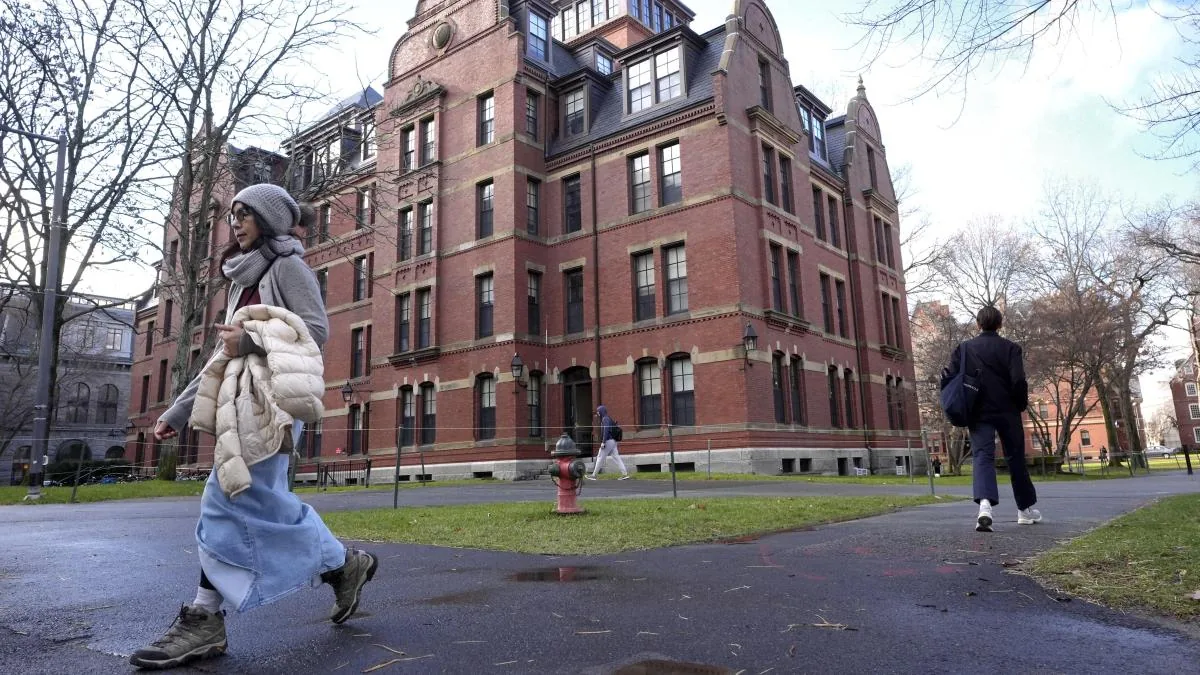
It is estimated that currently 1.2 million foreign students study in the United States, mainly at its universities, which are among the most prestigious in the world. The new Department of Homeland Security regulation represents a drastic shift in the regulation of the entry of international students, created in the 1990s.
According to the regulation, students with F visas and exchange program participants with J visas will only be able to remain in the United States for the duration of their program, up to a maximum of four years.
The visa for journalists, which can currently last years, would be up to 240 days or, in the case of Chinese citizens, 90 days. Holders of these visas will be able to request extensions.
In August, the Chinese Ministry of Foreign Affairs opposed the new rule proposed for Chinese journalists, considering it discriminatory. The Chinese Embassy did not immediately respond to the request for comments on Thursday.
Those who need more time—including most doctoral students and doctors in extended residencies—will have to submit a formal extension request to the United States Citizenship and Immigration Services (USCIS), provide biometric data, and pay a fee, instead of relying on their educational institutions to manage their status. Once the deadline expires, they will have to request readmission by traveling abroad and then re-entering the United States, the DHS indicated.
The new rule prohibits graduate students from changing their “educational objectives” at any time or transferring to another institution without authorization. It also halves the time for students to leave the United States after completing their studies or training, reducing it from 60 to 30 days.
Students already in the United States when the rule takes effect will have a fixed end date based on their current program, plus a grace period, instead of having to leave immediately. Those who let their fixed deadline expire will begin to accumulate unlawful presence immediately, exposing them to three- and ten-year entry bans.
Read more Lamine Yamal trains separately from the group three days before the World Cup final
David J. Bier, director of immigration studies at the Cato Institute, stated that “international students, many of whom have lived in the United States for years, will now have only 30 days to find an employer to sponsor them or they will immediately become undocumented immigrants. Don’t these people understand how life works?” he added.
The Department of Homeland Security justifies the rule by a drastic increase in this type of visa. According to a statement, more than 1.8 million student visas were issued in 2024, representing an increase of more than 11% compared to the previous year. The United States granted visas to more than 500,000 exchange visitors and 37,300 media members during fiscal year 2024, which began on October 1, 2023. The significant increase in the number of these visitors “poses a challenge to DHS’s ability to monitor these non-immigrants while they are in the United States,” DHS stated.
Department of Homeland Security officials have presented the reform as a national security and oversight measure, stating that fixed deadlines provide the government with more frequent opportunities to confirm that visa holders comply with the terms of their stay.
The rule is implemented at a time when the Trump administration has intensified actions against foreign students. Secretary of State Marco Rubio has revoked hundreds of student visas, including those of Columbia University activist Mahmoud Khalil and Tufts University graduate student Rumeysa Öztürk. The administration claims its goal is to combat support for Hamas, while the students’ lawyers argue they are being punished for exercising their right to freedom of expression.
The measure revives an initiative from President Donald Trump’s first term that faced opposition from medical organizations and university groups, who argued it would overburden students trying to finish their studies with unnecessary bureaucratic procedures.
The Department of Homeland Security (DHS) presented the proposal in August 2025 and sent the final version to the White House Office of Management and Budget in May. The Office of Management and Budget approved it on June 17, the last step before its publication.
The rule will take effect on September 15, although Congress could delay or revoke it during the major regulations review process. DHS also included a provision allowing the rest of the rule to remain in effect if a court blocks individual sections.
Read more Trump overestimates testosterone