The escalation in hostilities that began last week between the U.S. and Iran, after Donald Trump declared the ceasefire sealed in the preliminary agreement from a month ago suspended, intensified this Tuesday. U.S. forces launched a third consecutive attack against the Persian country in the early hours of this Tuesday, by order of the U.S. president, who had announced it hours earlier, as well as the “reestablishment” of the blockade on Iran in the Strait of Hormuz.
Read more The Paris parade showcases European cohesion and pays tribute to Ukraine
“During the mission, which lasted five hours, U.S. forces successfully attacked military targets throughout Iran, including Bushehr, Chabahar, Jask, Konarak, Abu Musa, and Bandar Abbas,” stated the U.S. Central Command in a statement published on the social network X.
Also read
Iran, for its part, responded with attacks against Bahrain, Jordan, and two oil tankers linked to the United Arab Emirates (UAE) transiting the strait, which caused the death of one sailor and injuries to eight others. The Emirates threatened to retaliate against Iran, which could lead the nation where Abu Dhabi and Dubai are located to confront Tehran again, as it did at the start of the war.
Tuesday’s attacks come at a time when Iran and the United States are competing for control of the strategic strait, through which in peacetime a fifth of the oil and natural gas passed. Iran announced over the weekend that it would close this vital waterway, while Trump proposes charging a 20% fee to ships for its protection.
We are neutralizing all their offensive capability and controlling the strait”
Donald Trump
President of the U.S.
According to the U.S. Central Command, the latest wave of attacks targeted “coastal defense systems, missile and drone sites, and Iranian maritime capabilities.” Iran acknowledged the attacks but did not provide assessments on casualties or damage. “These attacks will continue to impose a high cost on Iranian forces and diminish their ability to attack innocent civilians and merchant ships in the Strait of Hormuz,” declared the U.S. military.
Moments after the military announced the new attacks, Trump assured that the attacks will continue “and we’ll see what happens.” “We are neutralizing all their offensive capability and controlling the strait. We are reestablishing the blockade,” he told reporters in the Oval Office.
Also read
Trump also provided new details about his suggestion that the United States will charge tolls to ships transiting the strait, a change of stance after previously saying it would not. “We are protecting a very wealthy part of the world,” he said. “We are spending money. And, therefore, what we have decided is that we will be reimbursed for the protection.”
Read more The UCO warns that the PSOE used front companies to pay Leire Díez
This is a change in U.S. policy which, until now, held that the strait should remain open to all without tolls, as it was before the United States and Israel attacked Iran on February 28. Any attempt by the United States or Iran to charge fees would violate global rules on freedom of navigation and increase tensions, likely causing greater economic disruption far beyond the region.
Freedom of navigation
Any attempt to charge fees in Hormuz would violate global rules
Regarding the Iranian attacks, the Emirati Ministry of Defense stated that Iran launched two cruise missiles against the oil tankers Mombasa and Al Bahiyah. The attacks set both tankers on fire, although the fires were extinguished. Iran’s paramilitary Revolutionary Guard (IRGC) claimed responsibility for the attack, justifying it because the ships “ignored repeated warnings.” “They chose to cross a minefield and were subsequently attacked and disabled,” the Guard declared. Iran has been threatening ships that do not transit authorized routes (in waters near its coast) for weeks.
The Emirati Ministry of Defense reported that the attack on the tankers caused the death of an Indian citizen and left six Indians and two Ukrainians injured. “The United Arab Emirates reserves the right to respond to this escalation and to take all necessary measures to protect its territory, its citizens, and residents,” added the Ministry of Defense. The Emirates used language similar to that employed before launching attacks against Iran during the war. Combat aircraft were heard in Dubai on Tuesday morning. The U.S. Embassy in Abu Dhabi and the U.S. Consulate in Dubai alerted Americans early Tuesday that consular appointments had been canceled until Wednesday “due to the regional security situation.”
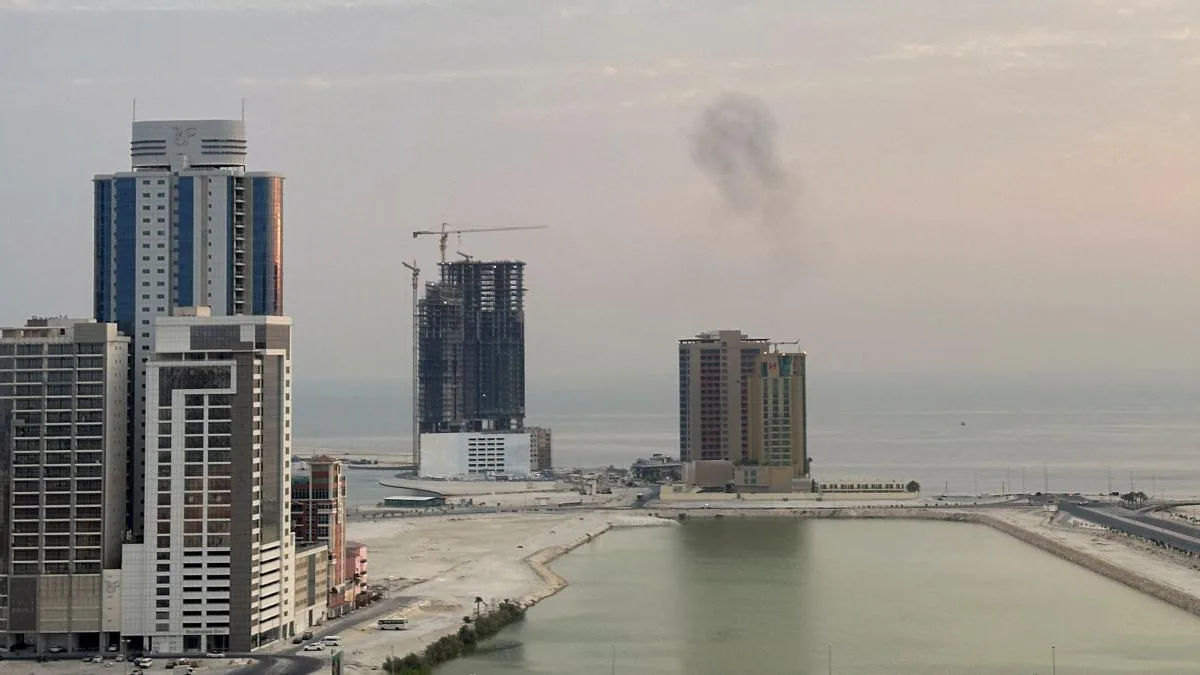
For its part, the Iranian agency Tasnim, linked to the IRGC, reported the destruction of a Patriot air control radar, which supposedly belongs to the U.S. Navy’s Fifth Fleet in Bahrain, which hosts U.S. military bases. No damage or casualties were reported.
In Jordan, its army reported intercepting four missiles coming from Iran, according to a statement released by the kingdom’s state news agency, Petra. Jordan hosts U.S. forces and has been attacked by Tehran in recent days.
Read more David Sánchez, brother of the president, sentenced to nine years of disqualification