





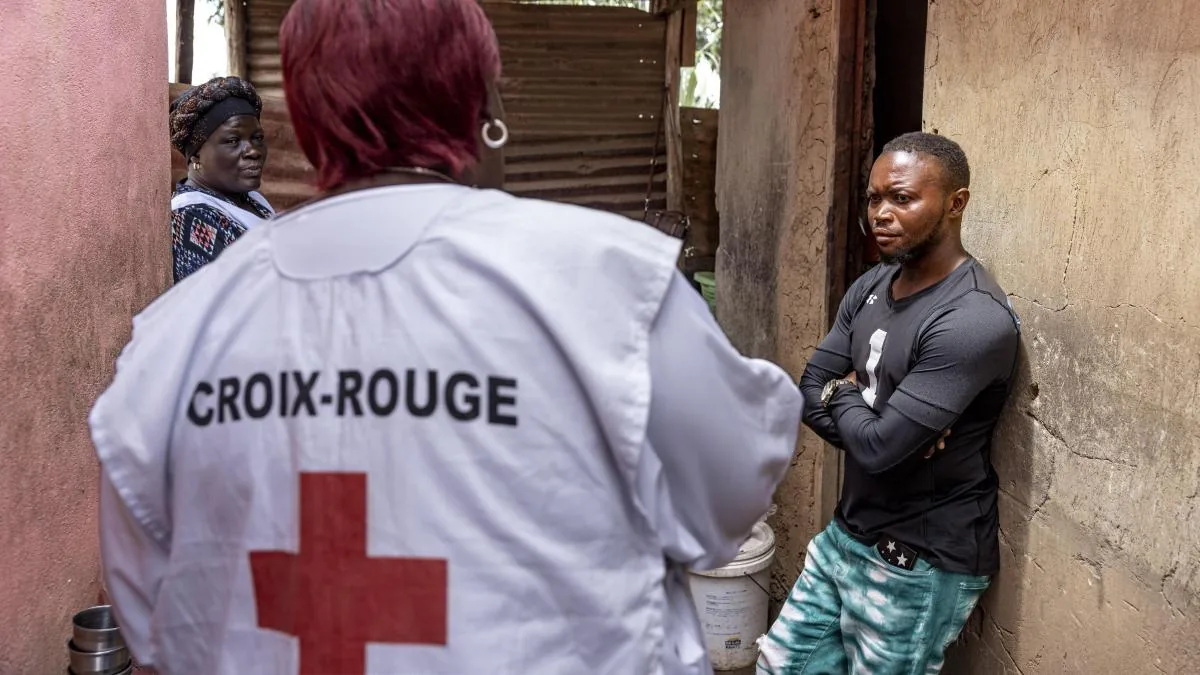
Authorities in the Democratic Republic of Congo (DRC) have raised the number of confirmed cases in the Ebola outbreak declared in the east of the country on May 15 to 488, including 86 deaths, and warned of “rapid and continued community transmission.”
Read more Drone attack leaves at least eleven dead in a market in central Sudan
In its latest bulletin on the disease, released last night, which corresponds to the count compiled up to this Thursday, the National Institute of Public Health (INSP) of the DRC noted that this represents an increase of 71 new confirmed cases in the last 24 hours before the report’s publication.
Likewise, 258 patients are “hospitalized or in isolation” and the number of cured people rose to eight (one more than in the last count), in a total of 25 affected health zones. Meanwhile, 57.8% of contacts have already been traced and the fatality rate is approximately 18%.
19 Ebola cases detected in Uganda, two people have died
Ituri province, bordering Uganda and South Sudan, where the outbreak was declared on May 15, remains the epicenter, with 424 cases, while the also eastern Congolese provinces of North Kivu and South Kivu record 25 and three cases, respectively.
Read more The Pope, received with state honors and a mass reception
The epidemic has also spread to Uganda, where 19 infections have been detected so far, including two deaths, both considered imported cases from the DRC. The Ugandan government announced on May 27 the temporary closure of its border with the DRC.
The outbreak corresponds to the Bundibugyo strain, whose fatality rate ranges between 30% and 50% and for which there is no authorized vaccine or specific treatment, according to the World Health Organization (WHO), which considers the risk of an outbreak in sub-Saharan Africa to be “high” and “low” globally.
The WHO estimates that the virus began circulating in Ituri about two months before the outbreak was declared, which it classified on May 17 as a “public health emergency of international concern.” Ebola virus is transmitted through direct contact with bodily fluids of infected people or animals and causes severe hemorrhagic fever, vomiting, diarrhea, and internal bleeding.
Read more Among young people and simple neighborhoods, the first steps of Leo XIV in Madrid