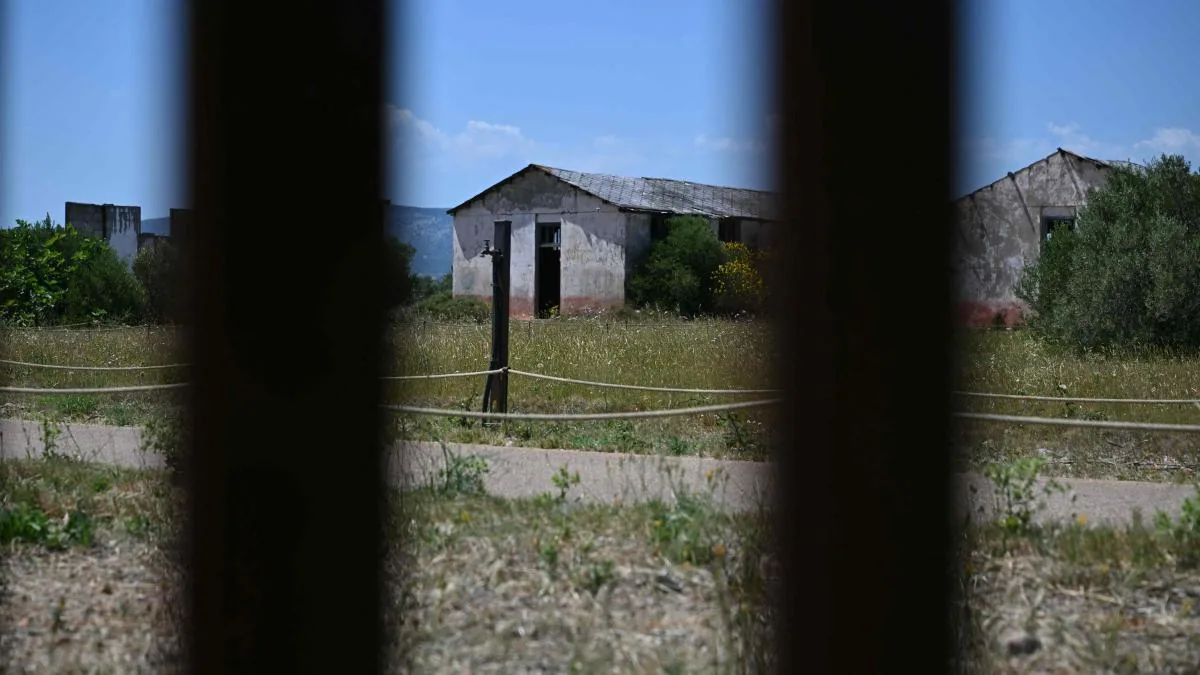
In the Roussillon plain, 50 kilometers north of the Franco-Spanish border, the Rivesaltes camp stands on dry and windy land. Converted into a Memorial in 2015 and recently renovated, the barracks of the old internment camp that operated here between 1941 and 1964 are still visible. Spanish refugees who fled Franco’s troops in 1939 were the first to be confined in Rivesaltes, a supposed “reception center” that was very similar to a concentration camp, surrounded by barbed wire and guarded by the French army. Conditions were precarious, but in the improvised camps on the beaches of Argelès, it was even worse. Although the policy of interning “undesirable foreigners” began in the 1930s, it was the authoritarian and pro-Nazi Vichy regime that truly boosted it from 1940 onwards.
Read more U.S. shoots down four Iranian drones and destroys radars in the Strait of Hormuz
Two hundred internment camps were built in France at that time. Between 15,000 and 20,000 Spaniards would pass through Rivesaltes, joined by foreign Jews who had fruitlessly sought refuge in France – and who would later be handed over to Nazi Germany and sent to the Auschwitz extermination camp – and French Roma. Once World War II ended, it would be a place of internment for German prisoners of war, before becoming a penitentiary center for Algerian National Liberation Front (FNL) activists and ending up – after Algeria’s independence – as a temporary reception point for Algerian refugees who had collaborated with the French army (harkis) and managed to flee the country… As a distant echo of its past, between 1986 and 2007, it was resurrected as a detention center for foreigners awaiting expulsion.
The creation of foreign internment camps is a European passion. They have existed in all types and everywhere. And, despite the moral burden represented by the dark history of the 20th century, in this second quarter of the 21st century, they are once again a trend. The European Council and the European Parliament have given the green light this week – a preliminary step to its definitive ratification – to the new European regulation on the return of irregular immigrants, which provides legal coverage for the construction of internment and deportation centers in third countries. An “innovative” idea – to use community jargon – the establishment of foreign detention centers in non-EU countries follows the model applied by the Italian Prime Minister, Giorgia Meloni, leader of the post-fascist Brothers of Italy, who has managed to normalize some of the far-right’s ideas on migration policy in Europe.
In 2024, after reaching an agreement with the Government of Tirana, Italy opened two immigrant detention centers in the Albanian towns of Gjäder and Shëngjin, on the Adriatic coast. The objective was – and is – to take immigrants rescued at sea to these centers, where their asylum applications must be analyzed and, if rejected, they are to be deported to their countries of origin. Without setting foot on Italian soil.
The two centers are operational, but so far very few immigrants have passed through them due to obstacles posed by the Italian justice system. This does not seem to have deterred, however, potential imitators within the EU. Brussels will not push the project itself, but a group of five EU countries are jointly exploring this path and sounding out possible destinations. Led by the Netherlands, the group also includes Germany, Austria, Denmark, and Greece. With the new regulation in hand, interned foreigners could remain detained for up to two years.
Community authorities swear that immigrants’ rights will be safeguarded and that the new centers will comply with European legislation despite being located abroad. But NGOs do not see it as clear at all. And, in fact, the example of Italy shows that there are quite a few grey areas.
A first point of debate – and one that has already raised judicial objections – is the destination of those expelled. Theoretically, only immigrants whose country of origin can be considered “safe” from the point of view of human rights respect can be repatriated. Is Afghanistan, for example, whose government Brussels is negotiating with to facilitate expulsions, safe? The Italian Justice expressed serious doubts about the list of “safe countries” drawn up by the Meloni government and referred it to the Court of Justice of the European Union (CJEU), which in August last year considered that it contravened community law. In its ruling, the court established that asylum seekers should have the right to challenge the “safe” status of their country in their personal case.
The list of “safe countries” included in the European Pact on Asylum and Migration, approved by the European Parliament last February, is quite brief to begin with: Bangladesh, Colombia, Egypt, Kosovo, India, Morocco, and Tunisia, in addition to those countries candidates for EU accession. The second point of debate is the internment and expulsion procedure itself, as well as its guarantees.
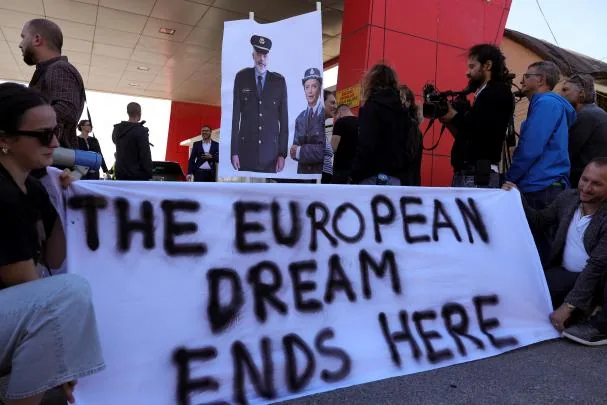
The CJEU, at the request of the Rome Court of Appeal, must also rule on the legality of external centers, and everything indicates that it could validate them with some safeguards. This is inferred from the recent pronouncement of the Advocate General – in this case, Nicholas Emiliou – whose criteria are usually largely followed by the court. In his opinion of April 23, Emiliou considered that the opening of internment centers for irregular immigrants and asylum seekers in third countries is perfectly legal, provided they are subject to European jurisdiction and comply with community legislation. In particular, the right of those confined to legal advice and linguistic assistance, to maintain contact with family, and to access effective judicial protection.
Read more Spain-France friendship, at risk
The European objective is to significantly increase the proportion of expulsions – which currently barely exceed 28% of all those ordered – but it remains to be seen whether extraterritorial centers will prove to be the panacea.
For now, the irregular influx of immigrants seems to be experiencing a certain inflection. The latest data from the European border agency, Frontex, corresponding to the first four months of this year, confirm that irregular arrivals to the EU – a total of 28,500 – decreased by 40% compared to the same period last year, and that the largest drop, 78%, occurred on the West African route (i.e., the Canary Islands), which is largely attributed to measures adopted by Gambia, Mauritania, and Senegal in agreement with Spain and the EU. All routes are decreasing to a greater or lesser extent except one, that of the Western Mediterranean (south of the Iberian Peninsula), which has risen by 50%, mainly fueled from Algeria. In the end, this is like a balloon: if you press on one side, the air moves to another.
The current rarefied atmosphere evokes the times of “undesirable foreigners” of the thirties and forties
Irregular immigration is today one of the main concerns of Europeans, behind security and defense issues, and the economic situation. In the Spring 2026 Eurobarometer, immigration was cited as the primary problem by 16% of respondents, representing a slight decrease compared to the previous survey (20%). In the meantime, the war in the Middle East, energy supply problems, and rising prices have arrived… Be that as it may, it is difficult to discern to what extent this state of opinion is contaminated by the alarmist discourse of the far-right, which presents foreign immigration as an existential threat, amplified today by the traditional right.
The current rarefied atmosphere somehow evokes the times of “undesirable foreigners” of the 1930s and 1940s. While extremists convene summits to promote their plans for what they have euphemistically dubbed “remigration” (i.e., a mass deportation of citizens of foreign nationality or origin) and EU governments plan internment centers to manage the expulsion of irregular immigrants, Europe has begun to lose sight – if it hasn’t already – that we are talking about people. And that today’s immigrants are doing what our parents and grandparents did before.
After the bloodshed of World War II, Europe, in need of labor, set out to recruit foreign workers. Countries like Germany and France launched official programs to encourage immigration, as Spaniards know very well (Come to Germany, Pepe!), believing – or wanting to believe – that they would later return to their homes. Some did, but many others did not. In his magnificent historical portrait of the continent, Europe, A Personal History, the British historian and journalist Timothy Garton Ash, recounts a lucid observation made by the Swiss writer Max Frisch in 1965: “We asked for workers, and human beings came.” Pope Leo XIV, who begins an official visit to Spain today, will travel next week to the Canary Islands and will hold a meeting with immigrants to remind us of this essential truth.
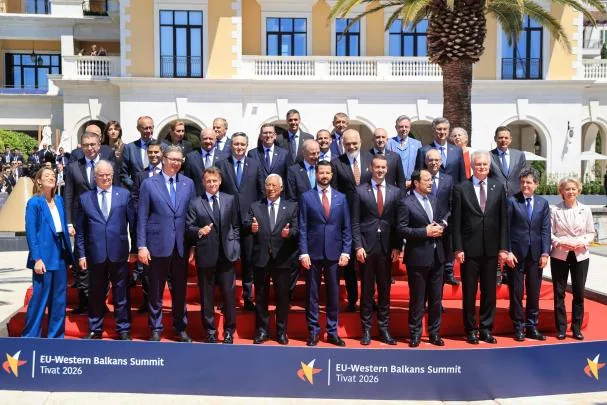
From enlargement to enlargement. The European Union, despite all difficulties and its internal divisions, continues to have a powerful force of attraction, and not a few countries aspire or consider joining the club (a trend that even reaches the United Kingdom, where more and more Britons think that Brexit was a mistake, despite which a return is currently unthinkable). One of the countries existentially most interested in joining the EU is Ukraine, which has been resisting the Russian invasion for more than four years. Formally invited to join the club, the start of negotiations had been blocked until now by the veto of Viktor Orbán’s Hungary. Not anymore. The new Hungarian Prime Minister, Péter Magyar, lifted it this week, after reaching an agreement with Kyiv on the linguistic, educational, cultural, and political rights of the Hungarian minority in Ukraine, comprising about 100,000 people, which was a source of tension between the two countries.
Ukraine, whose integration process will begin now, would like to see it completed by 2027, but no matter how quickly it implements the necessary reforms, it is difficult for that to happen, given the usual timelines. Hence, the German Chancellor, Friedrich Merz, proposed that Ukraine become a kind of “associate member” in the meantime, with a voice but no vote. The idea has led to a joint proposal from Berlin and Paris for candidate countries to integrate “gradually,” chapter by chapter, depending on progress in negotiations. This was put forward yesterday by French President Emmanuel Macron at the summit that brought together EU leaders with their counterparts from the Western Balkan countries applying for membership: Albania, Bosnia-Herzegovina, Kosovo, North Macedonia, Montenegro, and Serbia. Albanians and Montenegrins are the most advanced.
Read also
Far from there, in the icy waters of the North, Iceland is debating whether to try to integrate into the EU again. After formally applying in 2009 and starting negotiations the following year, in 2013 it decided to suspend them and in 2015 officially withdrew its candidacy. Integration into Europe keeps the island’s mere 400,000 inhabitants strongly divided, but the social democratic government of Kristrún Frostadóttir has decided to call a referendum on August 29 to decide whether to resume negotiations. The voracious appetite shown by US President Donald Trump towards the Arctic island of Greenland triggered all alarms in Reykjavik and rekindled interest in seeking refuge by tying itself to the continent.
Read more The UCO entered the office of the DAO of the Civil Guard to gather confidential information