Charles Mackay’s “Extraordinary Popular Delusions and the Madness of Crowds” (1841) is scorned by historians and revered among stock traders. The book is best known for its vivid accounts of the 17th-century tulip mania and the 18th-century South Sea Bubble. However, those who want to understand the business world in the 21st century should look, instead, at Mackay’s chapter on “epidemic terror of the end of the world.”
Read more Kyiv acknowledges that an out-of-control Ukrainian drone caused the explosion in Romania
Apocalyptic thinking is today the most powerful impulse in American capitalism. Elon Musk, a character who seems to have stepped out of Mackay’s pages, will soon take SpaceX public, a rocket company whose stated mission is to avert existential threats to humanity by establishing a colony on Mars. Musk is America’s richest capitalist partly because he is its loudest Cassandra.
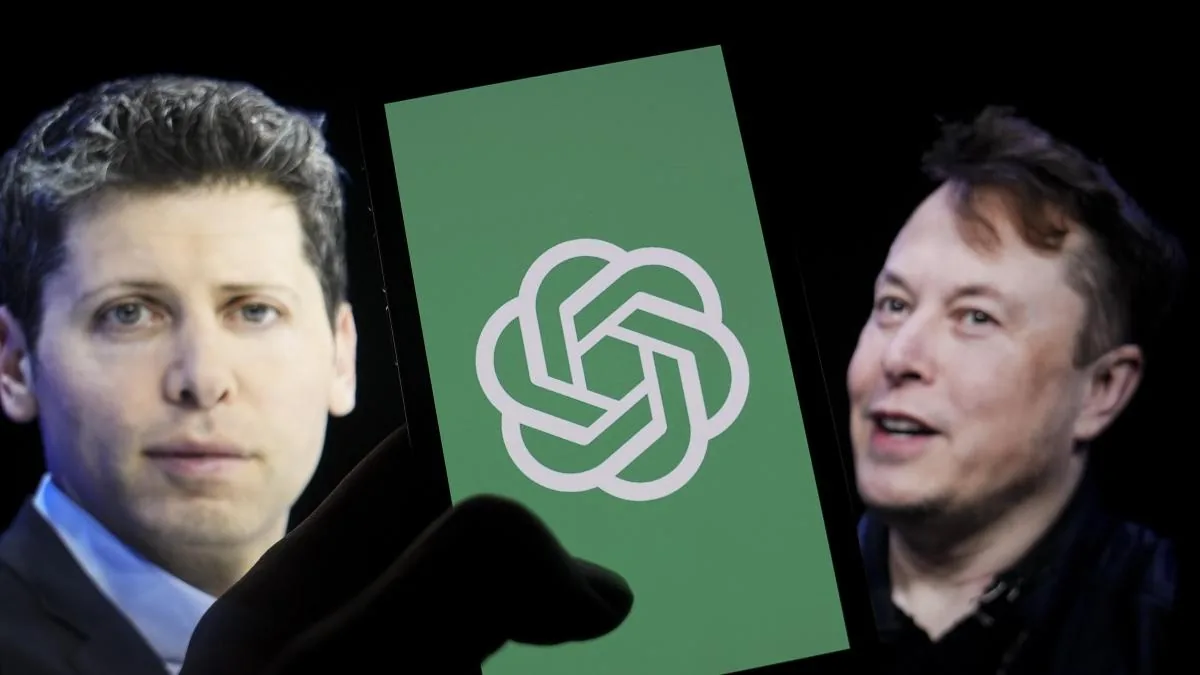
Musk is in a hurry to go public before two other prophets with equally millenarian worldviews. Anthropic filed paperwork for its IPO this week. Dario Amodei, its head, has repeatedly highlighted the destructive potential of his company’s Mythos model, which has so far been kept out of public reach. OpenAI, led by Sam Altman, will likely file its paperwork shortly. The lab recently published a utopian plan for the social contract after (or, rather, under) artificial intelligence.
Much of Wall Street is in a fatalistic mood
Today, the American business world is best divided not so much by sectors as by its vision of the future. The threat of war weighs almost as heavily on business as that of artificial intelligence. Last year, Alex Karp, the CEO of Palantir, published a book arguing that the future of the West depends on high-tech defense companies like his. Palmer Luckey, founder of Anduril, another defense tech company, often insists on his conviction that China will attempt to invade Taiwan. All companies selling critical minerals have a compelling argument for why theirs would be particularly scarce in the event of such a conflict.
Much of Wall Street is in a fatalistic mood. Recent investor withdrawals from previously little-known private credit funds have shaken confidence across all private markets. The list of financial innovations that central bankers deem systemically risky to the economy is so extensive that it’s hard to believe the system hasn’t already collapsed under the weight of its own anxiety. One of them, cryptocurrency, is itself an intrinsically apocalyptic enterprise, claiming to offer protection from government control and inflation caused by US spending, among other things, on defense.
Dates of past calamities take on an almost superstitious significance. The most widely read book on Wall Street last year was titled “1929.” A good bet for this year would be “1873.” Traders describe the stock market in terms of previous catastrophes. “Will 1999 become 2000 or 1987? Or will we go back to the 1996 clock?” a Deutsche Bank strategist wrote this week. That’s without even considering the possibility of a 1973. And, of course, a 1999 would increase the probability of another 2008.
Thiel claims AI will summon the Antichrist in the form of authoritarian rules
A millenarian economy is necessarily a paranoid economy. The appearance of comets has often heralded the end of the world. Today, a website tracks the private jets of the ultra-rich, supposedly because they would be the first to flee to safety in the event of a catastrophe. Economists anxiously analyze the surprising resilience of US economic data for the “K” signal, the idea that the economy is unsustainably propped up by the ultra-rich while the rest remains stagnant.
Read more Zelensky proposes face-to-face negotiations in an open letter to Putin
Permit disputes have become matters of national survival. “This is over. We’re lost,” warned Utah’s governor at the prospect of the US ceding ground to China in artificial intelligence (his voters are outraged by a mega data center in the state backed by Kevin O’Leary, a TV celebrity known for his participation in “Shark Tank”). Contractual problems have taken on transcendental importance. “Excuse me, but the fate of civilization is at stake,” Musk wrote to Altman as they argued over OpenAI’s management.
Debates about corporate regulation have taken on an almost evangelical tone. Tech investor Peter Thiel claims that artificial intelligence will summon the Antichrist in the form of authoritarian rules. “Merely regulating it is insufficient,” wrote Pope Leo XIV in a 40,000-word essay on AI published last month. “It must be disarmed.” A recent song by pop star Charli XCX reflects both the papal tone and popular sentiment: “Spring, summer of ’26/When the world ends, there’ll be no hope for anything/Yeah, we’re walking down a runway that leads straight to hell.”
Read also
If the situation is so dire, why are US stocks so expensive? It is often said that today’s US markets are a triumph of greed over fear. But this is just the opposite. Companies are raising capital in proportion to the intensity of their apocalyptic vision and are rushing to do so before the imminent market crash that many of them foresee.
The fear of missing out has been replaced by an even greater anxiety. The instinct to accumulate capital intensifies if one thinks their work will soon be worthless, as some in the hedge fund world believe. They are betting all or nothing. But their portfolios are often indistinguishable from those who think it’s all meaningless. Aside from tech, what else can they buy? If artificial intelligence truly gives rise to a new economy, it will grow rapidly, and bonds will be worth less due to inflation and higher interest rates. If it fails, it will destroy the current economy, and bonds will be worth even less. Every investor is an acolyte, whether they believe it or not.
It is possible for a country to worry itself into irrelevance. But the United States is an experiment based on scaring itself rich. Predictions of total and irreversible changes, of course, serve a purpose: there’s no better way to attract investors than to claim your company will change the world as we know it. However, an economy that combines widespread distrust of corporations with growing millenarianism among elites is also highly flammable. Perhaps the danger is not 2008, 1999, 1973, or even 1873, but 1789.
Read more U.S. House of Representatives backs sanctioning Russia, a setback for Trump
© 2026 The Economist Newspaper Limited. All rights reserved.