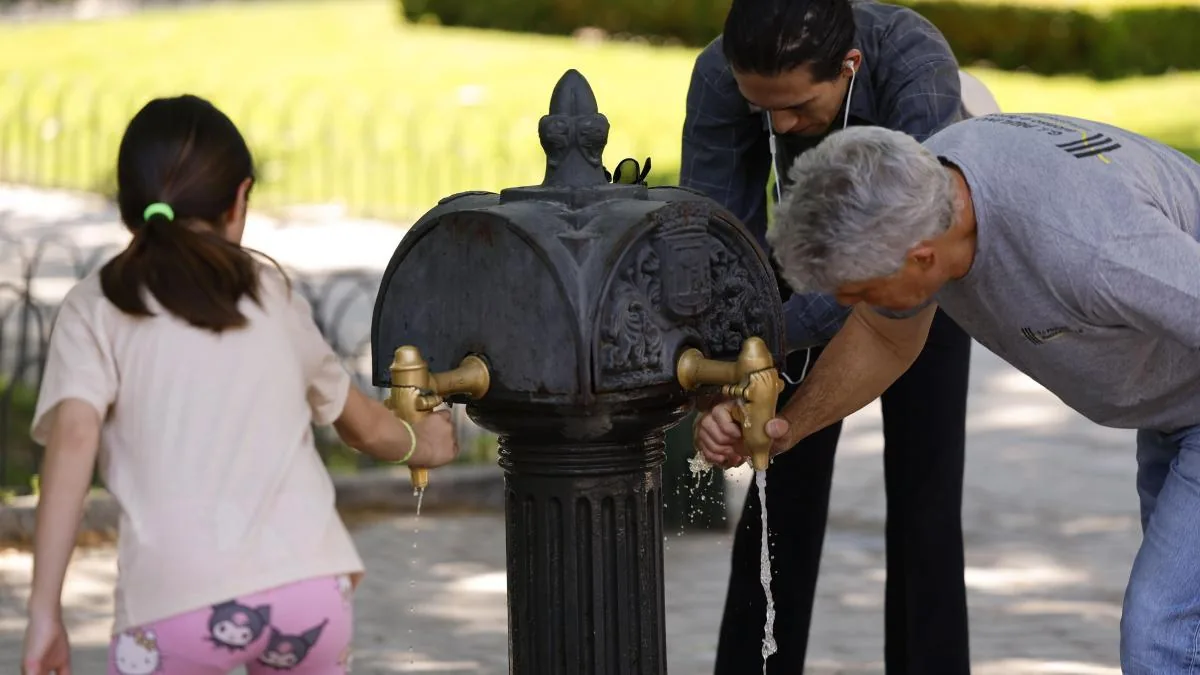
As every year, the Ministry of Health has launched its plan with the main objective of reducing morbidity and mortality associated with heat waves of epidemiological impact. One of the main new features this year is that the plan updates certain temperature thresholds after a thorough review of historical mortality and heat series in Spain, incorporating new methodological criteria.
Read more The judge orders the appraisal of the jewels found in the search to Zapatero’s office
Starting from this idea, one might think that the ministry has lowered the temperature thresholds (which can be consulted at this link) from which citizens’ health may be compromised. But this is not the case. The thresholds, in general terms, have tended to rise. Why? “Because we are increasingly adapted to the heat, and that is good news,” explains La Vanguardia Julio Díaz, researcher at the Carlos III Health Institute.
We are increasingly adapted to the heat”
Julio Díaz
Researcher at the Carlos III Health Institute
Although Health announced today that May marked a historic maximum of mortality associated with heat for this month, Díaz asserts that, fortunately, deaths associated with high temperatures do not rise at the same rate as the records do.
The ministry’s plan is structured into 182 meteoshealth zones, defined according to areas with similar climatologies of Adverse Meteorological Phenomena (AMP) established by the State Meteorological Agency (Aemet). This territorial disaggregation, fully established in 2024, allows alerts to be adjusted to the specific vulnerability of each local population. And it is in most of these zones where the threshold has risen this year compared to the previous one.
For example, in the three zones set in the Community of Madrid. In the Metropolitan and Henares, where the capital is located, it has gone from 35.9ºC last year to 37.4ºC this year.
In Catalonia it rises in 8 of the 16 set zones. On the Barcelona coast, where the capital is included, the record, however, remains: 30.4 in 2025; 30.3 this year.
They also rise generally in Extremadura. It does so in seven of the eight zones set for this community. In the so-called Caceres Plateau (where Cáceres is included), it has gone from 36.3ºC to 39.3ºC; while in the Vegas del Guadiana, where Badajoz is located, from 39.1ºC to 41.3ºC.
They also rise generally in the north, both in Cantabria and in Asturias, Navarra or Galicia. In this last community, it does so in 11 of the 16 total zones. In the Northwest of Coruña, where the capital is located, the record has risen from 26.6ºC to 27.8ºC.
Precisely, it has been in four northern communities (Asturias, Euskadi, Galicia and Cantabria) where the highest number of deaths attributable to heat in this month of May have been concentrated. Of the 101 total – the highest figure for this month since the series began in 2015 – 97 would be circumscribed in these communities: 39 in Asturias, 31 in Euskadi, 18 in Galicia and 9 in Cantabria.
The relevance of the ministry’s plan is reflected in the estimates of the MoMo monitoring system, which estimates 27,564 deaths attributable to high temperatures between 2015 and 2025. The year 2022 was the most impactful with 4,789 deaths, followed by 2025, with 3,832. The risk of mortality increases between 9.1% and 10.7% for each degree that the temperature exceeds the health risk threshold.
The warning system uses a decision algorithm based on the persistence of temperatures forecast above the threshold for three consecutive days. Levels are identified by colors: level 0 (green), no risk; level 1 (yellow), low risk; level 2 (orange), medium risk; and level 3 (red), high risk.
The general activation period of the plan runs from May 13 to September 30. However, a flexibility criterion is maintained that allows monitoring from May 1 to October 15, allowing unusual heat episodes outside the central summer to be monitored.
Protection of vulnerable groups and recommendations
The impact of extreme temperatures is mainly concentrated in those over 75 years old, but it also critically affects infants, children under 4 years old, pregnant women and people with chronic diseases (cardiovascular, respiratory or mental).
Health recommends that citizens follow basic prevention guidelines: drink water frequently, even if not thirsty; avoid drinks with caffeine, alcohol or excess sugar; stay in cool or air-conditioned places and reduce physical activity during the central hours of the day; and keep medicines in cool places to prevent heat from altering their composition.
Read more The Pope will have a private meeting with Illa on the afternoon of Tuesday, June 9