Spain will have to make an “ultimate effort” in the next four months to make the most of the transfers from the Recovery Plan. This was the term used this Thursday by the First Vice-President and Minister of Economy, Carlos Cuerpo, to refer to the challenge for administrations to deploy all direct and non-reimbursable aid from the European Commission before the end of August. At this moment, 13,000 million are at stake, although some items are already allocated.
Read more Putin justifies mobile internet restrictions in Russia for security reasons
The Minister of Economy stated that the Government is striving, together with the autonomous communities and city councils, to “simplify the investment conditions” of the funds and “be able to advance, implement and execute all these funds.” Time is pressing because the milestones must be met by August 31.
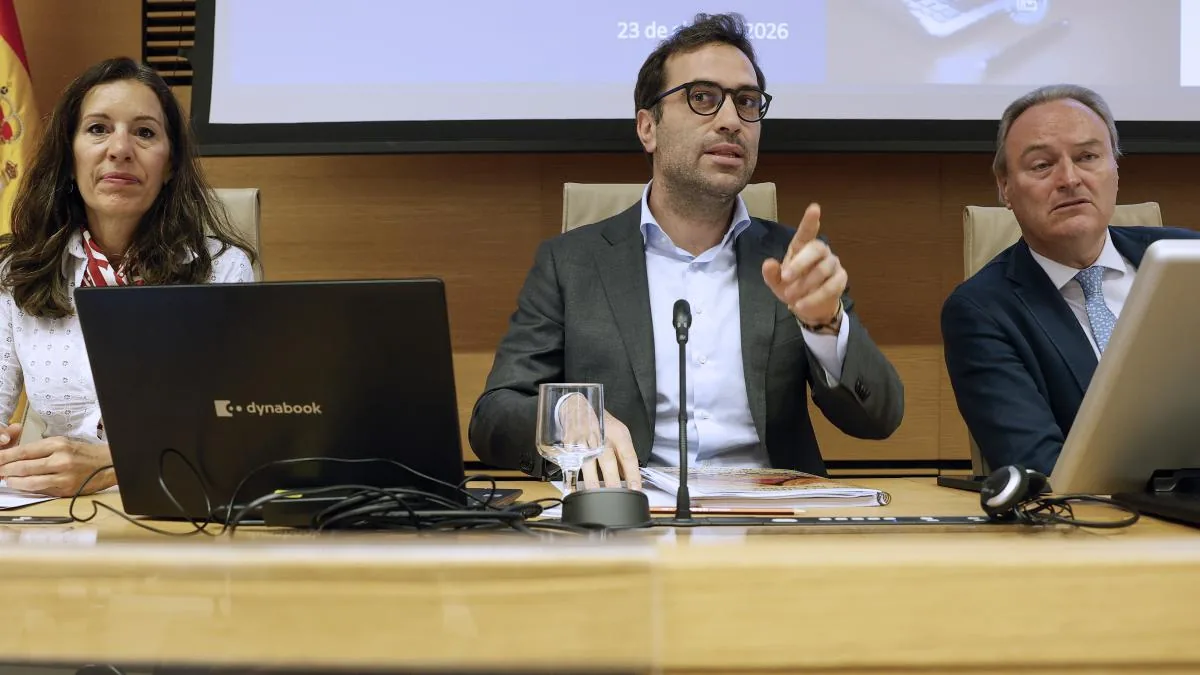
Cuerpo appeared before the joint committee for the European Union of the Cortes Generales, where he reported on the status of the deployment of the Recovery Plan. Spain was entitled to 80,000 million in transfers, and so far, according to the First Vice-President, 67,000 million have been awarded. This aid, he stressed, “has already reached the Spanish economy.” According to data from the Ministry of Economy, 40% of those 67,000 million have benefited micro-SMEs and SMEs.
The Government gives up on the commitment to eliminate the diesel tax aid
Of the 13,000 million in direct aid from European funds pending allocation, the Government has already given clues as to where a part of them will be allocated. For example, Economy has reserved 2,800 million in transfers in the sovereign fund “España crece” (Spain grows). It has also included an item, of up to 1,000 million, in aid for the victims of the DANA (depresión aislada en niveles altos, isolated depression at high levels). That is, although that “ultimate effort” still remains, the Executive is pushing to the maximum to squeeze all non-reimbursable transfers.
In total, the Recovery Plan approved to face the consequences of the pandemic will mean an injection into the Spanish economy of about 103,000 million between 2021 and 2026. To the 80,000 million in transfers, another 22,800 million in loans must be added, which do not have such an early resolution date. It should be remembered that Spain has only requested a quarter of the credits and renounced about 60,000 million to avoid increasing debt. The Treasury is able to finance itself in the markets under better conditions than those offered by the funds.
Read more A Sant Jordi not suitable for allergy sufferers
Spain is the second country in the EU, behind Italy, that has met the most milestones and objectives to date in the five examinations already passed. The European Commission is currently pending to evaluate the sixth disbursement, which will increase the figure to 60,000 million. Administrations have met more than 340 milestones and objectives, but they will not be able to meet one hundred percent of the commitments. Cuerpo practically gave up on one of these commitments, the elimination of the diesel tax bonus, even more so at this time when this fuel has become more expensive than gasoline after the outbreak of the war in Iran.
The Recovery Plan explains between 10% and 14% of annual GDP growth, according to Funcas
Coinciding with Cuerpo’s appearance in Parliament, today Funcas and Afi published a study concluding that European funds explained between 10% and 14% of Spain’s GDP growth since its launch in 2021 until the last fiscal year. That is, the Recovery Plan has had a positive impact on the Spanish economy and has contributed between 1.4 and 2.1 percentage points to national GDP in the same period.
However, Funcas also warned, the transformative effect of the Recovery Plan has not yet fully materialized in the Spanish economy. The report concludes that the funds have contributed to sustaining public investment, while the boost to business investment has been lower than expected. In fact, at the end of 2025, business investment was still 3.3 points below the pre-pandemic level in real terms, although a recent rebound has been perceived. Similarly, productivity reflects still limited dynamism.
Read more Tattoos, tears and books for the Secret Service: the most talked-about anecdotes of Sant Jordi