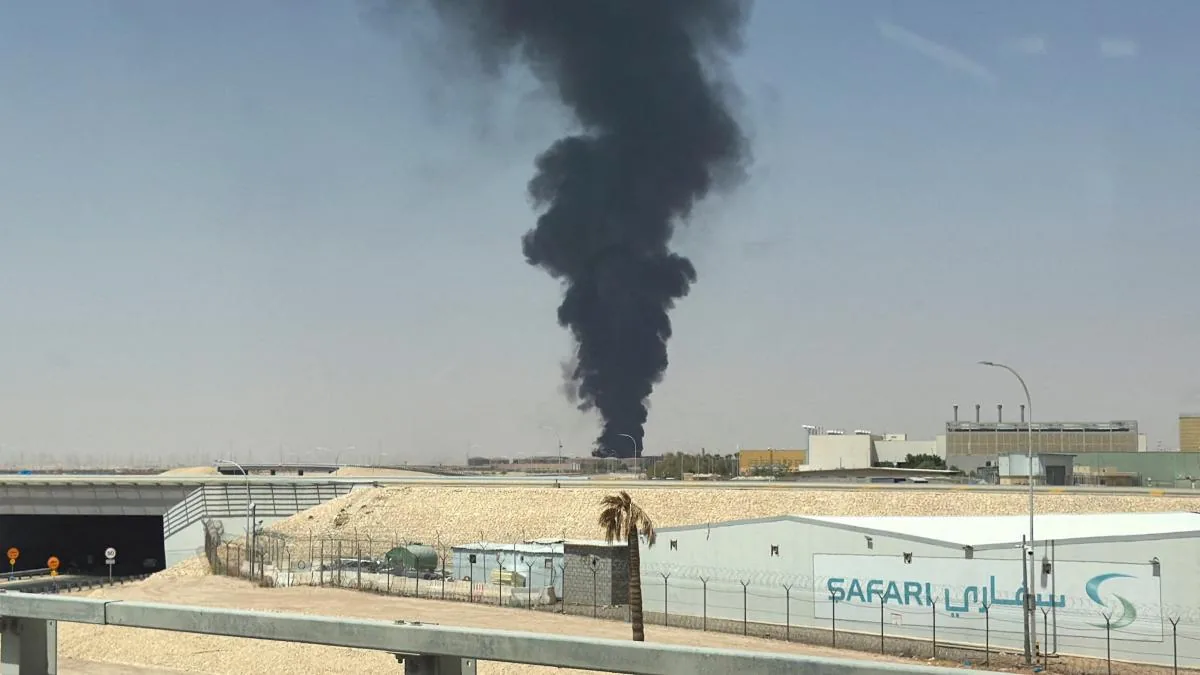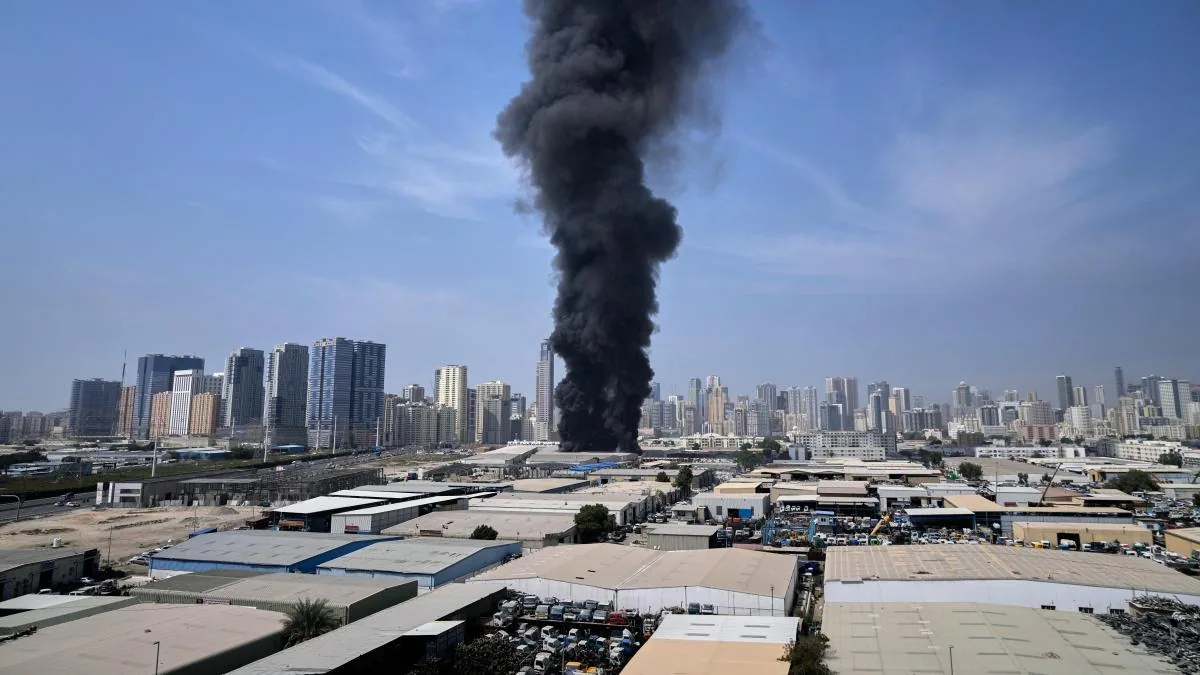
The image of a safe haven of the Persian Gulf countries, on which their opulent economies were based, has been disrupted by the Iran war. Maintaining the perception of security has become an imperative for these monarchies, even if it infringes on the freedom of expression of their citizens. Amnesty International (AI) denounced on Monday a “campaign of repression,” resulting in more than a thousand detainees accused of sympathizing with Iran during the United States and Israel war against the Islamic Republic.
Since the beginning of the war, at the end of February, the authorities of the countries belonging to the Gulf Cooperation Council (GCC) —Kuwait, Bahrain, the United Arab Emirates (UAE), Qatar, Saudi Arabia, and Oman— issued general warnings against the dissemination of content on the internet and social networks that spread “rumors” or “false information” about the war. Shortly after, several of these countries began announcing mass arrests.
Also read
Additionally, in Kuwait and Bahrain, local authorities reportedly revoked the nationality of several citizens detained in this context, while issuing prison sentences ranging from three to ten years, according to the NGO’s investigation.
“While Gulf states may take measures to address misinformation and protect national security, and may restrict certain rights during an armed conflict, any restriction on freedom of expression must comply with strict international human rights standards,” said AI’s regional director for the Middle East and Africa, Heba Morayef.
For Morayef, the monarchies have expanded an already existing repression. “Gulf states have resorted to their usual authoritarian heavy hand to control information and have instrumentalized ambiguous and overly broad provisions of cybercrime, counter-terrorism, and national security laws. This goes far beyond what is permitted by international law,” she added.
Gulf states have resorted to their usual authoritarian heavy hand to control information
Heba Morayef
Regional Director of AI for the Middle East and Africa
The region’s monarchies have faced the situation with varying degrees of severity. “The variable intensity of repression reflects a combination of factors, including the different political cultures of each state, the degree of damage suffered, and the nature of their relations with the United States and Israel,” explained the Middle East specialist researcher at the Carnegie Endowment for International Peace, Frederic Wehrey, in an article last month. “Those who most supported the war had the greatest incentives to suppress its internal repercussions,” he added. That is, UAE and Qatar.
The UAE, a mecca for influencers from around the world, mainly British, has arrested at least 375 people by early April, according to Emirati authorities. The highest number recorded in the region. The country’s laws regarding cybercrimes describe it as a crime not only to record but also to repost or comment on images that may “incite public opinion or disturb public security,” according to the organization Detained in Dubai, which assists foreigners arrested in the city and reported the first arrests in the luxurious emirate two months ago.
Read more Feijóo says «I am not here to ask for favors» but defends an alternative majority
This is the “draconian Cybercrime Law of the United Arab Emirates, Federal Law No. 34 of 2021, which prohibits sharing information considered ‘misleading’ or harmful to the ‘reputation of the State.’ This law is applied jointly with the Penal Code and other national security laws,” Amnesty recalled.
Dozens of the arrests made in the UAE were of British citizens who took photos or videos of Iranian attacks at the beginning of the war, as well as door-to-door phone inspections carried out by the police in areas affected by drone attacks, AI confirmed at the end of March. Additionally, dozens of prominent media accounts were blocked after sharing videos of the attacks.
Also read
Qatar’s stance is equally aggressive, with authorities having arrested at least 313 people, according to the Qatari Ministry of Interior announced in early March. While the small state initially maintained a neutral stance on the conflict, it hardened as it prolonged and saw how Iranian retaliation damaged its natural gas infrastructure.
Besides the arrests, another measure taken by the Gulf countries was to request Meta to block the Facebook or Instagram accounts of the persecuted individuals.
As a result, the task of portraying this reality has become almost impossible for information professionals. A journalist based in Riyadh (Saudi Arabia) told Amnesty that “no one speaks openly about what is happening or how they feel.” “It is impossible to know how people are coping with these restrictions, due to the immense climate of fear added to the existing fear of bombings,” said the journalist who spoke on condition of anonymity.
Read more The Government asks the Church to include Catalan in the blessing of the tower of Jesus