The encyclical of Pope Leo XIV on Artificial Intelligence is having a strong impact on public opinion, especially in published opinion. Magnifica Humanitas. ‘Magnificent humanity’, a beautiful title in a somber time. It is still early to know what the effects of this encyclical will be on the underlying issue raised in its 53 pages, organized into 244 points: human control over AI, ultimate responsibility in the new nervous system of developed societies, the driving or self-propulsion of the technological network that will modify the deepest structures of humanity to the point of being able to subjugate or destroy it. The Entity that one day could set as its goal the extinction of a Humanity deemed inefficient.
First impression. The text is being widely discussed in the media, is frequently cited on social networks, and is generating a clearly positive opinion in professional and scientific circles in the West. All those who have objective reasons to feel more threatened by the development of AI (all kinds of liberal professionals, middle management, journalists, professors, teachers, artists, managers of various ranks…) currently sympathize with the document released by the Pope eight days ago.
Also read
A large part of the enlightened left applauds Leo XIV, just as their parents and grandparents applauded in 1963 the Pacem in Terris of John XXIII, addressed “to all men of good will,” which established the moral foundations of ‘peaceful coexistence’ between the two opposing blocs during the first Cold War. Published two months before the death of Angelo Maria Roncalli, baptized by the Roman people as the “Good Pope,” that document placed respect for human rights at the center of international politics. Christian Democrats and Communists began to talk with John XXIII’s encyclical on the table.
Those human rights were violated many times, but the struggle between the two blocs constantly appealed to them. Freedom and equality. The Western bloc demanded maximum respect for individual freedom, and the socialist bloc prioritized social equalization.
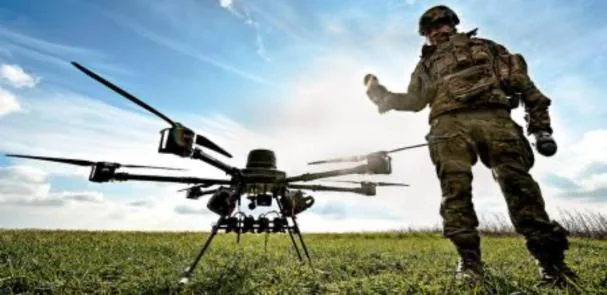
For years, political and ideological struggle in the world spoke of values. People were killed in the name of values. Today maps are deployed, ‘living spaces’ are drawn, and survival is discussed. Energy security, technological security are invoked, and the effectiveness of ‘intelligent’ drones as future weapons is being tested at high speed. The drone is the great discovery of the Ukraine war. The drone does not say “Magnifica Humanitas” when its sight captures a group of people hiding behind some bushes: it frames them, consults its program, and if it responds that they may be enemies, it shoots and kills, or explodes. Next-generation drones make that decision on their own. Drones and robots will be the preferred weapon of an increasingly near future.
That future scares many people, which is why the Pope’s encyclical has been favorably received by people of very different political thought. Some have remained silent. Liberals who reject anything that smells of regulation have frowned but have not raised any barricades. They still dare not do so. The staunch anticlericalism has also frowned. In Spain, Podemos and BNG (five deputies in total) have just announced that they will not attend the Congress session next Monday in which Leo XIV will address the parliamentarians. There was a time when Podemos threw stones into the pond and very visible waves were formed. For months, the concentric circles in the water were theirs. Today they throw gravel into the water.
The president of the Spanish Episcopal Conference, Luis Argüello, archbishop of Valladolid, a cleric with a distinctly conservative profile and notable political culture, has seen new spaces for social intervention open for the Catholic Church and has not delayed in taking the initiative. Yesterday he presented the encyclical in Madrid, flanked by the president of the CEOE employers’ association, Antonio Garamendi, and the general secretary of Comisiones Obreras, Unai Sordo. The Church at the center of the debate on the new social contract.
The most powerful remain silent, hermetically silent. High politics is silent. Neither Donald Trump, stuck in the Strait of Hormuz; nor Xi Jinping, always stoic; nor Vladimir Putin, now fearful of a military setback in Ukraine, have said anything. Ursula von der Leyen, always regulatory, is also silent. The European Union, often accused of being soft, has also not issued any opinion so far. The great technology oligarchs are also silent, for now. They will soon fire. Peter Thiel, founder of Palantir, the most ideological of them all, has just settled in Argentina to live far from Washington, support Javier Milei, and help turn that country into a large testing ground for new social control devices. Thiel wants to build an anarcho-liberal sanctuary in Patagonia from which to challenge the Pope of Rome. Maps, always the maps.
Is Trump silent? Not entirely. The President of the United States has said nothing about the encyclical, but this past weekend he attacked Leo XIV again for his position on the Iran war. He cannot stand it. It is clear that he cannot stand the existence of a voice independent of the imperial rules of the game. They offered a pact to Rome shortly after the death of Francis, a pact of mutual support, a Carolingian pact, the emperor would support the new pope, and the pope would leave the emperor alone. The conclave chose the American cardinal Robert F. Prevost, former general prior of the Augustinian order, trained as a bishop in Peru, who from the first minute had very clear what his mission was. Some wanted to present him as a cautious traditionalist who would return the waters stirred by Francis to their course. I think it is quite clear now that this diagnosis, very visible a year ago in prominent Anglo-Saxon media, was wrong.
Let’s look at some reactions.
J.D. Vance is cautious. The Vice President of the United States is showing caution after having sharply polemicized with Leo XIV regarding the Iran war. At a recent event with graduates of the Air Force Academy on May 28, Vance said he agrees with the Pope’s warning “not to delegate the most important decisions to digital technology.”
Read more The teachers’ strike reaches Barcelona and blocks access to Casa Batlló
During his speech in Colorado Springs, Vance explained before 900 newly graduated cadets that what worries him most about AI is how it will change war. “Decisions about life and death must be made by humans, not machines,” he warned. “You are masters of war, and both your minds and your hearts are the opposite of artificial,” he said. “Use technology to surpass yourselves, but never submit to it.” A convert Catholic for seven years, Vance seems aware of the good reception the encyclical has had among Catholics in the United States, regardless of their political orientation. Vance, who dreams of someday reaching the White House, knows perfectly well that the Catholic vote remains important in that country. The Pope today appears as a strong figure before American society.
‘Human First’, the quick move of the MAGA movement. Days before the publication of Magnifica Humanitas, from the United States, Steve Bannon, veteran Trump advisor, announced the creation of the “Human first” current, as a variant of the “Make America Great Again” movement. In a letter addressed to the president on May 19, exactly six days before the publication of the papal encyclical, Bannon and 60 other signatories urged Trump to regain ideological control of his second term by sidelining the tech oligarchs who advocate unlimited development of the digital society. The signatories expressed their support for the presidential decision to subject to prior control the sale of AI models that may be dangerous, a measure adopted for the first time with the Mythos program of the company Anthropic, capable of quickly detecting security flaws in cyber systems, that is, capable of detecting and exploiting those flaws. There is growing alarm about the advance of AI in that regard. Many lines point to a risk of social collapse. The encyclical has reflected on them with extraordinary clarity.
“Human First” seems to be the response of the most populist wing of Trumpism to the growing weight of new tech companies in the U.S. administration. A year ago, Bannon was launching darts against the ‘posthumanism’ of technologists. The two ends of the hegemonic movement launched by the radicalized Republican right are going to collide. Those at the very top and those at the bottom. The Elon Musks who want to live forever and the drinkers of Ultra Right Beer on the porches of the Midwest. The Silicon Valley guys and the voters of almost all rural counties in the United States. The two ends of a very wide arc are on their way to clash. That is why Vance is on alert. “The United States did not become the greatest nation in the world by allowing unelected elites to conduct experiments on the population without guarantees or accountability. ‘America First’ means above all American strength, American security, and the protection of our people,” says the letter addressed to Trump.
The Chinese Marxist-Leninist response. Bannon’s haste to take a position before the Vatican released the encyclical is significant. No less significant is the date chosen by the Chinese Communist Party to release an official-sounding opinion on the drift of AI. On May 25, coinciding with the presentation of the encyclical in Rome, the magazine Study Times, flagship newspaper of the CCP Central School of Cadres, revealed its vision of the new nervous system of technified humanity.
An article signed by Zang Donggang, CCP secretary at Renmin University, one of the country’s most prestigious research universities, reflected on “the construction of China’s autonomous knowledge system.” The text argues that AI is more than a technological frontier. It is a battlefield of epistemology, ideology, and global influence. The struggle for AI development is a major battle for China, and in that battle, algorithms will be required to align with socialist values, rather than follow Western models driven by capital.
Zang Donggang speaks of AI as a new form of “general intellect,” a force that reshapes the superstructure, a catalyst for the “systematization, theorization, and signification” of China’s autonomous knowledge system. Where the Pope invokes the human person, the CCP invokes the productive forces. Where the encyclical speaks of conscience, the Party speaks of epistemic sovereignty. Where the Vatican warns about the moral risks of social surveillance, the CCP text remains silent.
Both texts recognize that AI is not just a tool but a determining factor in the development of civilization. Both understand that it can exalt or degrade humanity. But one insists that the measure of technology lies in the human person, while the other holds that this measure lies in the historical project. Moral anthropology and historical materialism. There have been no disparaging statements from the Chinese regime about Magnifica Humanitas.
Among the reactions of Western politicians, the initiative of Canadian Prime Minister Mark Carney stands out, who made a phone call to the Pope to congratulate him and share impressions on the topic. The Vatican had the courtesy to include a brief note of that call in its daily press release, which surely did not please Donald Trump, among whose pending tasks is the conquest of Canada.
(I appreciate the collaboration and good advice of Gorka Larrabeiti and Esteban Hernández in guiding the radar).
Read more Strong job creation adds 232,000 new affiliates in May