






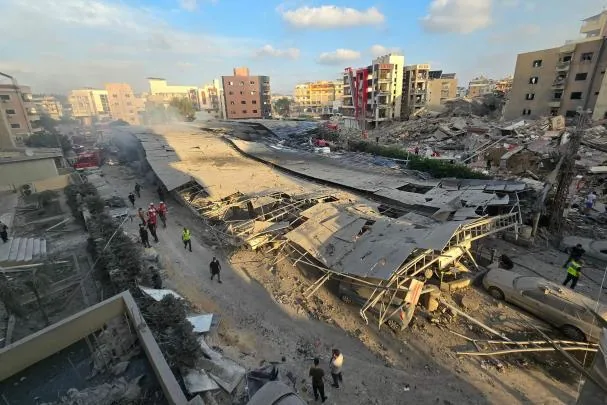
Donald Trump sought to exit the war with Iran through a pact before the midterm elections, but his unruly ally, Israel, threatens to blow the agreement apart. Benjamin Netanyahu announced early Sunday a new wave of bombings in the southern neighborhoods of Beirut, one of the red lines set by the United States in the ceasefire signed between the Lebanese and Israeli governments last April 17.
Read more Starmer’s name does not appear at all in Mandelson’s papers
Immediately after, Iran responded by freezing peace talks with Washington until Israel ceases its offensive in the land of the cedars. The spokesperson for the Iranian Ministry of Foreign Affairs, Esmail Baghaei, stated that “a ceasefire in Lebanon is an inseparable part of any ceasefire and any final agreement to end the war.”
In a statement, the Iranian Central Command said that if an air offensive over Beirut finally occurs, the inhabitants of the northern areas of Israel and the military settlements in the “occupied territories” must leave the area “if they do not want to be injured.”
The tension increased until the -chaotic and contradictory- intervention of Trump, who said on his social media that he had agreed with Hizbullah and Israel to stop the crossfire. According to Israeli sources cited by the media Yedioth Ahnoroth, the US president held a phone conversation with Netanyahu, who agreed to “postpone” the bombings in the capital.
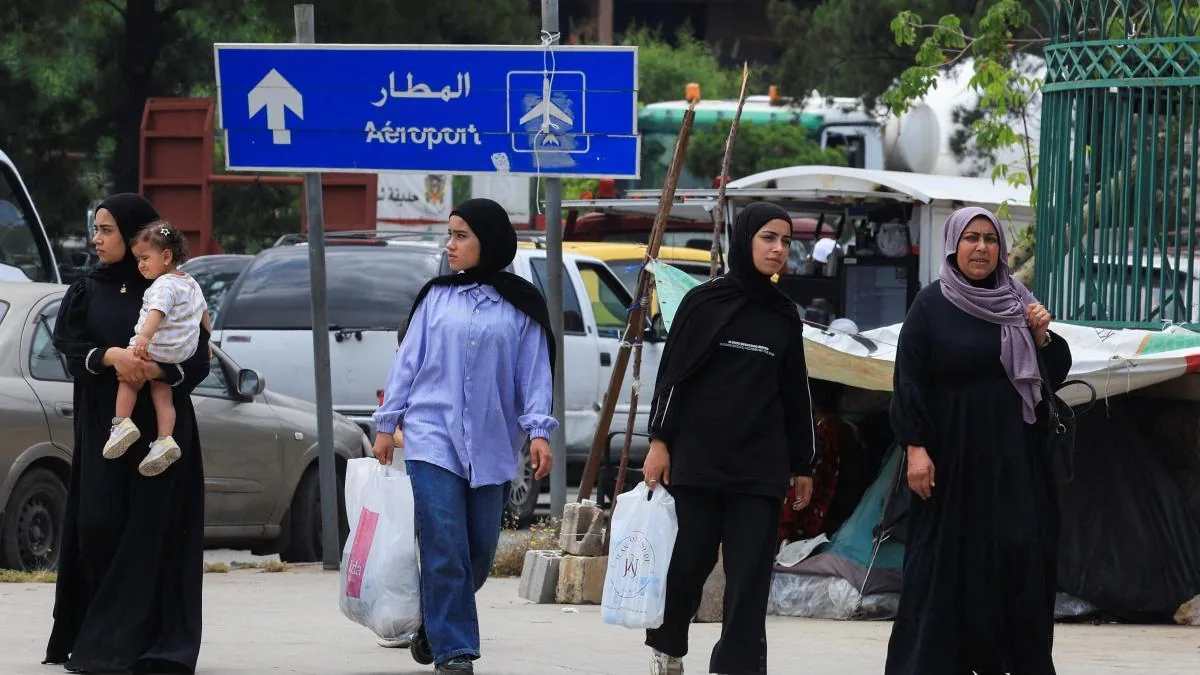
In Beirut, where only one Israeli attack has occurred since the truce came into effect, the words of the Israeli prime minister caused panic among the inhabitants of the southern neighborhoods. “There are many people who had returned to their apartments, as they had no alternative for shelter,” Abdalah explains by phone to La Vanguardia.
Once again, thousands of people clogged the main arteries of the city in anticipation of an imminent attack. “This time, people are much more tired,” narrates Abdalah, who laments the constant feeling that “no place is safe.”
Meanwhile, both the Israeli Army and Hizbullah have continued fighting in southern Lebanon. However, Tel Aviv has shown no intention of stopping an invasion with a high cost for its own population. Every day, the photo of a new soldier fallen in combat headlines all Hebrew newspapers. The Shiite militia launches dozens of drones daily against northern Israel, where air raid alarms do not cease and where school classes have been canceled.
Read more Trump says negotiations with Iran are underway again after Israel’s commitment not to attack Lebanon
The troops of the Israel Defense Forces (IDF) have further deepened their invasion of southern Lebanon in recent weeks. On Sunday, the military command claimed to have taken the emblematic Crusader fortress of Beaufort, a strategic point to control southern Lebanon and a symbol of all the wars between the two countries. Hizbullah, however, claims that the images released – in which the Star of David flag waves over the Lebanese castle – have a propaganda purpose and that Israel does not yet have full control of the lookout.
While the possible attack on Beirut occupied the headlines, Lebanese authorities reported an Israeli bombing near a hospital in the southern city of Tyre, a historic Phoenician enclave and one of the main towns in the south. The Ministry of Health released images showing severe damage to the facilities, with debris inside a room, collapsed ceilings, broken glass, and traces of blood, as well as a fire in the center’s parking area.
The Lebanese National News Agency indicated that the bombing, directed against a junction near the Jabal Amel hospital, hit a building and the parking lot, causing several injuries. So far, authorities have raised the toll to six dead and at least twenty injured. The Israeli army did not issue immediate comments on the incident.
The war in Lebanon, considered the main regional extension of the conflict with Iran, has caused the displacement of more than 1.2 million people since March, according to official data. Lebanese authorities estimate more than 3,370 dead due to the Israeli offensive, while Israel claims to have lost 24 soldiers and four civilians during the same period.
Over the streets of Beirut still weighs the memory of the Israeli siege of 1982 and the massacre in the Palestinian refugee camps of Sabra and Shatila. Israeli soldiers patrolled the south of the country until their withdrawal in 2000, without having achieved the goal of establishing a secure border. From that experience, they drew a lesson: it is much easier to enter Lebanon than to leave.
Read more Anthropic files for IPO with a huge public offering