Just over a month ago, coinciding with the start of the conflict, the European Medicines Agency (EMA) management board assessed the impact of the Middle East war on drug supply. It did not detect major alterations, but it did warn that the persistence of logistical difficulties could increase the risk of shortages. The pharmaceutical sector sees the probability of shortages of ingredients, medicines or health products becoming increasingly likely.
Read more Complaint in France against Uber Eats and Deliveroo for human trafficking
Farmaindustria, which brings together more than 130 laboratories representing almost all drug sales in Spain, confirms that it is closely monitoring the conflict together with the Spanish Agency for Medicines and Health Products (Aemps). “For now, there are no problems,” says this employers’ association.
Current stability is fragile and depends on the geopolitical context not deteriorating further”
Elena Casaus
Secretary General of Aeseg
The more than 180 production plants in the pharmaceutical sector in the country “continue to work normally to guarantee the supply of medicines to our pharmacies and hospitals,” it states in a note sent to La Vanguardia. But the situation is frankly uncomfortable, and that normality could be altered by any escalation or persistence of the conflict over time.
According to Farmaindustria, the war “represents a new source of uncertainty and volatility for the sector in an already complicated geopolitical context.” “And if it extends over time, it could have a great impact on the pharmaceutical industry, as already happened with the conflict in Ukraine,” which caused an increase in energy costs, higher raw material prices, and higher procurement costs due to increased maritime transport costs.
Read also
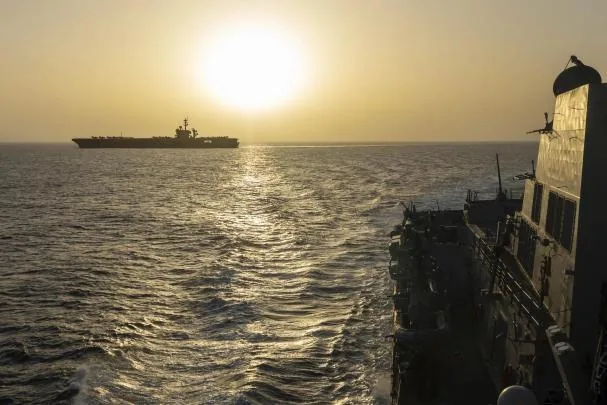
The war has fragmented global supply chains. Maritime traffic through the Strait of Hormuz, through which most of the active ingredients arriving in Europe from China and India pass, has been reduced by 90%. And the closure of airspace in the region has caused a reduction in cargo space of more than 70%, which has driven up air transport costs.
“It is not an immediate supply crisis, but rather a situation that is straining supply chains, increasing costs and reducing margins in a sector that already operates with very tight prices,” points out Elena Casaus, secretary general of the Spanish Association of Generic Medicines (Aeseg). In her opinion, the supply of medicines in Spain is maintained thanks to the safety stocks of pharmaceutical companies and their logistical adaptation capacity. Spanish legislation requires maintaining medicine reserves, but does not specify the duration, unlike, for example, Germany, where supply is guaranteed for six months.
Read more Lamine Yamal is out for the remainder of the League but his World Cup participation is not at risk
Current stability “is fragile and depends on the geopolitical context not deteriorating further,” warns Casaus, who highlights Europe’s enormous dependence on active ingredients produced in Asian countries. “Instability in the Middle East does not directly affect these factories, but it does so indirectly, by making energy more expensive, hindering access to certain chemical inputs, and straining global transport,” she argues.
Data from the European Court of Auditors for last year indicate that 70% of the active ingredients used on the continent come from Asia, or that dependence is total for such basic medicines as ibuprofen or paracetamol, and 80% for commonly used antibiotics such as amoxicillin.
Pharmaceutical companies maintain that stocks are currently guaranteeing the supply of medicines
In Casaus’s opinion, generic medicines are particularly sensitive to the Iran conflict due to the fact that they operate with regulated prices and very tight margins for laboratories, “without the capacity to pass on sudden increases in energy or logistical costs to the final price.”
Generics represent 90% of the list of more than 270 critical medicines identified by the European Medicines Agency as a result of supply problems arising from the Covid-19 pandemic. They are defined as drugs “whose absence can cause serious harm or a serious risk to patients.”
Read more Brawl at Ábalos’s trial: “This Public Prosecutor’s Office understands nothing and is incredulous”