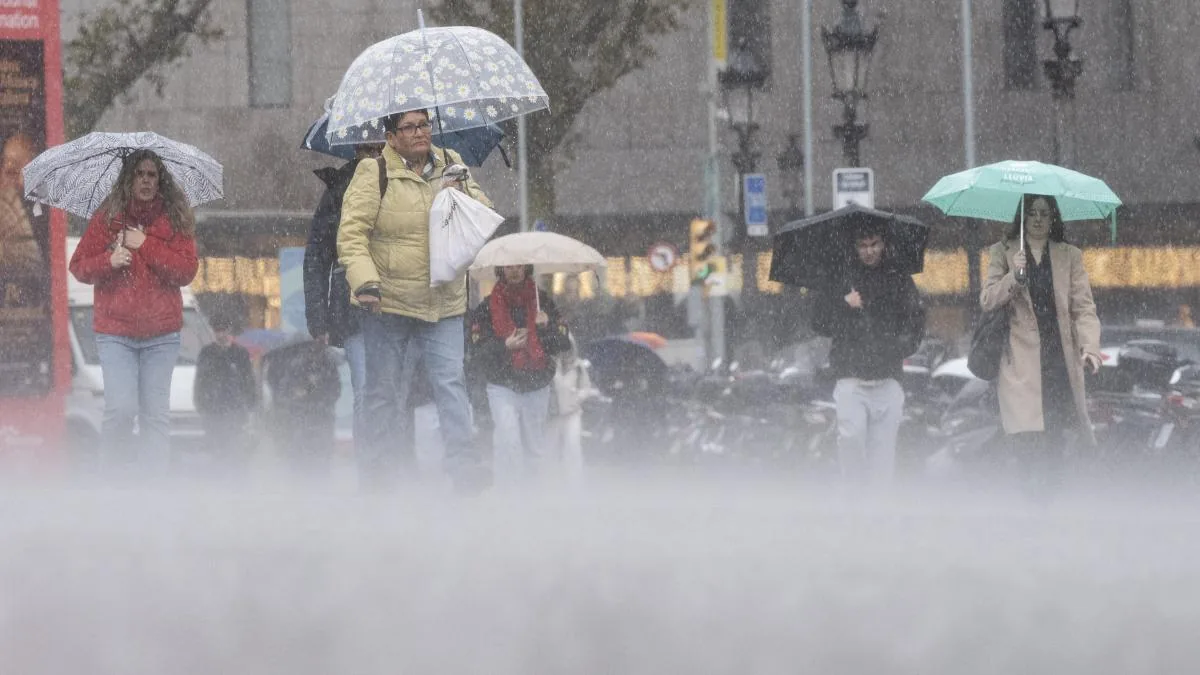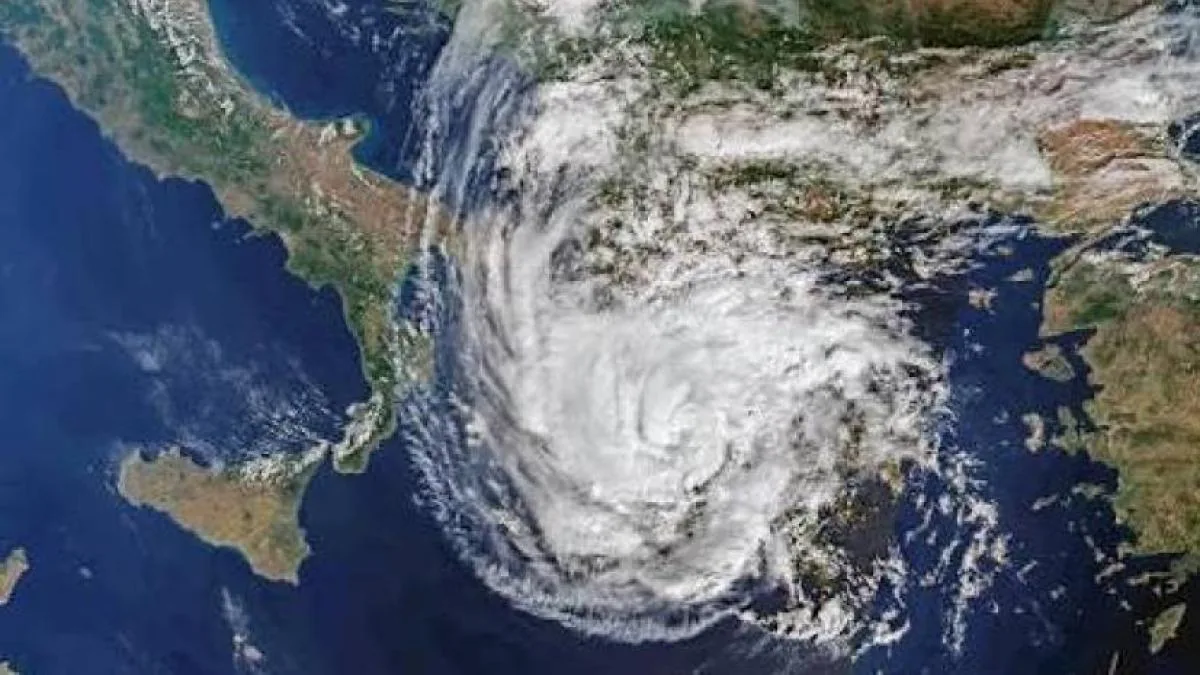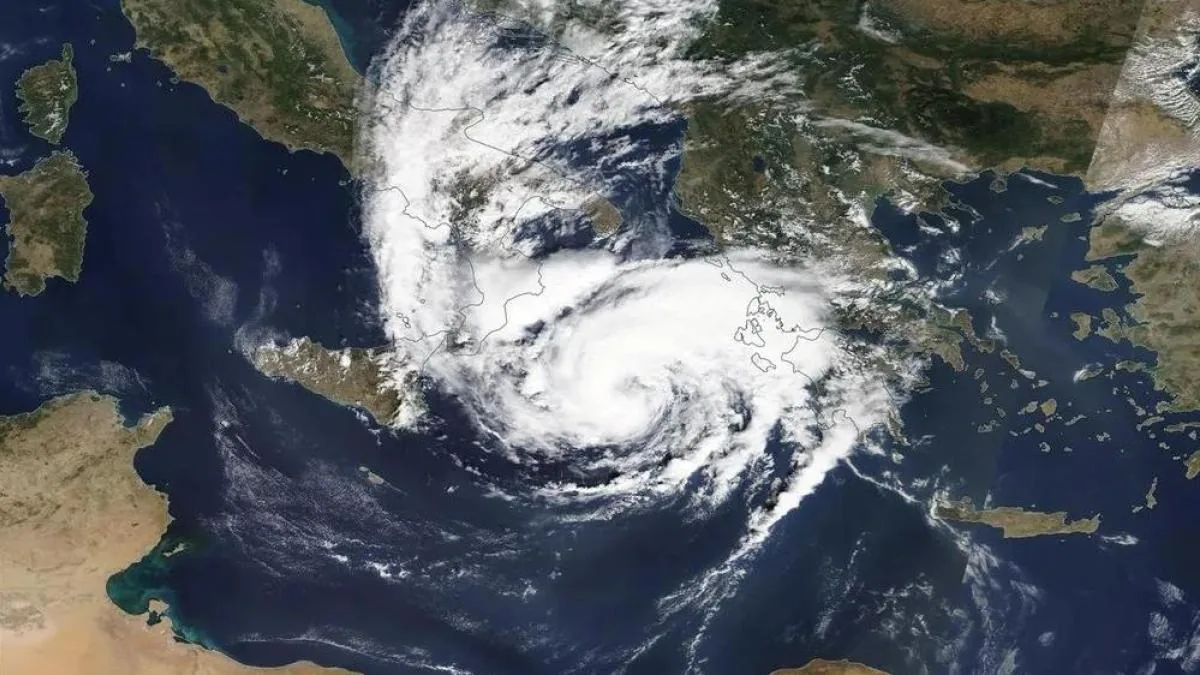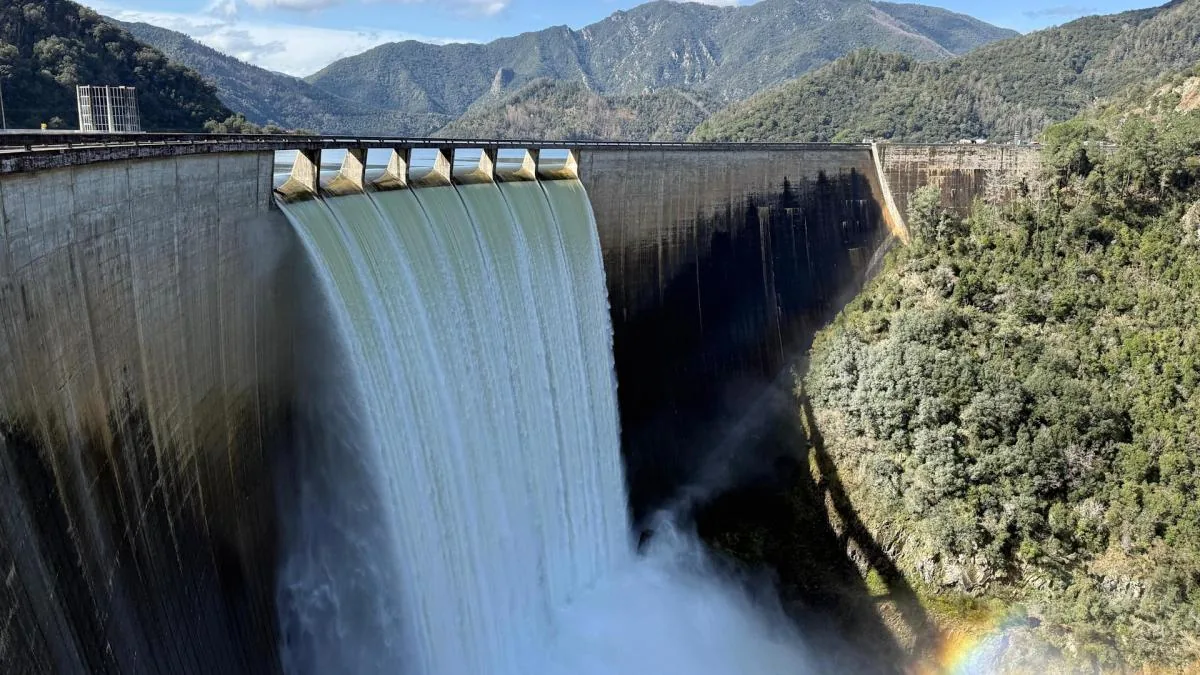
Rarely in recent decades have reservoirs been as full and overflowing as this spring. According to the latest data from the Ministry for the Ecological Transition (Miteco), aquifers are very close to their maximum capacity. Reserves are only 16% – 9,000 cubic hectometers – away from reaching full capacity. In a climate not altered by the accumulation of greenhouse gases in the atmosphere, these figures would guarantee a long period of moist soils. However, on a planet warming to record levels, the abundant and concentrated rains of recent months do not shield the country from suffering a drought.
Read more I have many girlfriends
This striking paradox has been revealed in a scientific study published this week in the journal Nature. The new evidence confirms that a territory can alternate floods and heavy torrential rains with droughts in a “consecutive and non-contradictory” manner.
It’s not just the amount of water that matters, but also how it is distributed (…) the accumulation of water on the surface evaporates more easily
Justin Mankin
Climatologist
The authors of the study, climatologists Corey Lesk and Justin Mankin, from the Department of Earth and Planetary Sciences at Dartmouth College (United States), explain that we must stop focusing on the amount of rainfall. Instead, we must analyze how it rains. If precipitation is concentrated in very intense events followed by dry periods of extreme heat – a situation that may occur this year in Spain – the water accumulated on the surface evaporates very easily.
The warning from these scientists is that the earth could store less water even if the annual amount of rainfall does not decrease. To issue this alert, they conducted satellite observations of water stored in soils, vegetation, and aquifers between 2002 and 2022 in different regions. After cross-referencing and analyzing all the records, they discovered a “global pattern”: when precipitation is concentrated, even if abundant, the water retained by the earth decreases.
Also read
That is, “the concentration of precipitation is almost as important for soil moisture as the amount of rain that falls in a year,” explains Lesk, one of the authors of the work. “From a hydrological perspective, we have always believed that what matters is the amount of precipitation a place receives, and not so much the demand that ecosystems and the atmosphere have,” adds Mankin, the other researcher.
Extreme heat, the study reveals, acts like an “atmospheric vacuum cleaner.” Evaporation increases, reservoirs lose water faster, soils dry out, and vegetation consumes more moisture to survive.
“We found that not only the amount of water matters, but also how it is distributed. Rain concentration is like asking the earth to drink from a fire hose. When rains are intense, more consecutive dry days occur, but the most important thing is that heavier rains cause water to accumulate on the surface, which evaporates more easily with atmospheric evaporation,” these scientists detail.
The thirst of the atmosphere
Sergio Vicente is a researcher at the Pyrenean Institute of Ecology, a member of the Climate and Climate Services Laboratory of the CSIC, and a member of the United Nations Intergovernmental Panel on Climate Change (IPCC). Last year he participated in an international study on how global warming is intensifying droughts, even in the wettest areas of the planet.
In the Mediterranean, for example, the amount of rainfall has not changed significantly in recent decades, according to the latest studies. More frequent and intense droughts are explained by an “increasingly thirsty” atmosphere.
“As the planet warms due to climate change, atmospheric evaporative demand increases, which causes water loss in surface water bodies, reservoirs, rivers, and lagoons. Let’s say that higher temperatures cause our atmosphere to demand a greater amount of water. And if that water is available, it evaporates, which means we have fewer resources,” he summarizes.
Read more Bad Bunny, the Great Phenomenon of Puerto Rico (★★★★✩)
For Vicente, including evaporative demand in drought monitoring, instead of relying solely on precipitation data, “is key” to better managing risks for agriculture, water resources, energy, and public health.
Drought is born in rainy years
Rodríguez Chueca, professor in the Department of Industrial Chemical and Environmental Engineering at the Polytechnic University of Madrid (UPM), adds another reflection to consider: apparent abundance can generate a false sense of security.
The amount of stored water, he explains, is only a snapshot, “not a guarantee for the future.” Annual water consumption in Spain is around 32,000 hm³, a figure close to the volume currently stored.
“Drought does not appear suddenly; it is a cumulative process. If consumption remains high, the system may seem safe. But if it also rains less, it can become vulnerable quickly. Like in personal finance, if expenses exceed income, savings run out,” he points out.
According to the study published by UPM, to understand a drought it is not enough to consider rainfall. The state of rivers, reservoirs, and – above all – consumption must also be observed. It is therefore essential to differentiate between meteorological drought, associated with lack of precipitation, and hydrological drought, which affects stored resources.
“Hydrological drought can take months or years to manifest if there are high reserves and good water management. Although meteorological drought cannot be avoided, its most severe effects can be delayed. This is possible with proper management,” Rodríguez clarifies.
In this scenario, “climate change introduces a new element of uncertainty.” In the last decade, greater alternation of extreme events has been observed. For example, there are more intense droughts. But also extreme precipitation, concentrated in time and space, with limited use.
“This reduces the reliability of historical data as a reference for planning. Therefore, it is necessary to work with a greater number of scenarios and adapt to greater variability. Currently, Spain does not suffer hydrological drought. However, it could be entering a new cycle of meteorological drought at any time. Relaxation when reservoirs are full can increase future risk,” concludes this expert.
Read more Barça- Lyonnes: How the talented blaugrana empire imposed itself on Kang’s wallet