The demonstration of intelligence that Verónica, a Swiss brown cow specimen, showed in January made the scientific community reflect. Verónica became the first cow recorded using a tool: a stick that allowed her to reach parts of her body she could not scratch. Researchers from the National Institute for Agricultural Research, Food and Environment of France observed the phenomenon and considered studying the memory of cows. Specifically, whether they could “discriminate between familiar and unfamiliar faces.”
Read more Sánchez and Meloni explore a meeting in Rome
And it turns out they can. The conclusions of the study, published in the journal PLOS One, state that cows “are capable of processing human signals and do not perceive all humans as a single undifferentiated category, but are able to distinguish and recognize individuals they have previously encountered.” The usefulness of this finding suggests that farmers or workers should be assigned to specific cows to “strengthen the relationship between humans and animals,” the study adds.
“From the perspective of animal welfare, a better understanding of their sociocognitive abilities is essential to improve interactions with them”
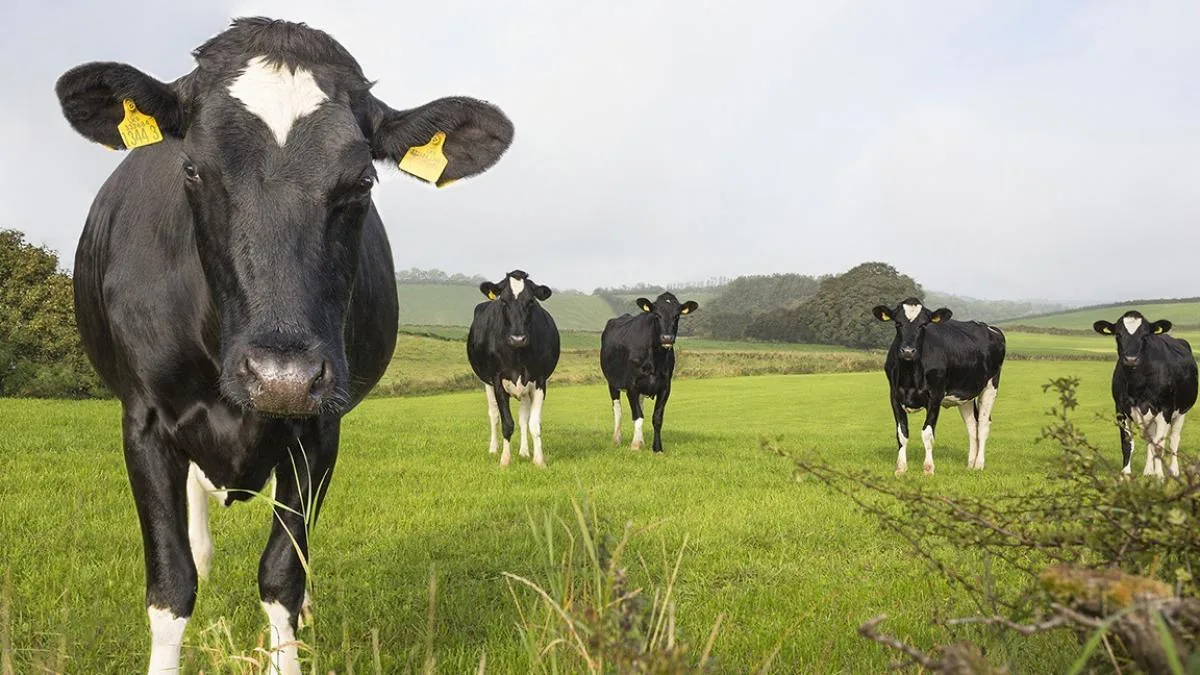
The researchers worked with a group of Prim’Holstein cows. They placed them in front of two screens showing images of human faces. One with a face that was part of their usual environment and another unknown. With no other stimulus than the image, the cows spent more time curiously looking at the unknown face.
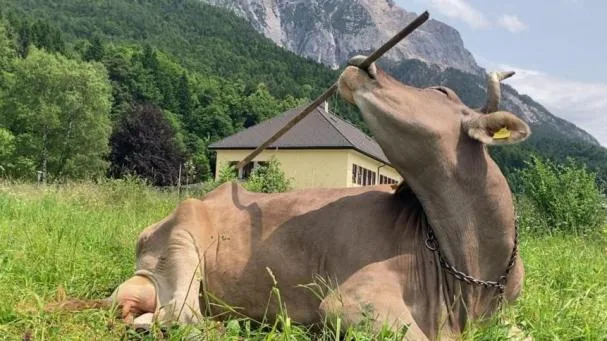
The cow Veronika surprises scientists with her intelligence using tools
When a familiar voice was added to the image, they spent more time looking at the known face. When the voice was unfamiliar, they focused on the unknown face.
“Our results indicate that cows are capable of integrating multiple sensory signals, reflecting a higher level of cognitive processing,” the researchers told The Times.
Also read
The researchers also showed them images of other animals of their species, some from their environment and others from different places. Unlike with humans, the cows “spent more time looking at photographs of familiar calves than photos of unknown heifers.”
The research reminds that dairy cows, in particular, live in close contact with humans from birth, being bottle-fed by people or milked daily, which inevitably creates a bond between animals and people. “From the perspective of animal welfare, a better understanding of their sociocognitive abilities is essential to improve interactions between humans and animals and management practices,” the study states.