The orbital railway line had been stored away for 15 years in a drawer of the Departament de Territori. Manel Nadal, the Mobility Secretary who left the file there when the tripartite government ended, is the same person who revived the project a decade and a half later. Why invent something new when you have that project and the transversal railway axis?, the socialists must have thought, who made these two lines the major bets of the 2025-2050 infrastructure plan presented last year with the aim of breaking the radial railway scheme of Catalonia, in which everything passes through Barcelona, both in Rodalies and high speed.
Read more The Mossos arrest Jonathan Andik, son of Mango founder Isak Andic, for homicide
The socialists’ intention is to create and enhance new transversal routes between cities in the third and fourth rings of the metropolitan region without having to cross the capital. It is a scenario analyzed from the perspective of mobility but also urban planning and housing, with more and more people creating their life and professional projects outside the metropolitan area.
When they rescued the idea from the bottom of a Territori drawer almost a year ago, there was neither budget nor schedule. Now, reaffirming the commitment to move forward with the orbital line was enough to gain ERC’s support for the Generalitat’s budgets.
Extension
120 kilometers in length, 68 of them newly constructed
The figures handled by the Generalitat when updating the project from 15 years ago are the same as then at the infrastructure level: 120 kilometers in total length, from Vilanova i la Geltrú to Mataró passing through Penedès, the north of Baix Llobregat, and Vallès. While some sections like Vilafranca to Martorell would use existing tracks; others like Vilafranca to Vilanova, Martorell to Terrassa, or Granollers to Mataró will require completely new infrastructure. Specifically, 68 kilometers will be newly constructed, incorporating 23 new stations along the route.
The estimated investment, however, has risen considerably compared to 15 years ago, reaching 5.2 billion euros. And it could be more since this is a rough estimate without any informative study yet drafted. What does exist – which is no small thing – is a land reserve in place since 2010, when an urban master plan (PDU) was approved that has prevented the occupation of the land where trains might one day pass.
The ends of the route present complicated orography, with significant slopes and mountain ranges in between. This will require building tunnels and viaducts of some complexity. The Government, in line with what has been announced in recent months for the L9 works and road improvements, wants to carry out the works using a public-private partnership formula through concessions.
Schedule
15 years of construction in the best case
The Generalitat aims to have everything finished by 2041. Given the track record of public works in Catalonia, this is an obvious exercise in optimism, as is the user forecast: more than 30 million annual travelers, a figure approaching those of established lines in much more populated areas like the R2 or R4. Independent technical studies done a few years ago place demand well below those figures.
Read more José Luis Rodríguez Zapatero, charged with criminal organization in the Plus Ultra case
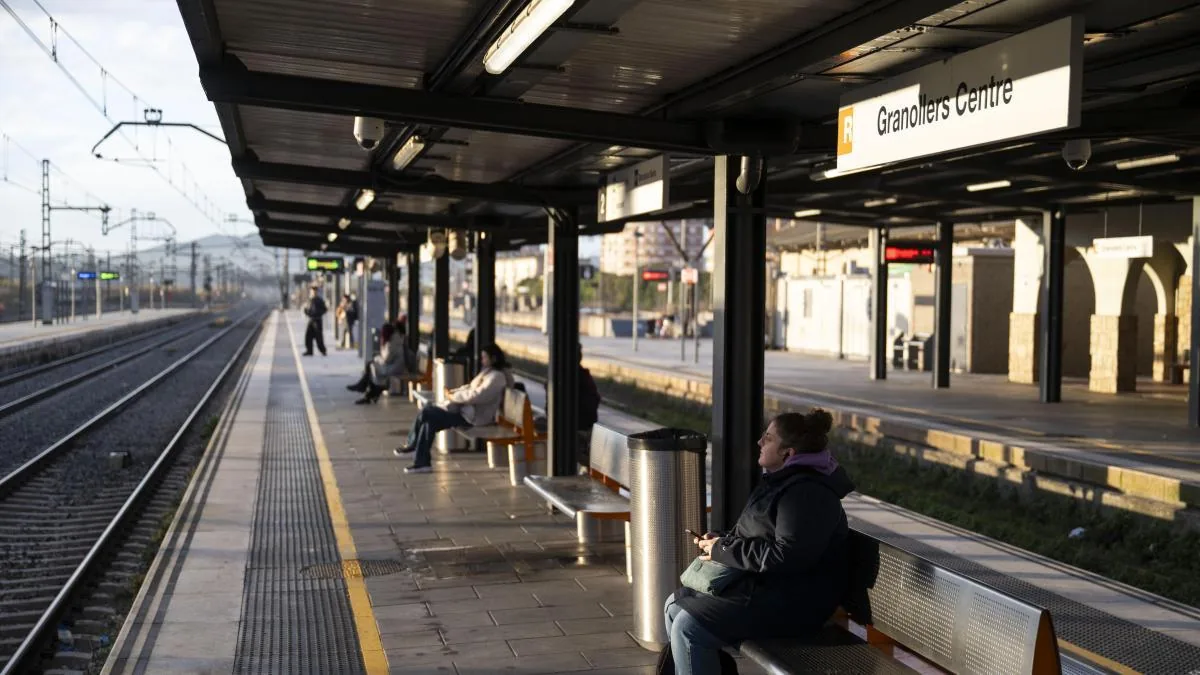
Since seeing the line completed in its entirety will take at least two decades, Generalitat sources insist on talking about sections, even incorporating a zero phase that would be almost immediate, focused on strengthening the current R8 line, which runs from Granollers to Martorell.
Zero phase
The first action is the improvement of the R8 and the construction of interchanges in Sant Cugat
It is an underutilized section, with only one train per hour, but at the same time with serious problems due to the state of the infrastructure, as demonstrated by the urgent works being carried out in the Rubí tunnel that have kept the line closed to Rodalies trains since January, leaving these tracks exclusively for freight.
In that area, there is already a prior agreement between ERC and PSC that commits the Ministry of Transport to finance the construction of two interchanges in Sant Cugat to facilitate shared use of Rodalies and Ferrocarrils de la Generalitat (FGC). The agreement signed at the time by the Generalitat and the Ministry of Transport set 2028 for the interchanges to enter service, but the works have not even started and the commissioning has been delayed until 2031.
Political priority
The railway route is put on the agenda, the fourth belt slows down
The new railway route is somewhat parallel to the even older project of the fourth belt, a ring road now known as B-40. The road between Terrassa, Sabadell, and Granollers has caused the most clashes between socialists and republicans, who demanded the railway alternative instead of the road and staged high-tension confrontations when they were in charge of the Conselleria de Territori. Government sources confirm they will comply with the investiture agreement with ERC and that the road project will advance on the northern ring between Terrassa and Sabadell but will not go further during this legislature.
The orbital line aims to cover the mobility deficit in that Vallès area through public transport. That is why the section between Santa Perpètua and Sabadell has been marked as the first phase of works. The Government already commissioned the informative study as part of the Rodalies plan, so it is nothing new. It also includes doubling the R3 between Granollers and Santa Perpètua and quadrupling the tracks of the R8 in that city to separate Rodalies and freight traffic, whose increase threatens to collapse other sections of the Rodalies network like the R4 in Penedès due to the implementation of the third rail.
The second phase the project would address is from Mataró to Granollers, 23 kilometers of new route to connect Maresme and Vallès, as was once done by road. This is one of the most complicated sections in terms of construction, as it will require significant tunnels to overcome orographic difficulties. The same challenge will occur between Vilafranca and Vilanova, the connection between Penedès and Garraf, which is left for the fourth phase of the project. Being newly constructed sections, they do not require the delicate balancing of works carried out on sections where service is maintained, which significantly lengthens deadlines.
Read more Two teenagers commit suicide after leaving three dead at the San Diego Islamic Center