






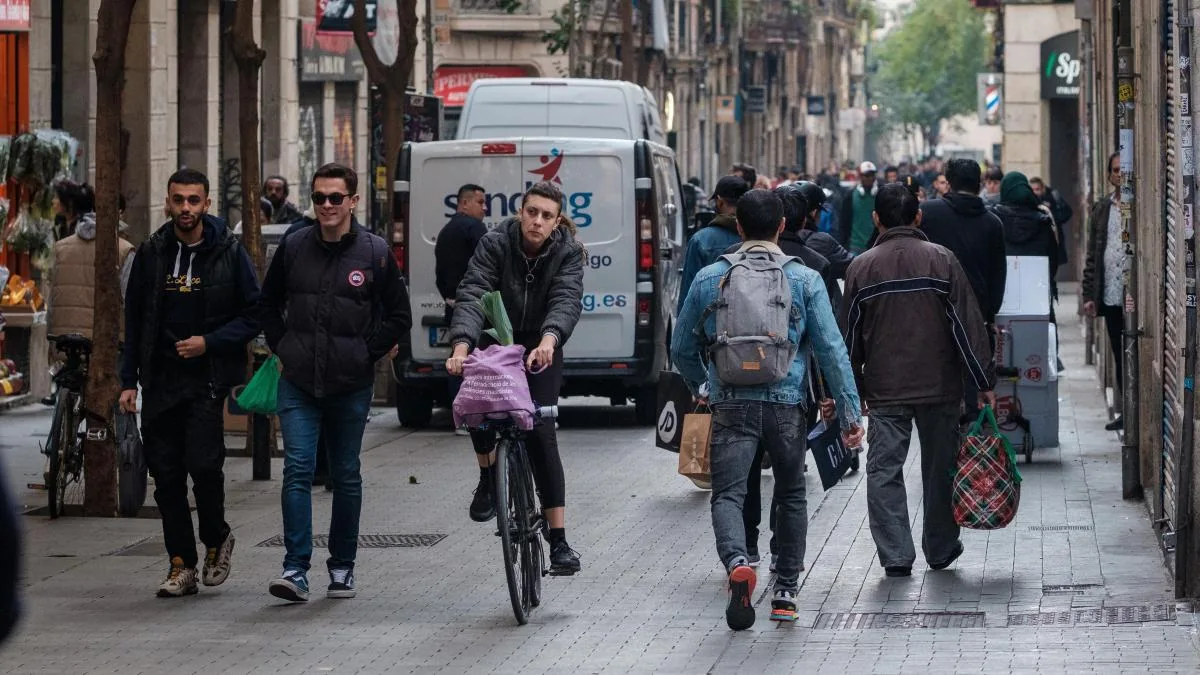
Beyond laws, the declaration of human rights, ordinances, the struggle of entities, and even beyond good intentions and common sense, Barcelona lacked a structural element, a public and active policy to fight for the equality of all people. That is why this Monday the first Anti-racist Plan 2026-2036 was presented in the Saló de Cent of the City Council, a cross-cutting commitment worked on with experts that involves the entire municipal machinery in areas such as housing, education, participation, health, or coexistence.
Read more The hardest blow for Fermín López: he goes through surgery and misses the World Cup
The Catalan capital created the BCN Antirumors strategy in 2010, an initiative that aimed to transform discriminatory practices and narratives, thanks to collaborative work between entities, citizens, and administration. But in a city with more than 180 nationalities and where 300 different languages are spoken, in a context of the rise of the far right, Jaume Collboni’s government missed a “clear policy against racism as a democratic priority of our city,” as the mayor himself explained this Monday during the presentation of the initiative.
The plan is divided into six axes with the idea of covering all spaces of citizen involvement. The first is a whole declaration of intentions, as well as a certain municipal mea culpa, since it refers to institutional transformation, with the aim of incorporating the anti-racist perspective into all public action. It may seem like a trivial detail, but a couple of months ago Sara Belbeida entered as a councilor, the first Muslim councilor in the history of the Catalan capital. Barcelona has never had, for example, a black, Asian, or Roma ethnicity councilor. The record of foreigners who have been part of the plenary is not much better: they do not reach the fingers of one hand.
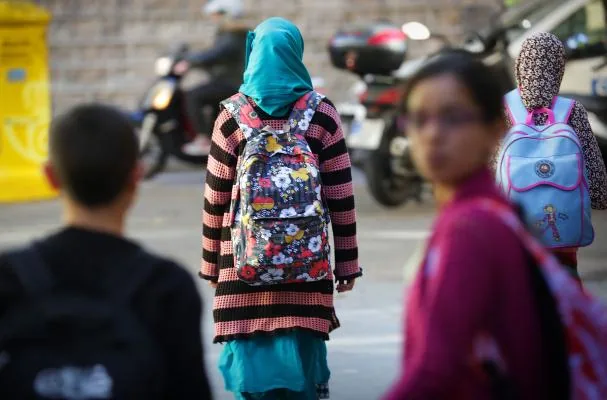
But the issue goes much further, especially regarding the relationship between the public entity and the citizens. Among other measures, the plan foresees training for municipal staff on racism and the inclusion of hiring clauses with an intercultural perspective, something that was already discussed on the Sant Jaume side in 2021. At that time, the city council estimated that only 1.4% of municipal staff had been born abroad, while the city average exceeds 25%. The Anti-racist Observatory of Barcelona will also be created, an “independent” space responsible for monitoring the effectiveness of the plan presented this Monday, which will have an investment of 3.5 million euros.
Municipal survey
30.3% of Barcelonans report having suffered discrimination for cultural, religious, or ethnic reasons
During the next decade, efforts will also be made to promote the participation of people and communities affected by racism in municipal spaces, especially those of a more local nature, such as youth or neighborhood centers. At the educational and cultural level, it is planned to enhance the active representation of groups of diverse origin in the municipal School Councils, as well as to strengthen the slavery route of the Barcelona History Museum, creating an interactive digital map that identifies and explains the spaces linked to the city’s slave past.
According to the 2024 interculturality survey, 30.3% of people residing in Barcelona report having suffered discrimination for cultural, religious, or ethnic reasons during the previous year, with much higher percentages among those surveyed who were born outside Spain.
Read more The PSOE demands that Ayuso present the accounts of her trip to Mexico on the transparency portal