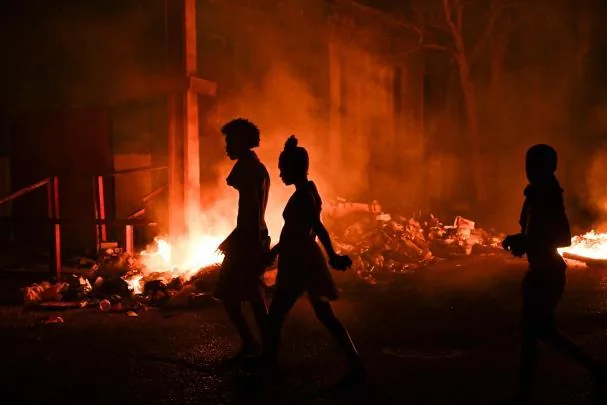
The future of the Cuban revolution, accustomed to overcoming all crises since it ousted dictator Fulgencio Batista in 1959, has been darkened by the Trump administration as much as the darkness of the streets of Havana, affected by continuous blackouts, which in some neighborhoods now last more than twenty hours a day.
Read more Trump’s investments in Nvidia and Boeing fuel a possible conflict of interest
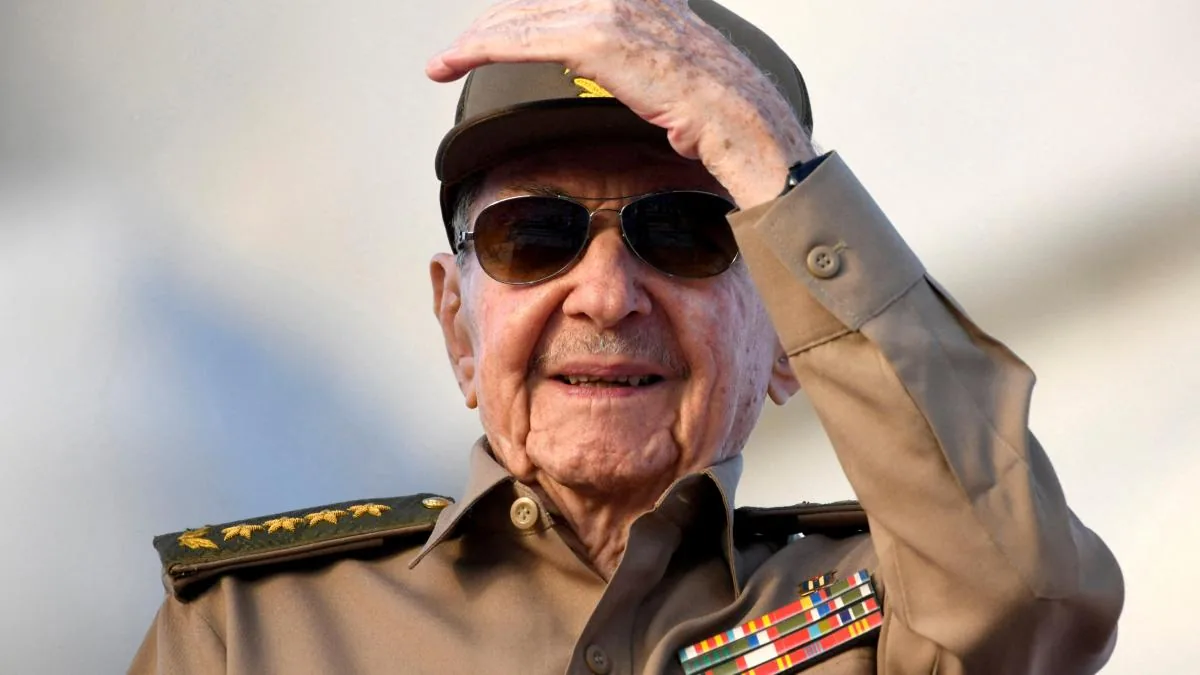
While the Cuban energy minister, Vicente de la O Levy, openly admitted that the country has run out of a drop of diesel and fuel, Donald Trump did not even wait to return from China to send a personal message to the communist regime. The messenger was the CIA director, who this Thursday notified the government of President Miguel Díaz-Canel that the countdown is underway and that Raúl Castro, the former head of state and younger brother of the late revolutionary leader Fidel Castro, will have to personally atone for nearly seven decades of communism.
The head of U.S. espionage landed in Havana without pomp or announcement, incognito, to meet with the head of Cuban intelligence, Ramón Romero Curbelo, other high-level officials, and the mediator Raúl Guillermo Rodríguez Castro, grandson of the leader who controlled the Cuban Communist Party until 2021 and who remains an influential political figure in the government of the Antillean island. Rodríguez Castro had already secretly met last February with Secretary of State Marco Rubio, taking advantage of a regional summit in Saint Kitts and Nevis.
No way out
The Trump administration has darkened the future of the Castro regime as much as the darkness in the streets of Havana
Ratcliffe acted as a notary of the increased level of U.S. demands regarding Cuba, in a critical economic situation after almost five months of the oil blockade imposed by Washington. He came to say that the future will be prosperous if the island faces “fundamental changes.” And that the Department of Justice is interested in prosecuting Raúl Castro for his involvement, according to a report by the U.S. television network CBS, in the downing in international waters of aircraft from Brothers to the Rescue, a humanitarian organization based in Miami, in 1996.
Except for the novelty of the accusation against Raúl Castro, it is the same discourse the White House has repeated since last January, when it kidnapped Venezuelan President Nicolás Maduro in a lightning operation and put Havana in the crosshairs for the next stage of its ideological crusade against leftist regimes in Latin America. The transcendental transformations were also the U.S. demand at the meeting on April 10 in the first joint meeting in Havana.
Meeting in Havana
The head of espionage, John Ratcliffe, notified that the countdown has begun in a country with a catastrophic situation, without fuel and with growing protests
The intervention of the CIA chief serves Washington to emphasize that Cuba is a security issue for the United States. So far, the Castro regime has justified its political immobility with the argument that Cuba does not represent a threat to the giant neighbor, that its political and economic system are internal matters, and that the current crisis would be resolved if Washington lifted the current “energy siege.”
It is unknown whether the U.S. threats against 94-year-old Raúl Castro are bluster like those Trump launched before attacking Iran, such as his intention to destroy Persian civilization in a single night. Ratcliffe is a more neutral and lower-ranking figure than Secretary of State Marco Rubio, a staunch defender of the island’s suffocation policy, who the other day posed dressed in the tracksuit with which Maduro was taken prisoner to the United States. If it depends on Rubio, Raúl Castro could be the new wearer of the sportswear, although he is lean and needs a smaller size.
Read more Trump concludes a visit to China rich in symbolism and poor in specifics
Upon leaving China this Friday, Trump avoided commenting on the intentions to prosecute Raúl Castro and showed a condescending tone: “They need help,” he said referring to the Cubans. “So we’ll see, we have a lot to talk about regarding Cuba,” he added. The U.S. president has repeatedly stated that he wants a political regime change in Cuba, and sources from his administration cited by Bloomberg agency expressed frustration this Friday over the lack of progress with Cuban leaders.
The situation in Cuba is catastrophic, with a fuel shortage limiting daily life. Inflation is rampant, hunger is beginning to surface, and there are problems finding salt and basic medicines like paracetamol. The tourism industry is paralyzed, and the sugar sector has been in decline for more than a decade. Commercial aviation has practically ceased, and transportation restrictions are severe.
Also read
Blackouts occurred again across the island this Friday. Power outages triggered street protests on Thursday night, when 70% of Cuban territory was left without electricity, according to the public company Unión Eléctrica (UNE).
The Cuban regime never enjoyed the mercy of the United States. From the beginning, Washington subjected the island to an economic embargo that has always conditioned its prosperity and later tried to invade it with the failed Bay of Pigs military adventure. Havana resisted the missile crisis and overcame the fall of communism. But the end of Chavismo in Venezuela, a country that was its energy umbilical cord, and the barrel crisis forecast the end of an era.
Catastrophic situation
Not a drop of fuel
Not a drop of diesel or gasoline. That was how clear the Cuban Energy Minister, Vicente de la O Levy, was in describing the country’s situation. A small domestic production of fuel and solar panels is not enough to prevent power outages. And an electric moped tricycle project being manufactured on the island is still not a reality.
For two consecutive weeks, fuel has practically disappeared from state gas stations in Havana. Russia has defined the energy crisis as difficult. The Kremlin sent an oil tanker in March, but the 730,000 barrels unloaded ran out in April, according to the energy minister. Protests have occurred inside and outside the capital, with street bonfires and pot-banging to protest the restrictions.
Read more Like May snow: an unexpected winter surprises the Vall d’Aran